Results by title
6 books match the query 'Japanese fiction'
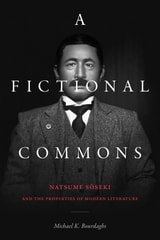
A Fictional Commons
Natsume Soseki and the Properties of Modern LiteratureMichael K. Bourdaghs
Duke University Press, 2021
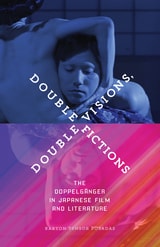
Double Visions, Double Fictions
The Doppelgänger in Japanese Film and LiteratureBaryon Tensor Posadas
University of Minnesota Press, 2018
A fresh take on the dopplegänger and its place in Japanese film and literature—past and present
Since its earliest known use in German Romanticism in the late 1700s, the word Doppelgänger (double-walker) can be found throughout a vast array of literature, culture, and media. This motif of doubling can also be seen traversing historical and cultural boundaries. Double Visions, Double Fictions analyzes the myriad manifestations of the doppelgänger in Japanese literary and cinematic texts at two historical junctures: the interwar period of the 1920s and 1930s and the present day.
According to author Baryon Tensor Posadas, the doppelgänger marks the intersection of the historical impact of psychoanalytic theory, the genre of detective fiction in Japan, early Japanese cinema, and the cultural production of Japanese colonialism. He examines the doppelgänger’s appearance in the works of Edogawa Rampo, Tanizaki Jun’ichiro, and Akutagawa Ryunosuke, as well as the films of Tsukamoto Shin’ya and Kurosawa Kiyoshi, not only as a recurrent motif but also as a critical practice of concepts. Following these explorations, Posadas asks: What were the social, political, and material conditions that mobilized the desire for the doppelgänger? And how does the dopplegänger capture social transformations taking place at these historical moments?
Double Visions, Double Fictions ultimately reveals how the doppelgänger motif provides a fascinating new backdrop for understanding the enmeshment of past and present.
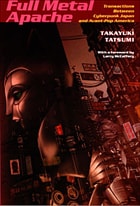
Full Metal Apache
Transactions Between Cyberpunk Japan and Avant-Pop AmericaTakayuki Tatsumi
Duke University Press, 2006
Full Metal Apache introduces English-language readers to a vast array of Japanese writers and performers and considers their work in relation to the output of William Gibson, Thomas Pynchon, H. G. Wells, Jack London, J. G. Ballard, and other Westerners. Tatsumi moves from the poetics of metafiction to the complex career of Madame Butterfly stories and from the role of the Anglo-American Lafcadio Hearn in promoting Japanese folklore within Japan during the nineteenth century to the Japanese monster Godzilla as an embodiment of both Japanese and Western ideas about the Other. Along the way, Tatsumi develops original arguments about the self-fashioning of “Japanoids” in the globalist age, the philosophy of “creative masochism” inherent within postwar Japanese culture, and the psychology of “Mikadophilia” indispensable for the construction of a cyborg identity. Tatsumi’s exploration of the interplay between Japanese and American cultural productions is as electric, ebullient, and provocative as the texts and performances he analyzes.

Murder Most Modern
Detective Fiction and Japanese CultureSari Kawana
University of Minnesota Press, 2008
The quintessential international genre, detective fiction often works under the guise of popular entertainment to expose its extensive readership to complex moral questions and timely ethical dilemmas. The first book-length study of interwar Japanese detective fiction, Murder Most Modern considers the important role of detective fiction in defining the country’s emergence as a modern nation-state.
Kawana explores the interactions between the popular genre and broader discourses of modernity, nation, and ethics that circulated at this pivotal moment in Japanese history. The author contrasts Japanese works by Edogawa Ranpo, Unno Juza, Oguri Mushitaro, and others with English-language works by Edgar Allan Poe, Dashiell Hammett, and Agatha Christie to show how Japanese writers of detective fiction used the genre to disseminate their ideas on some of the most startling aspects of modern life: the growth of urbanization, the protection and violation of privacy, the criminalization of abnormal sexuality, the dehumanization of scientific research, and the horrors of total war.
Kawana’s comparative approach reveals how Japanese authors of the genre emphasized the vital social issues that captured the attention of thrill-seeking readers-while eluding the eyes of government censors.
Sari Kawana is assistant professor of Japanese at the University of Massachusetts, Boston.
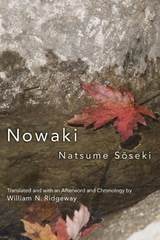
Nowaki
Natsume Soseki; Translated and with an Afterword and Chronology by William N. Ridgeway
University of Michigan Press, 2011
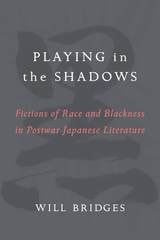
Playing in the Shadows
Fictions of Race and Blackness in Postwar Japanese LiteratureWilliam Bridges
University of Michigan Press, 2020