Results by title
4 books match the query 'Jealousy'
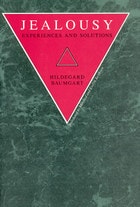
Jealousy
Experiences and SolutionsHildegard Baumgart
University of Chicago Press, 1990
Hildegard Baumgart, a practicing marriage counselor, pursues a multilayered exploration of jealousy that is at once public history, based on literary and cultural records, and private history, drawn from individual clinical cases and psychoanalytic practice. In the process she discovers provocative new answers to two central questions: How can one understand jealousy, whether one's own or another's?
Baumgart focuses on the fear of comparison with the rival that motivates much jealousy, and she shows how this idea is, in fact, built into both mythology and theology. She adroitly combines a rich array of documentation and evidence: detailed, clinical descriptions of the classic dilemmas of love triangles; a history of the concept of jealousy in the Judeo-Christian tradition; examples from the lives and writings of a fascinating gallery of authors (Shakespeare, Tolstoy, and Goethe, among others); discussions of Freud's writings on jealousy and of later psychoanalytic methodologies such as systems analysis, paradoxical intervention, and communications theory.
Throughout her narrative, Baumgart writes with compassion and feeling. Drawing on her personal experience of jealousy, her own psychoanalysis, and anecdotes from her counseling work and the clinical literature at large, she presents many fascinating vignettes of the painful—sometimes crippling—effects of jealousy as seen from the standpoints of both sufferer and therapist. What is more, she offers sensitive and sensible solutions to the problem of jealousy.
Baumgart's intriguing tapestry of the varied manifestations and interpretations of jealousy gives extraordinary resonance to the case histories she describes. In providing such a panoramic view, Jealousy invites everyone—analysts, counselors, sociologists, jealous lovers, and avid readers of advice columns—to reconsider both the cultural significance and personal meaning of this universal emotion.
Othello
William Shakespeare
Arizona Center for Medieval and Renaissance Studies, 2022
In her update of Shakespeare’s Othello, Mfoniso Udofia engages with the racial malice at the heart of the play. Udofia’s take on this complicated story emphasizes the rhythm and lyrical patterns of Othello’s speech. Opening up the text to modern ears, Udofia presents us with a code-switched Othello.
This translation of Othello was written as part of the Oregon Shakespeare Festival’s Play On! project, which commissioned new translations of thirty-nine Shakespeare plays. These translations present the work of “The Bard” in language accessible to modern audiences while never losing the beauty of Shakespeare’s verse. Enlisting the talents of a diverse group of contemporary playwrights, screenwriters, and dramaturges from diverse backgrounds, this project reenvisions Shakespeare for the twenty-first century. These volumes make these works available for the first time in print—a new First Folio for a new era.
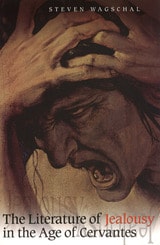
The Literature of Jealousy in the Age of Cervantes
Steven Wagschal
University of Missouri Press, 2007
Frequent and complex representations of jealousy in early modern Spanish literature offer symbolically rich and often contradictory images. Steven Wagschal examines these occurrences by illuminating the theme of jealousy in the plays of Lope de Vega, the prose of Miguel de Cervantes, and the complex poetry of Luis de Góngora. Noting the prevalence of this emotion in their work, he reveals what jealousy offered these writers at a time when Spain was beginning its long decline.
The Pleasure Marriage
A NovelTahar Ben Jelloun; Translated from the French by Rita S. Nezami
Northwestern University Press, 2021
Nabou returns to Fez as Amir’s second wife, weathering the jealous cruelty of Lalla Fatma, his first partner. Isolated within her new home, Nabou gives birth to twin sons, one black and one white, who come of age on the opposite sides of racial, social, and political chasms and who chart vastly different courses. The Pleasure Marriage showcases Ben Jelloun’s mastery of metaphor and lyrical narrative as he continues to take us into the worlds of Moroccan culture through his exquisite language and literary genius.