Results by title
2 books match the query 'Jeffries, Dru'
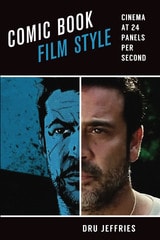
Comic Book Film Style
Cinema at 24 Panels per SecondBy Dru Jeffries
University of Texas Press, 2017
Superhero films and comic book adaptations dominate contemporary Hollywood filmmaking, and it is not just the storylines of these blockbuster spectacles that have been influenced by comics. The comic book medium itself has profoundly influenced how movies look and sound today, as well as how viewers approach them as texts. Comic Book Film Style explores how the unique conventions and formal structure of comic books have had a profound impact on film aesthetics, so that the different representational abilities of comics and film are put on simultaneous display in a cinematic work.
With close readings of films including Batman: The Movie, American Splendor, Superman, Hulk, Spider-Man 2, V for Vendetta, 300, Scott Pilgrim vs. the World, Watchmen, The Losers, and Creepshow, Dru Jeffries offers a new and more cogent definition of the comic book film as a stylistic approach rather than a genre, repositioning the study of comic book films from adaptation and genre studies to formal/stylistic analysis. He discusses how comic book films appropriate comics’ drawn imagery, vandalize the fourth wall with the use of graphic text, dissect the film frame into discrete panels, and treat time as a flexible construct rather than a fixed flow, among other things. This cinematic remediation of comic books’ formal structure and unique visual conventions, Jeffries asserts, fundamentally challenges the classical continuity paradigm and its contemporary variants, placing the comic book film at the forefront of stylistic experimentation in post-classical Hollywood.

Small-Screen Supers
Adaptation, Sexuality, and Politics in Superhero TelevisionEdited by Anna F. Peppard and Dru Jeffries
University of Texas Press, 0
The first collected volume to define superhero television as a distinct cultural phenomenon, broadening horizons of what superhero stories have been and might become.
Superhero films dominate Hollywood and recent studies of popular culture. Superheroes are also abundant on television, and have been for decades, yet critics have largely neglected this intersection of genre and medium. Small-Screen Supers gathers an international group of scholars who, for the first time, examine superhero television as a distinct cultural and artistic phenomenon.
Informed by a range of critical perspectives, contributors examine animated and live-action shows aimed at children, teens, and adults, combining scholarship on popular contemporary programming with analysis of less-successful shows from the recent and distant past. Collectively, the anthology emphasizes how superhero television has reflected, informed, and transformed American culture and media. In particular, Small-Screen Supers argues that superhero TV—more so than film—foregrounds demographic diversity and social critique. Whether interpreting the 1980s cartoon Spider-Man and His Amazing Friends as a queer sitcom, underscoring the progressive politics of Supergirl, or investigating pandemic-inspired subjectivities in Werewolf by Night, the authors reflect on superhero television as a unique mode of expression with important implications for understanding American popular culture.