Results by title
4 books match the query 'Jewish Question'
Figures of Conversion
“The Jewish Question” and English National IdentityMichael Ragussis
Duke University Press, 1995
—Daniel Defoe, The Farther Adventures of Robinson Crusoe (1719)
When the hero of Defoe’s novel listens skeptically to this anecdote related by a French Roman Catholic priest, he little suspects that in less than a century the conversion of the Jews would become nothing short of a national project—not in France but in England. In this book, Michael Ragussis explores the phenomenon of Jewish conversion—the subject of popular enthusiasm, public scandal, national debate, and dubbed "the English madness" by its critics—in Protestant England from the 1790s through the 1870s.
Moving beyond the familiar catalog of anti-Semitic stereotypes, Ragussis analyzes the rhetoric of conversion as it was reinvented by the English in sermons, stories for the young, histories of the Jews, memoirs by Jewish converts, and popular novels. Alongside these texts and the countertexts produced by English Jews, he situates such writers as Edgeworth, Scott, Disraeli, Arnold, Trollope, and Eliot within the debate over conversion and related issues of race, gender, and nation-formation. His work reveals how a powerful group of emergent cultural projects—including a revisionist tradition of the novel, the new science of ethnology, and the rewriting of European history—redefined English national identity in response to the ideology of conversion, the history of the Jews, and "the Jewish question."
Figures of Conversion offers an entirely new way of regarding Jewish identity in nineteenth-century British culture and will be of importance not only to literary scholars but also to scholars of Judaic and religious studies, history, and cultural studies.
Political Discourse in Exile
Karl Marx and the Jewish QuestionDennis Fischman
University of Massachusetts Press, 1991
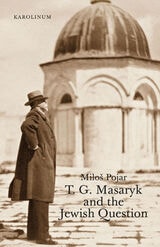
T. G. Masaryk and the Jewish Question
Miloš Pojar
Karolinum Press, 2018
In this book, Miloš Pojar traces the development and transformation of the opinions about Jews and Judaism of the first Czechoslovak president, T. G. Masaryk. Pojar describes the key events and ideas that shaped Masaryk’s attitudes: his first contacts with the Jewish world as a child, and later as a student; his work as a philosopher and sociologist, through which his thinking on Marxism, social issues, Christianity, and Judaism evolved; and his later, pivotal, experience at the time of the anti-Semitic libel trials against Leopold Hilsner, known as the Hilsner Affair. Pojar also details the period when Masaryk, as president, formulated his position on matters such as the Czech-Jewish movement, the question of assimilation, and Zionism. Featuring an entire chapter on Masaryk’s celebrated 1927 trip to Palestine as well as a series of brief profiles of outstanding Jewish figures that explore both Masaryk’s attitudes to their ideas and their opinions of Masaryk, this book is a compelling personal portrait and a substantial contribution to our understanding of the history of Jews in the Czech lands.
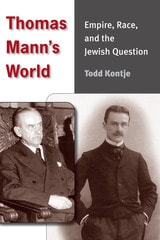
Thomas Mann's World
Empire, Race, and the Jewish QuestionTodd Kontje
University of Michigan Press, 2011