Results by title
2 books match the query 'Jewish orphans'
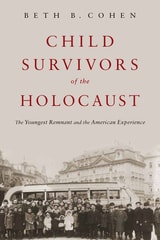
Child Survivors of the Holocaust
The Youngest Remnant and the American ExperienceCohen, Beth B
Rutgers University Press, 2018
The majority of European Jewish children alive in 1939 were murdered during the Holocaust. Of 1.5 million children, only an estimated 150,000 survived. In the aftermath of the Shoah, efforts by American Jews brought several thousand of these child survivors to the United States. In Child Survivors of the Holocaust, historian Beth B. Cohen weaves together survivor testimonies and archival documents to bring their story to light. She reveals that even as child survivors were resettled and “saved,” they struggled to adapt to new lives as members of adoptive families, previously unknown American Jewish kin networks, or their own survivor relatives. Nonetheless, the youngsters moved ahead. As Cohen demonstrates, the experiences both during and after the war shadowed their lives and relationships through adulthood, yet an identity as “survivors” eluded them for decades. Now, as the last living link to the Holocaust, the voices of Child Survivors are finally being heard.
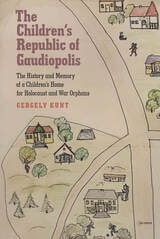
The Children’s Republic of Gaudiopolis
The History and Memory of a Children’s Home for Holocaust and War Orphans (1945–1950)Gergely Kunt
Central European University Press, 2022
Gaudiopolis (The City of Joy) was a pedagogical experiment that operated in a post–World War II orphanage in Budapest. This book tells the story of this children’s republic that sought to heal the wounds of wartime trauma, address prejudice and expose the children to a firsthand experience of democracy. The children were educated in freely voicing their opinions, questioning authority, and debating ideas.
The account begins with the saving of hundreds of Jewish children during the Siege of Budapest by the Lutheran minister Gábor Sztehlo together with the International Red Cross. After describing the everyday life and practices of self-rule in the orphanage that emerged from this rescue operation, the book tells how the operation of the independent children’s home was stifled after the communist takeover and how Gaudiopolis was disbanded in 1950.
The book then discusses how this attempt of democratization was erased from collective memory. The erasure began with the banning of a film inspired by Gaudiopolis. The Communist Party financed Somewhere in Europe in 1947 as propaganda about the construction of a new society, but the film’s director conveyed a message of democracy and tolerance instead of adhering to the tenets of socialist realism. The book breaks the subsequent silence on “The City of Joy,” which lasted until the fall of the Iron Curtain and beyond.