Results by title
6 books match the query 'Johnson, Jay K.'
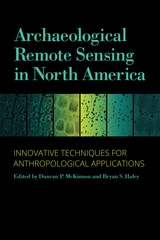
Archaeological Remote Sensing in North America
Innovative Techniques for Anthropological ApplicationsEdited by Duncan P. McKinnon and Bryan S. Haley
University of Alabama Press, 2017
Updating the highly praised 2006 publication Remote Sensing in Archaeology, edited by Jay K. Johnson, Archaeological Remote Sensing in North America: Innovative Techniques for Anthropological Applications is a must-have volume for today’s archaeologist. Targeted to practitioners of archaeological remote sensing as well as students, this suite of current and exemplary applications adheres to high standards for methodology, processing, presentation, and interpretation.
The use of remote sensing technologies to address academic and applied archaeological and anthropological research problems is growing at a tremendous rate in North America. Fueling this growth are new research paradigms using innovative instrumentation technologies and broader-area data collection methods. Increasingly, investigators pursuing these new approaches are integrating remote sensing data collection with theory-based interpretations to address anthropological questions within larger research programs.
In this indispensable volume, case studies from around the country demonstrate the technically diverse and major remote sensing methods and their integration with relevant technologies, such as geographic information systems (GIS) and global positioning systems (GPS), and include various uses of the “big four”: magnetometry, resistivity, ground-penetrating radar (GPR), and electromagnetic induction.
The study explores four major anthropological themes: site structure and community organization; technological transformation and economic change; archaeological landscapes; and earthen mound construction and composition. Concluding commentary from renowned expert Kenneth L. Kvamme overviews the practices, advances, and trends of geophysics and remote sensing in the past decade.
Histories of Southeastern Archaeology
Edited by Shannon Tushingham, Jane Hill, and Charles H. McNutt
University of Alabama Press, 2002
Histories of Southeastern Archaeology originated as a symposium at the 1999 Southeastern Archaeological Conference (SEAC) organized in honor of the retirement of Charles H. McNutt following 30 years of teaching anthropology. Written for the most part by members of the first post-depression generation of southeastern archaeologists, this volume offers a window not only into the archaeological past of the United States but also into the hopes and despairs of archaeologists who worked to write that unrecorded history or to test scientific theories concerning culture.
The contributors take different approaches, each guided by experience, personality, and location, as well as by the legislation that shaped the practical conduct of archaeology in their area. Despite the state-by-state approach, there are certain common themes, such as the effect (or lack thereof) of changing theory in Americanist archaeology, the explosion of contract archaeology and its relationship to academic archaeology, goals achieved or not achieved, and the common ground of SEAC.
This book tells us how we learned what we now know about the Southeast's unwritten past. Of obvious interest to professionals and students of the field, this volume will also be sought after by historians, political scientists, amateurs, and anyone interested in the South.
Additional reviews:
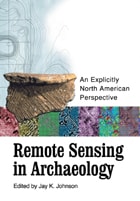
Remote Sensing in Archaeology
An Explicitly North American PerspectiveEdited by Jay K. Johnson
University of Alabama Press, 2006
In this volume, eleven archaeologists reveal how the broad application of remote sensing, and especially geophysical techniques, is altering the usual conduct of dirt archaeology. Using case studies that both succeeded and failed, they offer a comprehensive guide to remote sensing techniques on archaeological sites throughout North America. Because this new technology is advancing on a daily basis, the book is accompanied by a CD intended for periodic update that provides additional data and illustrations.
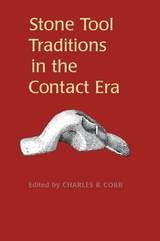
Stone Tool Traditions in the Contact Era
Edited by Charles Richard Cobb
University of Alabama Press, 2003
Explores the impact of European colonization on Native American and Pacific Islander technology and culture
This is the first comprehensive analysis of the partial replacement of flaked stone and ground stone traditions by metal tools in the Americas during the Contact Era. It examines the functional, symbolic, and economic consequences of that replacement on the lifeways of native populations, even as lithic technologies persisted well after the landing of Columbus. Ranging across North America and to Hawai'i, the studies show that, even with wide access to metal objects, Native Americans continued to produce certain stone tool types—perhaps because they were still the best implements for a task or because they represented a deep commitment to a traditional practice.Chapters are ordered in terms of relative degree of European contact, beginning with groups that experienced brief episodes of interaction, such as the Wichita-French meeting on the Arkansas River, and ending with societies that were heavily influenced by colonization, such as the Potawatomi of Illinois. Because the anthology draws comparisons between the persistence of stone tools and the continuity of other indigenous crafts, it presents holistic models that can be used to explain the larger consequences of the Contact Era.
Marvin T. Smith, of Valdosta State University has stated that, “after reading this volume, no archaeologist will ever see the replacement of lithic technology by metal tools as a simple matter of replacement of technologically inferior stone tools with their superior metal counterparts. This is cutting-edge scholarship in the area of contact period studies.”
The Development of Southeastern Archaeology
Edited by Jay K. Johnson
University of Alabama Press, 1993
Ten scholars whose specialties range from ethnohistory to remote sensing and lithic analysis to bioarchaeology chronicle changes in the way prehistory in the Southeast has been studied since the 19th century. Each brings to the task the particular perspective of his or her own subdiscipline in this multifaceted overview of the history of archaeology in a region that has had an important but variable role in the overall development of North American archaeology.
Some of the specialties discussed in this book were traditionally relegated to appendixes or ignored completely in site reports more than 20 years old. Today, most are integral parts of such reports, but this integration has been hard won. Other specialties have been and will continue to be of central concern to archaeologists. Each chapter details the way changes in method can be related to changes in theory by reviewing major landmarks in the literature. As a consequence, the reader can compare the development of each subdiscipline.
As the first book of this kind to deal specifically with the region, it be will valuable to archaeologists everywhere. The general reader will find the book of interest because the development of southeastern archaeology reflects trends in the development of social science as a whole.
Contributors include:
Jay K. Johnson, David S. Brose, Jon L. Gibson, Maria O. Smith, Patricia K. Galloway, Elizabeth J. Reitz, Kristen J. Gremillion, Ronald L. Bishop, Veletta Canouts, and W. Fredrick Limp

Time's River
Archaeological Syntheses from the Lower Mississippi ValleyEdited by Janet Rafferty and Evan Peacock
University of Alabama Press, 2008
An archaeologically rich region, in advance of impending disturbance
This volume stands as a key general resource for archaeologists working in the region extending from Louisiana through Mississippi north to Missouri and Kentucky, and it represents an opportunity to influence for decades a large part of the archaeological work to take place in the Southeast.
The book responds to a need for a comprehensive archaeological overview of the Lower Mississippi Valley that forms a portion of an interstate corridor spanning nine states that will run from southern Michigan to the Texas-Mexico border. The culturally sensitive Mississippi Delta is one of the richest archaeological areas in North America, and it is crucial that research designs be comprehensive, coordinated, and meet current preservation and future research needs. The authors are well-respected researchers from both within and outside the region with expertise in the full range of topics that comprise American archaeology. They examine matters of method and theory, the application of materials science, geophysics, and other high-tech tools in archaeology that provide for optimum data-recovery.