Results by title
10 books match the query 'Judicial error'
Barbarous Souls
David L. Strauss
Northwestern University Press, 2010
Barbarous Souls tells the story of Darrel Parker’s wrongful conviction for Nancy’s murder. Lincoln native David Strauss weaves a shocking true crime story with an exposé of still-prevalent methods of interrogation—methods that often lead to false confessions and the conviction of innocent suspects. After he was convicted, Parker served thirteen years of a life sentence before agreeing to a deal that would free him but not clear his record. It was later discovered that a murderer who died in prison in 1988 had taped a confession to the crime.
A roller-coaster ride in the tradition of John Grisham’s The Innocent Man, Barbarous Souls is a thorough examination of a wrongful conviction based on a false confession, and an illuminating portrayal of a widespread phenomenon that still plagues the justice system.
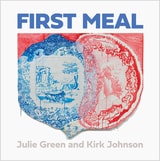
First Meal
Julie Green
Oregon State University Press, 2023
Wrongful convictions haunt the American criminal justice system, as revealed in recent years by DNA and other investigative tools. And every wrongfully convicted person who walks free, exonerated after years or decades, carries part of that story. From those facts, artist Julie Green posed a seemingly simple question: When you have been denied all choice, what do you choose to eat on the first day of freedom?
In the small details of life at such pivotal moments, a vast new landscape of the world can emerge, and that is the core concept of First Meal. Partnering with the Center on Wrongful Convictions at Northwestern University’s Pritzker School of Law, Green and her coauthor, award-winning journalist Kirk Johnson, have created a unique melding of art and narration in the portraits and stories of twenty-five people on the day of their release.
Food and punishment have long been intertwined. The tradition of offering a condemned person a final meal before execution, for example, has been explored by psychologists, filmmakers, and others—including Green herself in an earlier series of criminal-justice themed paintings, The Last Supper. First Meal takes on that issue from the other side: food as a symbol of autonomy in a life restored. Set against the backdrop of a flawed American legal system, First Meal describes beauty, pain, hope and redemption, all anchored around the idea—explored by writers from Marcel Proust to Michael Pollan—that food touches us deeply in memory and emotion.
In Green’s art, state birds and surreal lobsters soar over places where wrongful convictions unfolded, mistaken witnesses shout their errors, glow-in-the-dark skylines evoke homecoming. Johnson’s essays take us inside those moments—from the courtrooms where things went wrong to the pathways of faith and resilience that kept people sane through their years of injustice. First Meal seeks to inform and spread awareness, but also celebrate the humanity that unites us, and the idea that gratitude and euphoria—even as it mixes with grief and the awareness of loss—can emerge in places we least expect.
Innocent Until Interrogated
The True Story of the Buddhist Temple Massacre and the Tucson FourBy Gary L. Stuart
University of Arizona Press, 2010
Soon after, all five men recanted, saying their confessions had been coerced. One was freed after providing an alibi, but the remaining suspects—dubbed “The Tucson Four” by the media—remained in custody even though no physical evidence linked them to the crime.
Seven weeks later, investigators discovered—almost by chance—physical evidence that implicated two entirely new suspects. The Tucson Four were finally freed on November 22 after two teenage boys confessed to the crime, yet troubling questions remained. Why were confessions forced out of innocent suspects? Why and how did legal authorities build a case without evidence? And, ultimately, how did so much go so wrong?
In this first book-length treatment of the Buddhist Temple Massacre, Gary L. Stuart explores the unspeakable crime, the inexplicable confessions, and the troubling behavior of police officials. Stuart’s impeccable research for the book included a review of the complete legal records of the case, an examination of all the physical evidence, a survey of three years of print and broadcast news, and more than fifty personal interviews related to the case. Like In Cold Blood, and The Executioner’s Song, Innocent Until Interrogated is a riveting read that provides not only a striking account of the crime and the investigation but also a disturbing look at the American justice system at its very worst.
Law's Mistakes
Austin Sarat
University of Massachusetts Press, 2016
The essays in Law's Mistakes explore the things that law recognizes as errors and the way it responds to them. They identify the jurisprudential and political perspectives that underlie different understandings of what is or is not a legal mistake, and examine the fraught, contested, and evolving relationship between law and error. And they offer templates for thinking about what mistakes can tell us about the aspirations and limits of law, and for understanding how our imagining of law is enabled and shaped by its juxtaposition to a condition labeled mistake.
In addition to the volume editors, contributors include Paul Schiff Berman, Sonali Chakravarti, Jody L. Medeira, Stewart Motha, Kunal Parker, and Jordan Steiker.
Life after Death Row
Exonerees' Search for Community and IdentitySaundra D. Westervelt and Kimberly J. Cook
Rutgers University Press, 2012
Life after Death Row examines the post-incarceration struggles of individuals who have been wrongly convicted of capital crimes, sentenced to death, and subsequently exonerated.
Saundra D. Westervelt and Kimberly J. Cook present eighteen exonerees’ stories, focusing on three central areas: the invisibility of the innocent after release, the complicity of the justice system in that invisibility, and personal trauma management. Contrary to popular belief, exonerees are not automatically compensated by the state or provided adequate assistance in the transition to post-prison life. With no time and little support, many struggle to find homes, financial security, and community. They have limited or obsolete employment skills and difficulty managing such daily tasks as grocery shopping or banking. They struggle to regain independence, self-sufficiency, and identity.
Drawing upon research on trauma, recovery, coping, and stigma, the authors weave a nuanced fabric of grief, loss, resilience, hope, and meaning to provide the richest account to date of the struggles faced by people striving to reclaim their lives after years of wrongful incarceration.
Long Way Home
A Young Man Lost in the System and the Two Women Who Found HimLaura Caldwell
Northwestern University Press, 2012
By all accounts, Jovan Mosley was a good kid. He was working on a way out of his tough Chicago neighborhood and had been accepted at Ohio State University when he was forced to confess to a murder he did not commit. He then spent five years and ten months in jail without a trial. His efforts to exonerate himself got him nowhere until he happened to meet a successful criminal defense lawyer, Catharine O’Daniel. She became convinced of his innocence and took him on as her first pro bono client. Along with Laura Caldwell, she decided to fight to free Jovan. Against enormous odds, they finally won some measure of justice. In this affecting memoir, Caldwell tells the unforgettable story of a breakdown in the criminal justice system and what it took to free an innocent man.
Shattered Justice
Crime Victims' Experiences with Wrongful Convictions and ExonerationsKimberly J. Cook
Rutgers University Press, 2022
Wilkie Collins's The Dead Alive
The Novel, the Case, and Wrongful ConvictionsWilkie Collins
Northwestern University Press, 2005
Rob Warden, one of the nation's most eloquent and effective advocates for the wrongly convicted, reconsiders the facts of the Boorn case for what they can tell us about the systemic flaws that produced this first known miscarriage of justice-flaws that continue to riddle our system of justice today. A tale of false confessions and jailhouse snitches, of evidence overlooked, and justice more blinkered than blind, the Boorns' story reminds us of the perennial nature of the errors at the heart of American jurisprudence-and of the need to question and correct a system that regularly condemns the innocent.
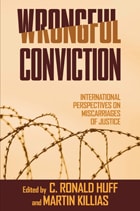
Wrongful Conviction
International Perspectives on Miscarriages of Justiceedited by C. Ronald Huff and Martin Killias
Temple University Press, 2009
Imperfections in the criminal justice system have long intrigued the general public and worried scholars and legal practitioners. In Wrongful Conviction, criminologists C. Ronald Huff and Martin Killias present an important collection of essays that analyzes cases of injustice across an array of legal systems, with contributors from North America, Europe and Israel. This collection includes a number of well-developed public-policy recommendations intended to reduce the instances of courts punishing innocents. It also offers suggestions for compensating more fairly those who are wrongfully convicted.
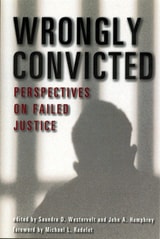
Wrongly Convicted
Perspectives on Failed JusticeWestervelt, Saundra D
Rutgers University Press, 2001
The American criminal justice system contains numerous safeguards to prevent the conviction of innocent persons. The Bill of Rights provides nineteen separate rights for the alleged criminal offender, including the right to effective legal representation and the right to be judged without regard to race or creed. Despite these safeguards, wrongful convictions persist, and the issue has reverberated in the national debate over capital punishment.
The essays in this volume are written from a cross-disciplinary perspective by some of the most eminent lawyers, criminologists, and social scientists in the field today. The articles are divided into four sections: the causes of wrongful convictions, the social characteristics of the wrongly convicted, case studies and personal histories, and suggestions for changes in the criminal justice system to prevent wrongful convictions. Contributors examine a broad range of issues, including the fallibility of eyewitness testimony, particularly in cross-racial identifications; the disadvantages faced by racial and ethnic minorities in the criminal justice system; and the impact of new technologies, especially DNA evidence, in freeing the innocent and bringing the guilty to justice. The book also asks such questions as: What legal characteristics do wrongful convictions share? What are the mechanisms that defendants and their attorneys use to overturn wrongful convictions? The book also provides case studies that offer specific examples of what can and does go wrong in the criminal justice system.