Results by title
7 books match the query 'Justice in literature'
A Certain Justice
Toward an Ecology of the Chinese Legal ImaginationHaiyan Lee
University of Chicago Press, 2023
To many outsiders, China has an image as a realm of Oriental despotism where law is at best window dressing and at worst an instrument of coercion and tyranny. In this highly original contribution to the interdisciplinary field of law and humanities, Haiyan Lee contends that this image arises from a skewed understanding of China’s political-legal culture, particularly the failure to distinguish what she calls high justice and low justice.
In the Chinese legal imagination, Lee shows, justice is a vertical concept, with low justice between individuals firmly subordinated to the high justice of the state. China’s political-legal culture is marked by a mistrust of law’s powers, and as a result, it privileges substantive over procedural justice. Calling on a wide array of narratives—stories of crime and punishment, subterfuge and exposé, guilt and redemption—A Certain Justice helps us recognize the fight for justice outside the familiar arenas of liberal democracy and the rule of law.
Each Hour Redeem
Time and Justice in African American LiteratureDaylanne K. English
University of Minnesota Press, 2013
Each Hour Redeem advances a major reinterpretation of African American literature from the late eighteenth century to the present by demonstrating how its authors are centrally concerned with racially different experiences of time. Daylanne K. English argues that, from Phillis Wheatley to Suzan-Lori Parks, African American writers have depicted distinctive forms of temporality to challenge racial injustices supported by dominant ideas of time. The first book to explore the representation of time throughout the African American literary canon, Each Hour Redeem illuminates how the pervasive and potent tropes of timekeeping provide the basis for an overarching new understanding of the tradition.
Combing literary, historical, legal, and philosophical approaches, Each Hour Redeem examines a wide range of genres, including poetry, fiction, drama, slave narratives, and other forms of nonfiction. English shows that much of African American literature is characterized by “strategic anachronism,” the use of prior literary forms to investigate contemporary political realities, as seen in Walter Mosley’s recent turn to hard-boiled detective fiction. By contrast, “strategic presentism” is exemplified in the Black Arts Movement and the Harlem Renaissance and their investment in contemporary political potentialities, for example, in Langston Hughes and Amiri Baraka’s adaptation of the jazz of their eras for poetic form and content. Overall, the book effectively demonstrates how African American writers have employed multiple and complex conceptions of time not only to trace racial injustice but also to help construct a powerful literary tradition across the centuries.
Just Wonder
Shifting Perspectives in TraditionPauline Greenhill
Utah State University Press, 2024
These essays examine fairy tales and other traditional forms of the fantastic and the real to offer alternative expressions of justice relevant to gender, sex, sexuality, environment, Indigeneity, class, ability, race, decolonizing, and human and nonhuman relations. By analyzing fairy tales and wonder texts from various media through an intersectional feminist lens, Pauline Greenhill and Jennifer Orme consider how wonder genres and forms blend with diverse conceptions of seeking and enacting justice. International collaborators—both established and emerging scholars who self-identify with different subjectivities, locations, and generations and come from an impressive range of inter/disciplines—engage with contemporary and historical texts from various languages and cultural contexts, including interventions, counterparts, and comparisons to the fairy tale. Just Wonder offers a critical look at how creative wondering can expand the ability to resist modes of oppression while fostering equity, as well as encourage curiosity and imagination.
In a world that can be overwhelming and precarious, this book presents scholarly, artistic, personal, and collective-action interventions to identify and respond to injustice while centering wonder and, thus, imagination, questioning, and hope. Just Wonder will appeal to fairy-tale scholars; folklorists; students and scholars of film, media studies, and cultural studies; as well as a general audience.
Literature and Criminal Justice in Antebellum America
Carl Ostrowski
University of Massachusetts Press, 2016
Drawing on an eclectic range of sources including newspaper arrest reports, prison reform periodicals, popular literary magazines, transatlantic travel narratives, popular crime novels, anthologies of prison poetry, and the memoirs of prison chaplains, Ostrowski analyzes how authors as canonical as Nathaniel Hawthorne and as obscure as counterfeiter/poet/prison inmate Christian Meadows adapted, manipulated, or rejected prevailing narratives about criminality to serve their artistic and rhetorical ends. These narratives led to the creation of new literary subgenres while also ushering in psychological interiority as an important criterion by which serious fiction was judged. Ostrowski joins and extends recent scholarly conversations on subjects including African American civic agency, literary sentimentalism, outsider authorship, and the racial politics of antebellum prison reform.

Natchiq Grows Up
The Story of an Alaska Ringed Seal Pup and Her Changing HomeDonna D.W. Hauser
University of Alaska Press, 2023
Beginning in the 1980s, scientists started traveling to northwest Alaska to research the lives of ringed seals, bringing Labrador retrievers who could sniff out seals and their snow cave homes (called lairs) on the sea ice. Decades later, scientists partnered with the Iñupiaq people of
Qikiktaġruk (Kotzebue) to learn more about ringed seals. They relied on a combination of Indigenous Knowledge and scientific techniques to capture and apply tags to understand the movements and behavior of ringed seals.
But the Arctic homes of ringed seals are changing, and the long history of ringed seal science in the Kotzebue Sound proved to be just the beginning of long and cooperative relationships melding science and Indigenous knowledge. During 2018 and 2019, with unprecedented sea ice conditions, Qikiktagrumiut Elders and scientists returned to the ice to measure changes in the habitat available for ringed seal pups in the region.
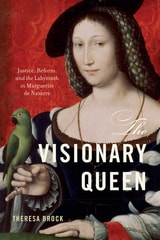
The Visionary Queen
Justice, Reform, and the Labyrinth in Marguerite de NavarreTheresa Brock
University of Delaware Press, 2024

Western Law, Russian Justice
Dostoevsky, the Jury Trial, and the LawGary Rosenshield
University of Wisconsin Press, 2005