Results by title
2 books match the query 'Kaplan, Rachel'
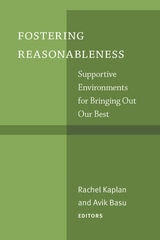
Fostering Reasonableness
Supportive Environments for Bringing Out Our BestRachel Kaplan and Avik Basu, editors
Michigan Publishing Services, 2015
We humans are difficult animals. We are the source of environmental degradation, the culprits of resource decline. We are reluctant to trust and easily angered. However, we are also the source of inspiration, compassion, and creative solutions. What brings out the reasonable side of our capacity? The Reasonable Person Model (RPM) offers a simple framework for considering essential ingredients in how people, at their best, deal with one another and the resources on which we all rely. RPM is a hopeful and engaging framework that helps us understand and address a wide diversity of issues. The 20 chapters of Fostering Reasonableness provide the conceptual foundations of the framework and applications examining contexts as diverse as a region, organization, the classroom, finding common ground in resource planning, education in the prison environment, greening in the inner city. Our collective hope in putting the book together is to encourage a way of seeing, a way of understanding and examining circumstances that might lead to more wholesome, adaptive, and effective means of addressing the big and little issues that depend on humanity’s reasonableness.
[more]
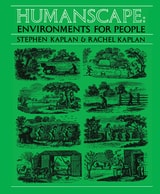
Humanscape
Environments for PeopleStephen Kaplan & Rachel Kaplan
Michigan Publishing Services, 2017
In dealing with environmental issues we are repeatedly confronted by the paradox that the biggest obstacle to a more humane world for people is -- people. Again and again designers, planners, citizen groups, policy makers, and managers set out to solve "real" problems and end up mired in "people" problems. This book attempts to apply the skills and insights of the behavioral sciences to this dilemma. The approach is untraditional, not only in its theoretical framework, but also in its focus. The emphasis is not on the environment itself, but on how people know and experience it, for we believe that the first priority is not specific answers to specific problems, but a greater understanding of the creature we are dealing with, a larger view of what people are like.
[more]