Results by title

4 books match the query 'Karanis (Extinct city)'
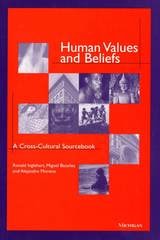
cover of Human Values and Beliefs: A Cross-Cultural Sourcebook

Human Values and Beliefs

A Cross-Cultural Sourcebook

Ronald Inglehart, Miguel Basanez, and Alejandro Moreno

University of Michigan Press, 1998

For over twenty-five years Ronald Inglehart and his colleagues have been collecting survey data on the beliefs and opinions of people all over the world on a variety of topics. This work led Inglehart to expound his noted theory about the development of post-materialist values in developed countries and explore its effect on politics. This book, based on the most comprehensive of these surveys, the World Values Survey conducted in over forty countries from 1990-93, publishes for the first time all of the findings of this survey. The questions cover issues such as politics, economics, religion, family life, and gender roles, and reflect differences in response by age, gender, economic standing, and education.
This book provides a wealth of data that will appeal to social scientists, journalists, people in international business, and policy makers interested in understanding social, political, or cultural attitudes in different countries.
Ronald Inglehart is Professor of Political Science, University of Michigan, and coauthor of Value Change in Global Perspective, as well as many other books and articles. Miguel Basanez is Professor of Political Science, Institutio Tecnologico Autonomo de Mexico, and director of MORI de Mexico. Alejandro Moreno is Professor of Political Science, Institutio Tecnologico Autonomo de Mexico.
[more]
cover of Papyri from Karanis: The Granary C123

Papyri from Karanis

The Granary C123

W. Graham Claytor and Arthur Verhoogt, editors

University of Michigan Press, 2018

Papyri from Karanis: The Granary C123 is the twenty- first volume of University of Michigan papyri and the fourth devoted to texts from the University’s excavations at Karanis. The volume offers a contextualized edition of thirty-seven documents found in  a single structure, a large granary (C123) originally built in the first century CE, in addition to an analysis of the archaeology and history of the structure.

The documents are presented with an introduction, transcription of the original Greek or Latin, translation, commentary, and images. A unique community prayer to the emperor and gods (827) is the volume’s most notable contribution. The other papyri are a mix of private and public documents (petitions, declarations, letters, lists, etc.) that date from between the first century BCE and the fourth century CE. The typological and chronological mix of texts shows that they do not form an undisturbed archive but were rather a dump of wastepaper and other household objects.

Michigan’s excavated papyri are here presented for the first time on the basis of their archaeological find spot rather than being organized according to content. The volume’s introduction provides a possible model for analyzing legacy data from the Karanis excavations stored at the University of Michigan. The book will be of interest to papyrologists, ancient historians, and archaeologists of Greco- Roman Egypt.
[more]
cover of Recycling Land: Understanding the Legal Landscape of Brownfield Development

Recycling Land

Understanding the Legal Landscape of Brownfield Development

Elizabeth Glass Geltman

University of Michigan Press, 2000
Older--and often economically depressed--industrial cities generally have a number of well located but abandoned industrial sites. Too frequently these sites are heavily polluted by the residue of toxic wastes dumped when old factories were still in use. These "brownfield" sites must be cleaned up under existing law before they can be redeveloped. And yet the question of who will bear the cost of this cleanup frequently stymies efforts to return these sites to productive use. A complicated net of federal, state and local regulations can involve several generations of owners in potential liability for the cleanup, frequently resulting only in extended litigation, not often in the cleanup of the site. In this book, Elizabeth Glass Geltman surveys the laws on both the federal and state level with regard to the cleanup of brownfield sites. The author makes valuable suggestions for reforming these laws that will help encourage land reuse and the accompanying redevelopment of the industrial base of many American cities both large and small.
Elizabeth Glass Geltman is Professor of Law, George Washington University Law School and is the author of many books on environmental law, including Modern Environmental Law: Policy and Practice.
[more]
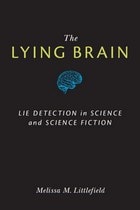
cover of The Lying Brain: Lie Detection in Science and Science Fiction

The Lying Brain

Lie Detection in Science and Science Fiction

Melissa M. Littlefield

University of Michigan Press, 2011

"The Lying Brain is a study to take seriously. Its argument is timely, clear, and of particular importance to the enlargement of our understanding of the relationships among science studies, literary studies, and technology studies."
---Ronald Schleifer, University of Oklahoma

Real and imagined machines, including mental microscopes, thought translators, and polygraphs, have long promised to detect deception in human beings. Now, via fMRI and EEG, neuroscientists seem to have found what scientists, lawyers, and law enforcement officials have sought for over a century: foolproof lie detection. But are these new lie detection technologies any different from their predecessors? The Lying Brain is the first book to explore the cultural history of an array of lie detection technologies: their ideological assumptions, the scientific and fictional literatures that create and market them, and the literacies required for their interpretation.

By examining a rich archive of materials about lie detection---from science to science fiction---The Lying Brain demonstrates the interconnections of science, literature, and popular culture in the development and dissemination of deception detection in the American cultural imagination. As Melissa Littlefield demonstrates, neuroscience is not building a more accurate lie detector; it is simply recycling centuries-old ideologies about deception and its detection.

Cover art: "Human Brain" © Denis Barbulet, courtesy of Shutterstock.com

[more]