Results by title
3 books match the query 'Kaufmann, Stefan'

Formalizing the Dynamics of Information
Edited by Martina Faller, Stefan Kaufmann, and Marc Pauly
CSLI, 2000
The papers collected in this volume exemplify some of the trends in current approaches to logic, language and computation. Written by authors with varied academic backgrounds, the contributions are intended for an interdisciplinary audience. The first part of this volume addresses issues relevant for multi-agent systems: reasoning with incomplete information, reasoning about knowledge and beliefs, and reasoning about games. Proofs as formal objects form the subject of Part II. Topics covered include: contributions on logical frameworks, linear logic, and different approaches to formalized reasoning. Part III focuses on representations and formal methods in linguistic theory, addressing the areas of comparative and temporal expressions, modal subordination, and compositionality.
[more]

The Construction of Meaning
Edited by David I. Beaver, Luis D. Casillas Martinez, Brady Z. Clark, and Stefan
CSLI, 2002
This volume collects leading-edge work on the semantics and pragmatics of natural language, including contributions from Eve Clark, Paul Kiparsky, Stanley Peters, Dag Westerstahl, and Arnold Zwicky. The research covers a number of languages—English, Mandarin, Japanese, Korean, and Quechua—and phenomena, including adverbial modification, classifiers, constructional meaning, control phenomena, evidentiality, events semantics, focus, presupposition, and quantification. This is an essential volume for anyone interested in the latest developments in the study of meaning.
[more]
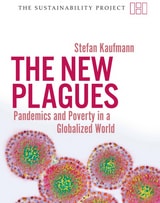
The New Plagues
Pandemics and Poverty in a Globalized WorldStefan Kaufmann
Haus Publishing, 2009
The threat from infectious diseases has increased with globalization. Throughout the history of mankind, epidemics have eradicated whole regions, started the migration of peoples and decided wars. They continue to leave their mark on societies, as well as influencing politics and economies. The New Plagues: Pandemics and Poverty in a Globalized World explores the strategies of microbes in conjunction with the economic impact of epidemics. In particular, it looks at the conflict between rich and poor with regard to outbreaks, and introduces possible strategies for containment.
[more]