Results by title
6 books match the query 'Kennedy'
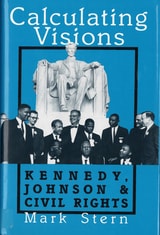
Calculating Visions
Kennedy, Johnson, and Civil RightsMark Stern
Rutgers University Press, 1992
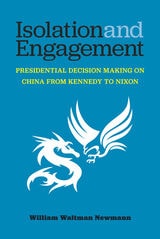
Isolation and Engagement
Presidential Decision Making on China from Kennedy to NixonWilliam Waltman Newmann
University of Michigan Press, 2022

Selling Outer Space
Kennedy, the Media, and Funding for Project Apollo, 1961-1963James Kauffman
University of Alabama Press, 2009
Examines the Kennedy administration’s rhetorical campaign to persuade Congress and the public to adopt a manned flight to the moon. In so doing, the study addresses three key themes.
First, it illuminates the contrasting nature of technical and narrative arguments and explores how those arguments play different roles in public discussion of social policy. Second, the book examines how both the executive branch and the news media function to help set the agenda in American politics. Offering a case study of the increasingly complex relationship between the government and the media.
Finally, Selling Outer Space explores the power of technology to shape and direct human action.
The Birth of Head Start
Preschool Education Policies in the Kennedy and Johnson AdministrationsMaris A. Vinovskis
University of Chicago Press, 2005
Policymakers proposing to reform Head Start often invoke its origins to justify their position, but until now no comprehensive political history of the program has existed. Maris A. Vinovskis here provides an in-depth look at the nation's largest and best known—yet politically challenged—early education program. The Birth of Head Start sets the record straight on the program's intended aims, documenting key decisions made during its formative years. While previous accounts of Head Start have neglected the contributions of important participants such as federal education officials and members of Congress, Vinovskis's history is the first to consider the relationship between politics and policymaking and how this interaction has shaped the program. This thorough and incisive book will be essential for policymakers and legislators interested in prekindergarten education and will inform future discussions on early intervention services for disadvantaged children.
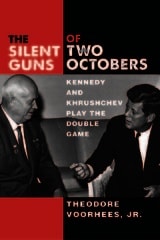
The Silent Guns of Two Octobers
Kennedy and Khrushchev Play the Double GameTheodore Voorhees, Jr.
University of Michigan Press, 2020
The Silent Guns of Two Octobers uses new as well as previously under-appreciated documentary evidence to link the Cuban Missile Crisis to the Checkpoint Charlie tank standoff to achieve the impossible—craft a new, thoughtful, original analysis of a political showdown everyone thought they knew everything about. Ultimately the book concludes that much of the Cold War rhetoric the leaders employed was mere posturing; in reality neither had any intention of starting a nuclear war. Theodore Voorhees reexamines Khrushchev’s and Kennedy’s leadership, decision, and rhetoric in light of the new documentary evidence available. Voorhees examines the impact of John F. Kennedy's domestic political concerns about his upcoming first midterm elections on his handling of the Cuban Missile Crisis through his use of back-channel dealings with Khrushchev during the lead-up to the crisis and in the closing days when the two leaders managed to reach a settlement.
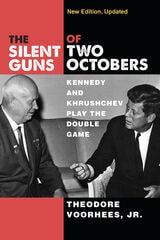
The Silent Guns of Two Octobers
Kennedy and Khrushchev Play the Double GameTheodore Voorhees, Jr.
University of Michigan Press, 2021
The Silent Guns of Two Octobers uses new as well as previously under-appreciated documentary evidence to link the Cuban Missile Crisis to the Checkpoint Charlie tank standoff to achieve the impossible—craft a new, thoughtful, original analysis of a political showdown everyone thought they knew everything about. Ultimately the book concludes that much of the Cold War rhetoric the leaders employed was mere posturing; in reality neither had any intention of starting a nuclear war. Theodore Voorhees reexamines Khrushchev’s and Kennedy’s leadership, decision, and rhetoric in light of the new documentary evidence available. Voorhees examines the impact of John F. Kennedy's domestic political concerns about his upcoming first midterm elections on his handling of the Cuban Missile Crisis through his use of back-channel dealings with Khrushchev during the lead-up to the crisis and in the closing days when the two leaders managed to reach a settlement.