Results by title
4 books match the query 'Kennedy, Robert F.'
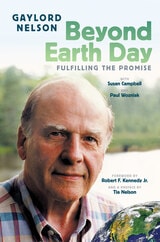
Beyond Earth Day
Fulfilling the PromiseGaylord Nelson; With Susan Campbell and Paul Wozniak; Foreword by Robert F. Kennedy Jr.; Preface by Tia Nelson
University of Wisconsin Press, 2002
Gaylord Nelson’s legacy is known and respected throughout the world. He was a founding father of the modern environmental movement and creator of one of the most influential public awareness campaigns ever undertaken on behalf of global environmental stewardship: Earth Day.
Nelson died in 2005, but his message in this book is still timely and urgent, delivered with the same eloquence with which he articulated the nation’s environmental ills throughout the decades. He details the planet’s most critical concerns—from species and habitat losses to global climate change and population growth. In outlining strategies for planetary health, Nelson inspires citizens to reassert environmentalism as a national priority. Included in this reprint is a new preface by Gaylord Nelson’s daughter, Tia Nelson.
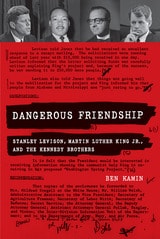
Dangerous Friendship
Stanley Levison, Martin Luther King Jr., and the Kennedy BrothersBen Kamin
Michigan State University Press, 2014
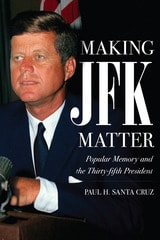
Making JFK Matter
Popular Memory and the Thirty-fifth PresidentPaul H. Santa Cruz
University of North Texas Press, 2015
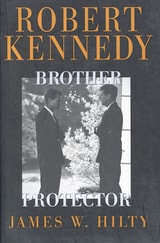
Robert Kennedy
Brother ProtectorJames Hilty
Temple University Press, 2000
The centerpiece of the book is the remarkable political partnership that formed between Robert and John. As the manager of John's political campaigns Robert proved himself "hard as nails" (in his father's admiring words), relentless in securing his brother's victory and unforgiving in overseeing his brother's presidency. Hilty marshals a great deal of evidence to show that while they did not always see eye to eye -- Lyndon Johnson's selection as John's running mate being a notable disagreement -- Robert and John discussed virtually every issue, gauging the likely political effects of every position. Robert was so close to the President that insiders called him "number one and a-half"; their consultations were so intimate that they spoke in a kind of code, barely intelligible to those around them. In Hilty's evocative but unsentimental recounting of the political crises of the Kennedy Administration, Robert and John prove to have been more calculating and astute leaders than today's pundits allow. Theirs was a partnership that was unprecedented and, thanks to an act signed into law by Lyndon Johnson, is never to be equaled.
The Kennedy family's story seems to have been lived in the public eye and Americans apparently never tire of the photographs and familiar anecdotes. Most of the written accounts, however, either highlight the multiple tragedies and scandals, preserve the latter-day Camelot myth, or follow the elusive traces of some conspiracy.
In contrast, Hilty's concern is for historical perspective -- for accuracy, plausibility, and thoroughness. With facts and reasoned conclusions, he challenges the stories about the Kennedys in relation to Marilyn Monroe, J. Edgar Hoover, and Martin Luther King, Jr. that have passed into American folklore. He develops a portrait of Robert Kennedy as a complex public figure, a man of centrist political allegiances and firm moral convictions who easily adapted to the crusader's role in working for Joseph McCarthy or pursuing James Hoffa for racketeering. Hilty's great care in sifting through the evidence and weighing competing theories gives us a sense of Kennedy as a public servant whose dedication to social justice intensified after he was in office and further deepened after his brother's assassination.
Even as he took charge of family matters and supported Jacqueline during the long ordeal of the state funeral, Robert's own crushing pain was evident to the world. It was then that "Bobby" ceased being a disparaging term and became a mark of respect and affection.