Results by title
3 books match the query 'Keys, Ancel'

The Biology of Human Starvation
Volume IAncel Keys
University of Minnesota Press, 1950
The Biology of Human Starvation
Volume IIAncel Keys
University of Minnesota Press, 1950
The Biology of Human Starvation was first published in 1950. Minnesota Archive Editions uses digital technology to make long-unavailable books once again accessible, and are published unaltered from the original University of Minnesota Press editions.
With great areas of the world battling the persistent and basic problem of hunger, this work constitutes a major contribution to needed scientific knowledge. The publication is a definitive treatise on the morphology, biochemistry, physcology, psychology, and medical aspects of calorie undernutrition, cachexia, starvation, and rehabilitation in man.
Presented critically and systematically are the fact and theory from the world literature, including the evidence from World War II and the finding of the Minnesota Starvation Experiment (1944*1946). Pertinent experiments and field and clinical observations to 1949 are covered.
The extensive original research involved was conducted at the University of Minnesota Laboratory of Physiological Hygiene, which Dr. Keys heads. The authors, all of the laboratory staff, were assisted in preparation of the work by Ernst Simonson, Samuel Wells and Angie Sturgeon Skinner.
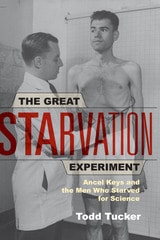
The Great Starvation Experiment
Ancel Keys and the Men Who Starved for ScienceTodd Tucker
University of Minnesota Press, 2007
“The Great Starvation Experiment is wide-ranging, weaving progress in the war into the day-to-day suffering of the hungry volunteers.” —Saint Paul Pioneer Press
“Fascinating . . .” —Minneapolis Star Tribune
Near the end of World War II, thirty-six conscientious objectors volunteered to be systematically starved for renowned scientist Ancel Keys’s study at the University of Minnesota in the basement of Memorial Stadium. Aimed to benefit relief efforts in war-ravaged Europe and Asia, the study sought the best way to rehabilitate starving citizens. Tucker captures a lost moment in American history—a time when stanch idealism and a deep willingness to sacrifice trumped even basic human needs.
“Tucker provides a fascinating and moving history of the experiment, centering on the lives and experiences of the volunteers and the formidable obstacles they overcame. Tucker tells the story with verve and economy. . . . Keys, his experiment and his 36 starving men form a compelling combination.” —Publishers Weekly
Todd Tucker is the author of several books, including Notre Dame vs. the Klan: How the Fighting Irish Defeated the Ku Klux Klan (2004). He served on the legendary Navy submarine USS Alabama before moving to Valparaiso, Indiana.