Results by title
4 books match the query 'Kid'

Billy the Kid
El Bandido SympaticoJames B. Mills
University of North Texas Press, 2022
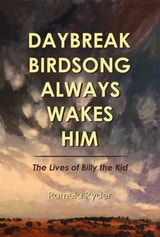
Daybreak Birdsong Always Wakes Him
The Lives of Billy the KidPamela Ryder
University of Alabama Press, 2026
A haunting reimagining of Billy the Kid—myth, violence, and regret collide in a lyrical coming-of-age story woven with history, legend, and the omnipresence of birds.
Daybreak Birdsong Always Wakes Him: The Lives of Billy the Kid by Pamela Ryder is a coming-of-age saga like no other. It reaches beyond the myth of the reckless and romantic rebel, the murdering gunslinger, and the scrappy outlaw. His story is one of survival, mayhem, and regret. Billy is portrayed as a complex and authentic figure. At times he is ruthless, often sympathetic, always clever and engaging. Yet he remains haunted by loneliness as he rides ever closer to the end of his short and violent life.
The child of Irish immigrants, Billy came of age amid hardship and lawlessness, forced to navigate a world that offered him little mercy. From his grim childhood in the tenements of New York to the unforgiving deserts of New Mexico, his journey is marked by loss, chaos, and fleeting moments of grace. He was a boy who became an outlaw, forever running from his past toward an inevitable fate.
Told through shifting perspectives and enriched by Billy’s keen observations of birds, landscapes, and the lives he has taken, the novel unfolds in lyrical, unflinching prose. His fascination with birds, whose freedom stands in stark contrast to his own doomed flight, threads through the narrative. A meditation on myth, mortality, and the stories we tell about ourselves, Daybreak Birdsong Always Wakes Him is a singular reimagining of the American West. It does not flinch from the blood or the beauty of a life lived on the edge of history.

Kid on the Sandlot
Congress and Professional Sports, 1910–1992Stephen R. Lowe
University of Wisconsin Press, 1995
Lowe provides concise, interpretive narrative of Congress’s involvement in professional sports. Testimony is included from such colorful figures as Jackie Robinson, Casey Stengel, Pete Rozelle, Muhammad Ali, Sonny Liston, and Don King. Leading congressmen and senators are also included.
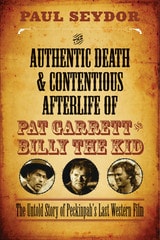
The Authentic Death and Contentious Afterlife of Pat Garrett and Billy the Kid
The Untold Story of Peckinpah's Last Western FilmPaul Seydor
Northwestern University Press, 2015
Long before Sam Peckinpah finished shooting his 1973 Western, Pat Garrett and Billy the Kid, there was open warfare between him and the studio. In this scrupulously researched new book Paul Seydor reconstructs the riveting history of a brilliant director fighting to preserve an artistic vision while wrestling with his own self‑destructive demons. Meticulously comparing the film five extant versions, Seydor documents why none is definitive, including the 2005 Special Edition, for which he served as consultant. Viewing Peckinpah’s last Western from a variety of fresh perspectives, Seydor establishes a nearly direct line from the book Garrett wrote after he killed Billy the Kid to Peckinpah’s film ninety-one years later and shows how, even with directors as singular as this one, filmmaking is a collaborative medium. Art, business, history, genius, and ego all collide in this story of a great director navigating the treacherous waters of collaboration, compromise, and commerce to create a flawed but enduringly powerful masterpiece.