Results by title

2 books match the query 'Kind-Kovács, Friederike'
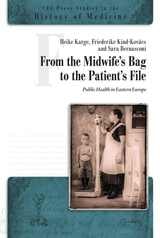
cover of From the Midwife's Bag to the Patient's File: Public Health in Eastern and Southeastern Europe

From the Midwife's Bag to the Patient's File

Public Health in Eastern and Southeastern Europe

Sara Bernasconi

Central European University Press, 2018
This volume offers an analysis of the intertwined relationship between public health and the biopolitical dimensions of state- and nation building in Central, Eastern and Southeastern Europe. It challenges the idea of diverging paths towards modernity of Europe’s western and eastern countries by not only identifying ideas, discourses and practices of “solving” public health issues that were shared among political regimes in the region; it also uncovers the ways in which, since the late nineteenth century, the biopolitical organization of the state both originated from and shaped an emerging common European framework. The broad range of local case studies stretches from Bosnia and Herzegovina, Czechoslovakia, the GDR, Greece and Hungary, to Poland, Serbia, the Soviet Union, and Yugoslavia. Taking a time span that begins in the late nineteenth century and ends in the post-socialist era, the book makes an original contribution to scholarship examining the relationship between public health, medicine, and state- and nation building in Europe’s long twentieth century. Close readings and dense descriptions of local discourses and practices of “public” health help to reflect on the transnational and global entanglements in the sphere of public health. In doing so, this volume facilitates comparisons on the regional, European, and global level.
[more]
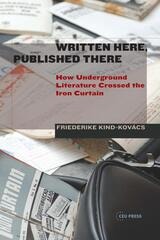
cover of Written Here, Published There: How Underground Literature Crossed the Iron Curtain

Written Here, Published There

How Underground Literature Crossed the Iron Curtain

Friederike Kind-Kovács

Central European University Press, 2015

Written Here, Published There offers a new perspective on the role of underground literature in the Cold War and challenges us to recognize gaps in the Iron Curtain. The book identifies a transnational undertaking that reinforced détente, dialogue, and cultural transfer, and thus counterbalanced the persistent belief in Europe's irreversible division.

It analyzes a cultural practice that attracted extensive attention during the Cold War but has largely been ignored in recent scholarship: tamizdat, or the unauthorized migration of underground literature across the Iron Curtain. Through this cultural practice, I offer a new reading of Cold War Europe's history. Investigating the transfer of underground literature from the 'Other Europe' to Western Europe, the United States, and back illuminates the intertwined fabrics of Cold War literary cultures. Perceiving tamizdat as both a literary and a social phenomenon, the book focuses on how individuals participated in this border-crossing activity and used secretive channels to guarantee the free flow of literature.

[more]