Results by title
2 books match the query 'Kis, János'
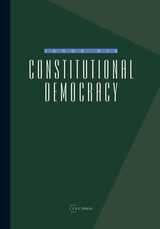
Constitutional Democracy
János Kis
Central European University Press, 2003
Constitutional democracy addresses the widely held belief that liberal democracy embodies an uneasy compromise of incompatible values: those of liberal rights on the one hand, and democratic equality on the other. Liberalism is said to compromise democracy, while democracy is said to endanger the values of liberalism. It is these theses that János Kis examines and tries to refute. Making the assumption that the alleged conflict is to be resolved at the level of institutions, he outlines a new theory of constitutional democracy. A wide range of problems encountered in constitutional democracy are discussed, such as the popular vote, popular sovereignty, and non-elected justices. The volume is composed of three parts. Part One, "Public Good and Civic Virtue", revisits the debate between liberals and democrats on how to interpret the democratic vote. In Part Two, "Liberal Democracy", the author proves that on the level of principles there is no incompatibility between liberalism and democracy and that liberal theory can demonstrate that democratic values follow from fundamental liberal values. In Part Three, "Constitutional Adjudication in a Democracy", the compatibility of democracy and judicial or constitutional review is analyzed and a theory of constitutionalism is outlined. This volume appeals to scholars in political philosophy, political science, and constitutional law, but is also recommended to all those interested in liberal and democratic theory, and the transition to democracy in Central and Eastern Europe.
[more]
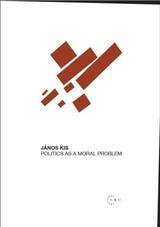
Politics as a Moral Problem
János Kis
Central European University Press, 2008
In a world where politics is often associated with notions such as moral decay, frustration and disappointment, the feeling of betrayal, and of democracy in trouble, Kis examines theories about the morality of political action. Amending the two classical theses of realism and of indirect motivation in politics, Kis argues for a constrained thesis of realism and a wide thesis of indirect motivation. By these means the place of moral motivation and common deliberation can be identified, and political agents can be held morally accountable. The analysis refers to a broad range of classic and contemporary literature as well as to recent cases from international politics which call for moral judgment. The Appendix is dedicated to Václav Havel’s seminal essay on “The Power of the Powerless,” which sheds light on the diversity of approaches dissident intellectuals have taken to politics.
[more]