Results by title
6 books match the query 'Kitchen'
A Domestic Cook Book
Containing a Careful Selection of Useful Receipts for the KitchenMalinda Russell
University of Michigan Press, 2025
A Domestic Cook Book contains 260 recipes and household tips that draw from Malinda Russell’s twenty years of experience cooking in Southern kitchens, her boarding house, and her pastry shop, and showcase her skills as a pastry chef. This new edition includes a foreword by scholar Rafia Zafar as well as an introduction by the late food historian Janice Bluestein Longone that contextualize Russell’s cookbook. Using the only known copy of the original book housed in the Janice Bluestein Longone Culinary Archive at the University of Michigan Library's Special Collections Research Center, this new edition preserves an important part of Michigan and American history and makes it widely available to readers for the first time.
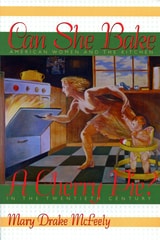
Can She Bake a Cherry Pie?
American Women and the Kitchen in the Twentieth CenturyMary Drake McFeely
University of Massachusetts Press, 2000
In the rural America of the past, a woman's reputation was sometimes made by her cherry pie—or her chocolate layer cake, or her biscuits. As America modernized and as women left the home, entered the paid labor force, and battled their way to success in the professions, mastery of cooking remained an accepted sign that a woman took her gendered responsibilities seriously. Ironically, over the course of the twentieth century, as ready-made foods and kitchen appliances made home cooking less essential and labor-intensive, skill in the kitchen continued to be perceived not only by society but often by women themselves as a measure of a woman's true value.
This book shows how cooking developed and evolved during the twentieth century. From Fannie Farmer to Julia Child, new challenges arose to replace the old. Women found themselves still tied to the kitchen, but for different reasons and with the need to acquire new skills. Instead of simply providing sustenance for the family, they now had to master more complex cooking techniques, the knowledge of “ethnic” cuisines, the science of nutrition, the business of consumerism, and, perhaps most important of all, the art of keeping their husbands and children happy and healthy.
Obsessed
The Cultural Critic’s Life in the KitchenElisabeth Bronfen
Rutgers University Press, 2019
Even the most brilliant minds have to eat. And for some scholars, food preparation is more than just a chore; it’s a passion. In this unique culinary memoir and cookbook, renowned cultural critic Elisabeth Bronfen tells of her lifelong love affair with cooking and demonstrates what she has learned about creating delicious home meals. She recounts her cherished food memories, from meals eaten at the family table in postwar Germany to dinner parties with friends. Yet, in a thoughtful reflection on the pleasures of cooking for one, she also reveals that some of her favorite meals have been consumed alone.
Though it contains more than 250 mouth-watering recipes, Obsessed is anything but a conventional cookbook. As she shares a lifetime of knowledge acquired in the kitchen, Bronfen hopes to empower both novice and experienced home chefs to improvise, giving them hints on how to tweak her recipes to their own tastes. And unlike cookbooks that assume readers have access to an unlimited pantry, this book is grounded in reality, offering practical advice about food storage and reusing leftovers. As Bronfen serves up her personal stories and her culinary wisdom, reading Obsessed is like sitting down to a home-cooked meal with a clever friend.
Parlor and Kitchen
Housing and Domestic Culture in Budapest, 1870-1940Gábor Gyáni
Central European University Press, 2002
Besides Berlin, Budapest was the fastest-growing capital city in Europe at the end of the nineteenth century. Parlor and Kitchen, the work of a microhistorian and historical anthropologist, describes the development of private spaces in this newly emerged metropolis.
Author Gábor Gyáni has chosen two distinct groups of contemporary society: the upper middle class and the working class, to present their homes, domestic culture and attitudes. At the same time the book offers a panoramic view of the everyday life of the entire society, on social segregation and mobility. Behind the visual details the author reveals a great deal about the value systems of the groups of society investigated.
Reconstructing minute details as well as case studies, the author has relied on archival sources, private documents, and statistical data. The text is accompanied by contemporary photographs, maps and blueprints.
This enlightening and interesting volume will be of interest not only to historians, anthropologists and sociologists, but also to the general reader with an interest in urban history.
Gábor Gyáni is founder and editor of the quarterly Budapest Review of Books. He is President of the Hungarian-American Historians' Committee and Secretary of the Urban History Workshop of the Hungarian Academy of Sciences.
A student of the late professor Péter Hanák, Gyáni is active in research into the urban and social history of modern Hungary and the theory and methodology of history writing.
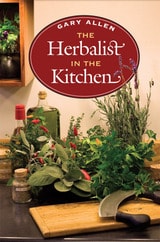
The Herbalist in the Kitchen
Gary Allen
University of Illinois Press, 2006
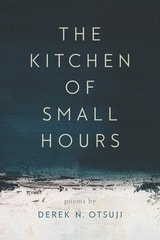
The Kitchen of Small Hours
Derek N. Otsuji
Southern Illinois University Press, 2021
In The Kitchen of Small Hours, Derek N. Otsuji embraces the fragility and endurance of a family of immigrants from two prefectures in Japan: Kagoshima in the south and Okinawa, an island more than four hundred miles from the mainland. In these poems, five generations sing, save, scold, bury, and cook against the culture and history that emerged from the pineapple and sugar cane plantations of mid-nineteenth-century Hawaii, from the bomb-scapes and hatreds of World War II, and from the canning and tourism industry of the twentieth century. Otsuji writes of how his family used stories and rugged cheer to fill the spaces apart from the cane fields and the canning factory. Their recipes, rituals, celebrations, songs, dances, myths, and family stories passed from grandmother to father to son, who folds them into lyrics.
Here too are whispers, failures, and traceable absences: a face removed from photos, a love silenced to be acceptable, a dead firstborn housed in an urn. There are things that no one intended to give. Otsuji’s language hungers for them anyway. The haunting reunions between author and ancestor sink just as deep as roots and hold just as fast. The cooking pot, the family photo, the moon recur as images that feed and comfort. Lyrical and warm, Otsuji’s voice sounds out a sinew of words that make the remnants of heritage and home durable. In these poems each new generation seeks to reimagine for itself the elusive American Dream