Results by title
7 books match the query 'Koerner, András'
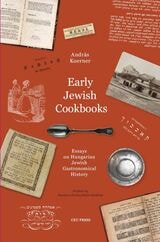
Early Jewish Cookbooks
Essays on Hungarian Jewish Gastronomical HistoryAndrás Koerner
Central European University Press, 2022
Winner of the Association of Jewish Libraries' 2022 Judaica Bibliography Award.
The seven essays in this volume focus such previously unexplored subjects as the world’s first cookbook printed in Hebrew letters, published in 1854, and a wonderful 19th-century Jewish cookbook, which in addition to its Hungarian edition was also published in Dutch in Rotterdam. The author entertainingly reconstructs the history of bólesz, a legendary yeast pastry that was the specialty of a famous, but long defunct Jewish coffeehouse in Pest, and includes the modernized recipe of this distant relative of cinnamon rolls. Koerner also tells the history of the first Jewish bookstore in Hungary (founded as early as in 1765!) and examines the influence of Jewish cuisine on non-Jewish food.
In this volume András Koerner explores key issues of Hungarian Jewish culinary culture in greater detail and more scholarly manner than what space restrictions permitted in his previous work Jewish Cuisine in Hungary: A Cultural History, also published by CEU Press, which received the prestigious National Jewish Book Award in 2020. The current essays confirm the extent to which Hungarian Jewry was part of the Jewish life and culture of the Central European region before their almost total language shift by the turn of the 20th century.
Exhibiting Jewish Culinary Culture
András Koerner
Central European University Press, 2024
András Koerner is the author of a number of critically acclaimed, award-winning CEU Press titles on the cultural history of Hungarian Jews and Jewish cuisine. This volume continues that tradition by discussing the phenomenon of exhibits on Jewish culinary culture in museums and galleries around the world.
The first part of the book provides an overview of the cultural history of "foodism" and the proliferation of Jewish museums. In addition, it examines the role of cuisine in Jewish identity. It offers an analysis of the history and recent examples of exhibitions on Jewish culinary culture, a subject that has not received scholarly attention until now.
The second part complements this by offering a detailed case study of the book’s subject. It showcases a 2022 exhibition in Budapest on the History of Hungarian Jewish Culinary Culture. András Koerner was the co-curator of the show, thus he is able to offer an insider’s account of its implementation – concept, scope, goals, audience, and design. He also openly discusses the compromises made and mistakes committed in the exhibition’s preparatory work.
This subjective account, quite different from the dry objectivity of catalogues, offers an unusual, behind-the-scenes look at how a complex exhibition like this is prepared. At the same time, the book’s appendix includes images of the display boards and some of the exhibited objects – thus it can also stand for a valuable ex-post catalogue.
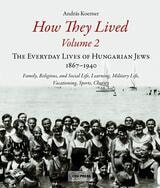
How They Lived 2
The Everyday Lives of Hungarian Jews, 1867-1940: Family, Religious, and Social Life, Learning, Military Life, Vacationing, Sports, CharityAndrás Koerner
Central European University Press, 2017
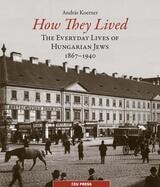
How They Lived
The Everyday Lives of Hungarian Jews, 1867–1940András Koerner
Central European University Press, 2015
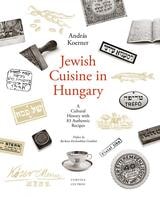
Jewish Cuisine in Hungary
A Cultural History with 83 Authentic RecipesAndrás Koerner
Central European University Press, 2020
Winner of the 2019 National Jewish Book Award in the category of Food Writing & Cookbooks.
The author refuses to accept that the world of pre-Shoah Hungarian Jewry and its cuisine should disappear almost without a trace and feels compelled to reconstruct its culinary culture. His book―with a preface by Barbara Kirshenblatt-Gimblett―presents eating habits not as isolated acts, divorced from their social and religious contexts, but as an organic part of a way of life.
According to Kirshenblatt-Gimblett: “While cookbooks abound, there is no other study that can compare with this book. It is simply the most comprehensive account of a Jewish food culture to date.” Indeed, no comparable study exists about the Jewish cuisine of any country, or―for that matter―about Hungarian cuisine. It describes the extraordinary diversity that characterized the world of Hungarian Jews, in which what could or could not be eaten was determined not only by absolute rules, but also by dietary traditions of particular religious movements or particular communities.
Ten chapters cover the culinary culture and eating habits of Hungarian Jewry up to the 1940s, ranging from kashrut (the system of keeping the kitchen kosher) through the history of cookbooks, the food traditions of weekdays and holidays, the diversity of households, and descriptions of food and hospitality industries to the history of some typical dishes. Although this book is primarily a cultural history and not a cookbook, it includes 83 recipes, as well as nearly 200 fascinating pictures of daily life and documents.i
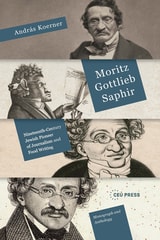
Moritz Gottlieb Saphir
Nineteenth-Century Pioneer of Journalism and Food WritingAndrás Koerner
Central European University Press, 2027
His literary and journalistic innovations included publishing the first modern newspapers in Berlin, Munich and Vienna, developing a new style of humorous writing, introducing the journalistic genre of the feuilleton to Austria, authoring the first extended prose poem in the German language and writing the first study of vernacular Ashkenazi Jewish cuisine, as well as the first review of a Jewish cookbook and restaurant. Although due to censorship he had to largely eschew political subjects, he courageously fought for press freedom and against anti-Jewish prejudice. Although perhaps not a great writer, he was an important and intriguing figure of European cultural history who certainly doesn’t deserve the neglect his work has suffered since the early 20th century.
András Koerner’s book is the first modern monograph of him, which in addition to a detailed presentation of his eventful, interesting life and an examination of his personality, identity and work also includes the first-ever extensive annotated anthology of him in English.
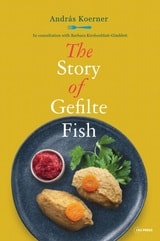
The Story of Gefilte Fish
András Koerner
Central European University Press, 2027