Results by title
3 books match the query 'Kolkata (India)'
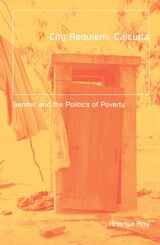
City Requiem, Calcutta
Gender And The Politics Of PovertyAnanya Roy
University of Minnesota Press, 2002
Uses Calcutta as a site for the exploration of persistent structures of deprivation and want.
Housing developments emerge amid the paddy fields on the fringes of Calcutta; overflowing trains carry peasant women to informal urban labor markets in a daily commute against hunger; land is settled and claimed in a complex choreography of squatting and evictions: such, Ananya Roy contends, are the distinctive spaces of a communism for the new millennium-where, at a moment of liberalization, the hegemony of poverty is quietly reproduced. An ethnography of urban development in Calcutta, Roy’s book explores the dynamics of class and gender in the persistence of poverty.
City Requiem, Calcutta emphasizes how gender itself is spatialized and how gender relations are negotiated through the everyday practices of territory. Thus Roy shows how urban developmentalism, in its populist guise, reproduces the relations of masculinist patronage, and, in its entrepreneurial guise, seeks to reclaim a bourgeois Calcutta, gentlemanly in its nostalgias. In doing so, her work expands the field of poverty studies by showing how a politics of poverty is also a poverty of knowledge, a construction and management of social and spatial categories.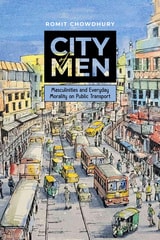
City of Men
Masculinities and Everyday Morality on Public TransportRomit Chowdhury
Rutgers University Press, 2023
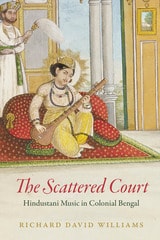
The Scattered Court
Hindustani Music in Colonial BengalRichard David Williams
University of Chicago Press, 2023
How far did colonialism transform north Indian music? In the period between the Mughal empire and the British Raj, how did the political landscape bleed into aesthetics, music, dance, and poetry? Examining musical culture through a diverse and multilingual archive, primarily using sources in Urdu, Bengali, and Hindi that have not been translated or critically examined before, The Scattered Court challenges our assumptions about the period. Richard David Williams presents a long history of interactions between northern India and Bengal, with a core focus on the two courts of Wajid Ali Shah (1822–1887), the last ruler of the kingdom of Awadh. He charts the movement of musicians and dancers between the two courts in Lucknow and Matiyaburj, as well as the transregional circulation of intellectual traditions and musical genres, and demonstrates the importance of the exile period for the rise of Calcutta as a celebrated center of Hindustani classical music. Since Lucknow is associated with late Mughal or Nawabi society and Calcutta with colonial modernity, examining the relationship between the two cities sheds light on forms of continuity and transition over the nineteenth century, as artists and their patrons navigated political ruptures and social transformations. The Scattered Court challenges the existing historiography of Hindustani music and Indian culture under colonialism by arguing that our focus on Anglophone sources and modernizing impulses has directed us away from the aesthetic subtleties, historical continuities, and emotional dimensions of nineteenth-century music.