Results by title
3 books match the query 'Kopecek, Radovan'
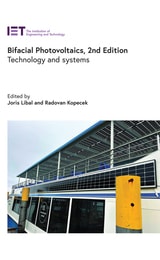
Bifacial Photovoltaics
Technology and systemsJoris Libal
The Institution of Engineering and Technology, 2026
Bifacial photovoltaic technology has completed its transition from an emerging innovation to a mainstream solution within the solar industry. Bifacial modules are no longer regarded as a niche product and are now widely deployed, representing the predominant choice in most utility scale, commercial and many other solar projects. The change is being driven by the ability of bifacial PV systems to significantly increase energy yield and reduce levelized cost of energy (LCOE). Double-glass bifacial modules, in particular, offer durability, long-term stability, and enhanced performance in diverse environmental conditions.
[more]
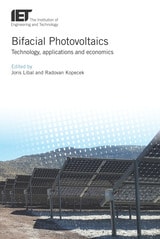
Bifacial Photovoltaics
Technology, applications and economicsJoris Libal
The Institution of Engineering and Technology, 2019
Bifacial photovoltaic (PV) modules are able to utilize light from both sides and can therefore significantly increase the electric yield of PV power plants, thus reducing the cost and improving profitability. Bifacial PV technology has a huge potential to reach a major market share, in particular when considering utility scale PV plants. Accordingly, bifacial PV is currently attracting increasing attention from involved engineers, scientists and investors.
[more]
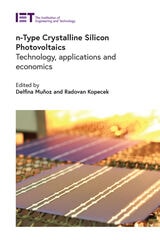
n-Type Crystalline Silicon Photovoltaics
Technology, applications and economicsDelfina Muñoz
The Institution of Engineering and Technology, 2022
Most solar cells currently in commercial use are p-type solar cells, due to their historically lower cost and ease of manufacture compared to n-type solar cells. However, due to improved manufacturing technology and falling cost in general, the cost difference between the two types has shrunk, making n-type solar cells an attractive option for future commercial high-efficiency solar cells.
[more]