Results by title
2 books match the query 'Krasuska, Karolina'
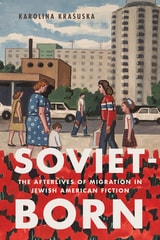
Soviet-Born
The Afterlives of Migration in Jewish American FictionKarolina Krasuska
Rutgers University Press, 2024
Entering an immigrant, Soviet-born standpoint creates an alternative and sometimes complementary pattern of how the Eastern and Central European past and present resonate with American Jewishness. The novels, short stories, and graphic novels considered here often stage strikingly fresh variations on key older themes, including cultural geography, the memory of World War II and the Holocaust, communism, gender and sexuality, genealogy, and finally, migration. Soviet-Born demonstrates how these diasporic writers, with their critical stance toward identity categories, open up the field of what is canonically Jewish American to broader contemporary debates.
This book is also freely available online as an open-access digital edition.
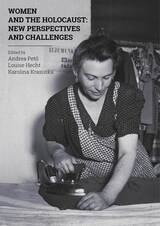
Women and the Holocaust
New Perspectives and ChallengesAndrea Pető
Central European University Press, 2015
Women and Holocaust: New Perspectives and Challenges expands the existing scholarship on women and the Holocaust adopting current approaches to gender studies and focusing on the texts and context from Central-Eastern Europe. The authors complicate earlier approaches by considering the intersections of gender, region, nationa, and sexuality, often within specifically delineated national settings, including the Czech/German, Hungarian, Hungarian/Austrian, Lithuanian, Polish/Israeli, Romanian/US-American, and Slovak. In these essays, the communist regimes after WWII often provide a productive framework for studying women and the Holocaust. This truly international volume features contributions by eminent authors, including pioneers in the field, as well as upcoming literary scholars and historians who delve into previously unmapped archives, explore cinematic representations and digital testimonies.