Results by title
2 books match the query 'LaCocque, André'
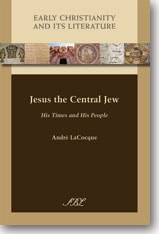
Jesus the Central Jew
His Times and His PeopleAndré LaCocque
SBL Press, 2015
Not a Jew marginally, but centrally
In this book, LaCocque presents the case that Jesus was totally and unquestionably a Jew. He lived as a Jew, thought as a Jew, debated as a Jew, acted as a Jew and died as a Jew. He had no intention of creating a new religion; rather, he was a reformer of the Judaism of his day. True, his critique went far beyond an intellectual subversion. In fact, Jesus progressively thought of himself as the “Son of Man” inaugurating the advent of the Kingdom of God on earth.
Features:
- Focused attention given to the historical Jesus and not Christianity or Christology
- Addresses restricted sources, namely, the Synoptic Gospels
- Close examination of Jesus’s way of thinking, teaching, and behaving
[more]
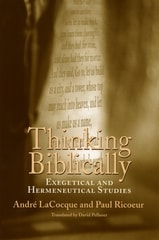
Thinking Biblically
Exegetical and Hermeneutical StudiesAndré LaCocque and Paul Ricoeur
University of Chicago Press, 1998
Unparalled in its poetry, richness, and religious and historical significance, the Hebrew Bible has been the site and center of countless commentaries, perhaps none as unique as Thinking Biblically. This remarkable collaboration sets the words of a distinguished biblical scholar, André LaCocque, and those of a leading philosopher, Paul Ricoeur, in dialogue around six crucial passages from the Old Testament: the story of Adam and Eve; the commandment "thou shalt not kill"; the valley of dry bones passage from Ezekiel; Psalm 22; the Song of Songs; and the naming of God in Exodus 3:14. Commenting on these texts, LaCocque and Ricoeur provide a wealth of new insights into the meaning of the different genres of the Old Testament as these made their way into and were transformed by the New Testament.
LaCocque's commentaries employ a historical-critical method that takes into account archaeological, philological, and historical research. LaCocque includes in his essays historical information about the dynamic tradition of reading scripture, opening his exegesis to developments and enrichments subsequent to the production of the original literary text. Ricoeur also takes into account the relation between the texts and the historical communities that read and interpreted them, but he broadens his scope to include philosophical speculation. His commentaries highlight the metaphorical structure of the passages and how they have served as catalysts for philosophical thinking from the Greeks to the modern age.
This extraordinary literary and historical venture reads the Bible through two different but complementary lenses, revealing the familiar texts as vibrant, philosophically consequential, and unceasingly absorbing.
[more]