527 books match the query 'Labor' and 25 start with a
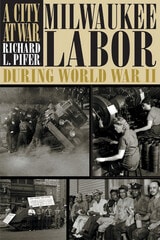
cover of A City At War: Milwaukee Labor During World War II

A City At War

Milwaukee Labor During World War II

Richard L. Pifer

Wisconsin Historical Society Press, 2003
Milwaukeeans greeted the advent of World War II with the same determination as other Americans. Everyone felt the effect of the war, whether through concern for loved ones in danger, longer work hours, consumer shortages, or participation in war service organizations and drives. Men and women workers produced the essential goods necessary for victory—the vehicles, weapons, munitions, and components for all the machinery of war. But even in wartime there were labor conflicts, fueled by the sacrifices and tensions of wartime life. A City at War focuses on the experience of working men and women in a community that was not a wartime boom town. It looks at the stands of the CIO and the AFL against low wartime wages, and at women in unionized factories facing the perceptions and goals of male workers, union leaders, and society itself. Here is a social history of wartime Milwaukee and its workers as they laid the groundwork for a secure postwar future.
[more]
cover of A Contest of Ideas: Capital, Politics and Labor

A Contest of Ideas

Capital, Politics and Labor

Nelson Lictenstein

University of Illinois Press, 2013

For more than thirty years Nelson Lichtenstein has deployed his scholarship--on labor, politics, and social thought--to chart the history and prospects of a progressive America. A Contest of Ideas collects and updates many of Lichtenstein's most provocative and controversial essays and reviews.

These incisive writings link the fate of the labor movement to the transformations in the shape of world capitalism, to the rise of the civil rights movement, and to the activists and intellectuals who have played such important roles. Tracing broad patterns of political thought, Lichtenstein offers important perspectives on the relationship of labor and the state, the tensions that sometimes exist between a culture of rights and the idea of solidarity, and the rise of conservatism in politics, law, and intellectual life. The volume closes with portraits of five activist intellectuals whose work has been vital to the conflicts that engage the labor movement, public policy, and political culture.
[more]
cover of A David Montgomery Reader: Essays on Capitalism and Worker Resistance

A David Montgomery Reader

Essays on Capitalism and Worker Resistance

David Montgomery. Edited by Shelton Stromquist and James R. Barrett

University of Illinois Press, 2024

A foundational figure in modern labor history, David Montgomery both redefined and reoriented the field. This collection of Montgomery’s most important published and unpublished articles and essays draws from the historian’s entire five-decade career.

Taken together, the writings trace the development of Montgomery’s distinct voice and approach while providing a crucial window into an era that changed the ways scholars and the public understood working people’s place in American history. Three overarching themes and methods emerge from these essays: that class provided a rich reservoir of ideas and strategies for workers to build movements aimed at claiming their democratic rights; that capital endured with the power to manage the contours of economic life and the capacities of the state but that workers repeatedly and creatively mounted challenges to the terms of life and work dictated by capital; and that Montgomery’s method grounded his gritty empiricism and the conceptual richness of his analysis in the intimate social relations of production and of community, neighborhood, and family life.

[more]
cover of A Feminist Reading of Debt

A Feminist Reading of Debt

Luci Cavallero

Pluto Press, 2021

***Winner of an English PEN Award 2021***

In this sharp intervention, authors Lucí Cavallero and Verónica Gago defiantly develop a feminist understanding of debt, showing its impact on women and members of the LGBTQ+ community and examining the relationship between debt and social reproduction.

Exploring the link between financial activity and the rise of conservative forces in Latin America, the book demonstrates that debt is intimately linked to gendered violence and patriarchal notions of the family. Yet, rather than seeing these forces as insurmountable, the authors also show ways in which debt can be resisted, drawing on concrete experiences and practices from Latin America and around the world.

Featuring interviews with women in Argentina and Brazil, the book reveals the real-life impact of debt and how it falls mainly on the shoulders of women, from the household to the wider effects of national debt and austerity. However, through discussions around experiences of work, prisons, domestic labour, agriculture, family, abortion and housing, a narrative of resistance emerges.

Translated by Liz Mason-Deese.

[more]
cover of A Feminist Reading of Debt

A Feminist Reading of Debt

Luci Cavallero

Pluto Press, 2021

***Winner of an English PEN Award 2021***

"Of great value to those interested in the financialisation of everyday life and social reproduction."—LSE Review of Books
 
In this sharp evaluation and call to action, authors Lucí Cavallero and Verónica Gago defiantly develop a feminist understanding of debt, showing its impact on women and members of the LGBTQ+ community and examining the relationship between debt and social reproduction.
 
Exploring the link between financial activity and the rise of conservative forces in Latin America, the book demonstrates that debt is intimately linked to gendered violence and patriarchal notions of the family. Yet, rather than seeing these forces as insurmountable, the authors also show ways in which debt can be resisted, drawing on concrete experiences and practices from Latin America and around the world.  Chapters include:
 
*Debt and Social Reproduction
*Debt as a “Counter-revolution” of Everyday Life
*The writing on the Body of Women
*Neither Victims not Entrepreneurs
*Feminist Insubordination and Fascist Neoliberalism
*The Patriarchy Has My Missing Contributions
*Hunger and Gender Mandates
*Us Against Debt
 
The authors state in their Introduction, “Our investigations and activism show that there is an urgent need to develop a specifically feminist analysis of finance. Here we do so by bringing together methodological elements, political hypotheses, and narratives of practices elaborated by the feminist movement that are challenging finance.”
 
Featuring interviews with women in Argentina and Brazil, the book reveals the real-life impact of debt and how it falls mainly on the shoulders of women, from the household to the wider effects of national debt and austerity. However, through discussions around experiences of work, prisons, domestic labor, agriculture, family, abortion and housing, a narrative of resistance emerges.
 

[more]
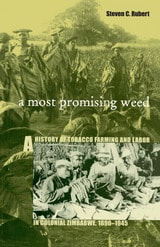
cover of A Most Promising Weed: A History of Tobacco Farming and Labor in Colonial Zimbabwe, 1890–1945

A Most Promising Weed

A History of Tobacco Farming and Labor in Colonial Zimbabwe, 1890–1945

Steven C. Rubert

Ohio University Press, 1998
A Most Promising Weed examines the work experience, living conditions, and social relations of thousands of African men, women, and children on European-owned tobacco farms in colonial Zimbabwe from 1890 to 1945. Steven C. Rubert provides evidence that Africans were not passive in their responses to the penetration of European capitalism into Zimbabwe but, on the contrary, helped to shape both the work and living conditions they encountered as they entered wage employment. Beginning with a brief history of tobacco growing in Zimbabwe, this study focuses on the organization of workers’ compounds and on the paid and unpaid labor performed by both women and children on those farms.
[more]
cover of A New Deal for All?: Race and Class Struggles in Depression-Era Baltimore

A New Deal for All?

Race and Class Struggles in Depression-Era Baltimore

Andor Skotnes

Duke University Press, 2012

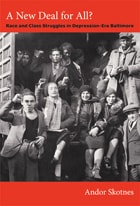
In A New Deal for All? Andor Skotnes examines the interrelationships between the Black freedom movement and the workers' movement in Baltimore and Maryland during the Great Depression and the early years of the Second World War. Adding to the growing body of scholarship on the long civil rights struggle, he argues that such "border state" movements helped resuscitate and transform the national freedom and labor struggles. In the wake of the Great Crash of 1929, the freedom and workers' movements had to rebuild themselves, often in new forms. In the early 1930s, deepening commitments to antiracism led Communists and Socialists in Baltimore to launch racially integrated initiatives for workers' rights, the unemployed, and social justice. An organization of radicalized African American youth, the City-Wide Young People's Forum, emerged in the Black community and became involved in mass educational, anti-lynching, and Buy Where You Can Work campaigns, often in multiracial alliances with other progressives. During the later 1930s, the movements of Baltimore merged into new and renewed national organizations, especially the CIO and the NAACP, and built mass regional struggles. While this collaboration declined after the war, Skotnes shows that the earlier cooperative efforts greatly shaped national freedom campaigns to come—including the civil rights movement.
[more]
cover of A Time for Tea: Women, Labor, and Post/Colonial Politics on an Indian Plantation

A Time for Tea

Women, Labor, and Post/Colonial Politics on an Indian Plantation

Piya Chatterjee

Duke University Press, 2001

In this creative, ethnographic, and historical critique of labor practices on an Indian plantation, Piya Chatterjee provides a sophisticated examination of the production, consumption, and circulation of tea. A Time for Tea reveals how the female tea-pluckers seen in advertisements—picturesque women in mist-shrouded fields—came to symbolize the heart of colonialism in India. Chatterjee exposes how this image has distracted from terrible working conditions, low wages, and coercive labor practices enforced by the patronage system.
Allowing personal, scholarly, and artistic voices to speak in turn and in tandem, Chatterjee discusses the fetishization of women who labor under colonial, postcolonial, and now neofeudal conditions. In telling the overarching story of commodity and empire, A Time for Tea demonstrates that at the heart of these narratives of travel, conquest, and settlement are compelling stories of women workers. While exploring the global and political dimensions of local practices of gendered labor, Chatterjee also reflects on the privileges and paradoxes of her own “decolonization” as a Third World feminist anthropologist. The book concludes with an extended reflection on the cultures of hierarchy, power, and difference in the plantation’s villages. It explores the overlapping processes by which gender, caste, and ethnicity constitute the interlocked patronage system of villages and their fields of labor. The tropes of coercion, consent, and resistance are threaded through the discussion.
A Time for Tea will appeal to anthropologists and historians, South Asianists, and those interested in colonialism, postcolonialism, labor studies, and comparative or international feminism.

Designated a John Hope Franklin Center book by the John Hope Franklin Seminar Group on Race, Religion, and Globalization.
[more]
cover of A Working Nation: Workers, Work, and Government in the New Economy

A Working Nation

Workers, Work, and Government in the New Economy

David T. Ellwood

Russell Sage Foundation, 2000

The nature of work in the United States is changing dramatically, as new technologies, a global economy, and more demanding investors combine to create a far more competitive marketplace. Corporate efforts to respond to these new challenges have yielded mixed results. Headlines about instant millionaires and innovative e-businesses mingle with coverage of increasing job insecurity and record wage gaps between upper management and hourly workers. A Working Nation tracks the profound implications the changing workplace has had for all workers and shows who the real economic winners and losers have been in the past twenty-five years. A Working Nation sorts fact from fiction about the new relationship between workers and firms, and addresses several critical issues: Who are the real winners and losers in this new economy? Has the relationship between workers and firms really been transformed? How have employees become more integrated into or disconnected from corporate strategies and performance? Should government step into this new economic reality and how should it intervene? Among the topics investigated, David T. Ellwood explores and explains the apparent paradox between the steady rise in per capita national income and the stagnant wages of middle- and working-class workers. Douglas Kruse and Joseph Blasi study relative changes in long-term vs. temporary work, and evaluate the introduction of profit-sharing schemes and high performance workplace programs. William A. Niskanen and Rebecca M. Blank, both former members of the president's Council of Economic Advisers, offer their perspectives on what direction government might take to make this a working nation for everyone. Though Niskanen and Blank take alternative approaches, they both conclude that the primary policy emphasis ought to be on the problems of the least skilled more than on inequality per se, and that a focus on childhood education and tax supports for low-income working families should be of primary concern. A Working Nation paints a compelling and surprisingly consistent picture of today's workplace. While the booming economy has created millions of new jobs, it has also lead to an alarmingly unbalanced system of rewards that puts less-skilled, and many middle-class, workers at risk. This book is essential reading for those seeking the most efficient answers to the challenges and opportunities of the evolving economy.
[more]
cover of African Successes, Volume II: Human Capital

African Successes, Volume II

Human Capital

Edited by Sebastian Edwards, Simon Johnson, and David N. Weil

University of Chicago Press, 2016

Studies of African economic development frequently focus on the daunting challenges the continent faces. From recurrent crises to ethnic conflicts and long-standing corruption, a raft of deep-rooted problems has led many to regard the continent as facing many hurdles to raise living standards. Yet Africa has made considerable progress in the past decade, with a GDP growth rate exceeding five percent in some regions. The African Successes series looks at recent improvements in living standards and other measures of development in many African countries with an eye toward identifying what shaped them and the extent to which lessons learned are transferable and can guide policy in other nations and at the international level.
           
The second volume in the series, African Successes: Human Capital turns the focus toward Africa’s human capital deficit, measured in terms of health and schooling. It offers a close look at the continent’s biggest challenges, including tropical disease and the spread of HIV.
         
[more]
cover of After the Strike: A Century of Labor Struggle at Pullman

After the Strike

A Century of Labor Struggle at Pullman

Susan Eleanor Hirsch

University of Illinois Press, 2003

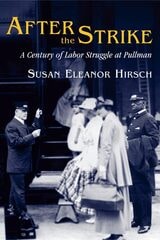
The 1894 Pullman strike and the rise of the Brotherhood of Sleeping Car Porters played major roles in the century-long development of union organizing and labor-management relations in the Pullman Company. Susan Eleanor Hirsch connects the stories of Pullman car builders and porters to answer critical questions like: what created job segregation by race and gender? What role did such segregation play in shaping the labor movement? 

Hirsch illuminates the relationship between labor organizing and the racial and sexual discrimination practiced by both employers and unions. Because the Pullman Company ran the sleeping-car service for American railroads and was a major manufacturer of railcars, its workers were involved in virtually every wave of union organizing from the 1890s to the 1940s. 

In exploring the years of struggle by the men and women of the Pullman Company, After the Strike reveals the factors that determined the limited success and narrow vision of most American unions.
[more]
cover of Against Labor: How U.S. Employers Organized to Defeat Union Activism

Against Labor

How U.S. Employers Organized to Defeat Union Activism

Edited by Rosemary Feurer and Chad Pearson

University of Illinois Press, 2017

Against Labor highlights the tenacious efforts by employers to organize themselves as a class to contest labor. Ranging across a spectrum of understudied issues, essayists explore employer anti-labor strategies and offer incisive portraits of people and organizations that aggressively opposed unions. Other contributors examine the anti-labor movement against a backdrop of larger forces, such as the intersection of race and ethnicity with anti-labor activity, and anti-unionism in the context of neoliberalism. Timely and revealing, Against Labor deepens our understanding of management history and employer activism and their metamorphic effects on workplace and society. Contributors: Michael Dennis, Elizabeth Esch, Rosemary Feurer, Dolores E. Janiewski, Thomas A. Klug, Chad Pearson, Peter Rachleff, David Roediger, Howard Stanger, and Robert Woodrum.
[more]
cover of All That Glitters: Class, Conflict, and Community in Cripple Creek

All That Glitters

Class, Conflict, and Community in Cripple Creek

Elizabeth Jameson

University of Illinois Press, 1998

At the turn of the century, Colorado's Cripple Creek District captured the national imagination with the extraordinary wealth of its gold mines and the unquestionable strength of the militant Western Federation of Miners. 

Elizabeth Jameson tells the entertaining story of Cripple Creek, the scene in 1894 of one of radical labor's most stunning victories and, in 1903 and 1904, of one of its most crushing defeats. Jameson draws on working-class oral histories, the Victor and Cripple Creek Daily Press published by 34 of the local labor unions, and the 1900 manuscript census. She connects unions with lodges and fraternal associations, ethnic identity, families, households, and partisan politics. Through these ties, she probes the differences in age, skill, gender, marital status, and ethnicity that strained working-class unity and contributed to the fall of labor in Cripple Creek. 

Jameson's book will be required reading for western, ethnic, and working-class historians seeking an alternative interpretation of western mining struggles that emphasizes class, gender, and multiple sources of social identity.
[more]
cover of All Work Is Cultural Work: Diasporic Haitian Women, Paid Labor, and Cultural Citizenship

All Work Is Cultural Work

Diasporic Haitian Women, Paid Labor, and Cultural Citizenship

Nikita Carney

Rutgers University Press, 2026

What does it mean to belong in a nation? All Work Is Cultural Work examines how Haitian women living in diaspora find and create status through their work outside the home. Nikita Carney draws on ethnographic data gathered over several years in Boston, Montreal, and Paris with women who left Haiti in search of other things: safety, financial security, and opportunity. Ranging from administrative assistants to dancers to preschool teachers, the women in this study share their rich experiences, teaching us how they found a place in their new host nations through paid labor. Focusing on small, daily interactions in the workplace, these women’s narratives highlight the ways in which often invisible daily cultural practices build and re-build both the nation and the home. Taking into account the overlapping and interlocking systems of oppression her participants face both nationally and globally, Carney uses an intersectional analysis to illuminate how the workplace serves as a central site in which Haitian women become raced, gendered, and classed within the nation. Ultimately, the lives and experiences of these women point to one conclusion: culture is indivisible from labor and labor from culture, with paid labor providing a vital method for national culture to be created and recreated each and every day.
 

[more]
cover of America Works: Thoughts on an Exceptional U.S. Labor Market

America Works

Thoughts on an Exceptional U.S. Labor Market

Richard B. Freeman

Russell Sage Foundation, 2007

The U.S. labor market is the most laissez faire of any developed nation, with a weak social safety net and little government regulation compared to Europe or Japan. Some economists point to this hands-off approach as the source of America's low unemployment and high per-capita income. But the stagnant living standards and rising economic insecurity many Americans now face take some of the luster off the U.S. model. In America Works, noted economist Richard Freeman reveals how U.S. policies have created a labor market remarkable both for its dynamism and its disparities. America Works takes readers on a grand tour of America's exceptional labor market, comparing the economic institutions and performance of the United States to the economies of Europe and other wealthy countries. The U.S. economy has an impressive track record when it comes to job creation and productivity growth, but it isn't so good at reducing poverty or raising the wages of the average worker. Despite huge gains in productivity, most Americans are hardly better off than they were a generation ago. The median wage is actually lower now than in the early 1970s, and the poverty rate in 2005 was higher than in 1969. So why have the benefits of productivity growth been distributed so unevenly? One reason is that unions have been steadily declining in membership. In Europe, labor laws extend collective bargaining settlements to non-unionized firms. Because wage agreements in America only apply to firms where workers are unionized, American managers have discouraged unionization drives more aggressively. In addition, globalization and immigration have placed growing competitive pressure on American workers. And boards of directors appointed by CEOs have raised executive pay to astronomical levels. Freeman addresses these problems with a variety of proposals designed to maintain the vigor of the U.S. economy while spreading more of its benefits to working Americans. To maintain America's global competitive edge, Freeman calls for increased R&D spending and financial incentives for students pursuing graduate studies in science and engineering. To improve corporate governance, he advocates licensing individuals who serve on corporate boards. Freeman also makes the case for fostering worker associations outside of the confines of traditional unions and for establishing a federal agency to promote profit-sharing and employee ownership. Assessing the performance of the U.S. job market in light of other developed countries' recent history highlights the strengths and weaknesses of the free market model. Written with authoritative knowledge and incisive wit, America Works provides a compelling plan for how we can make markets work better for all Americans. A Volume in the Russell Sage Foundation's Centennial Series
[more]
cover of America's Working Man: Work, Home, and Politics Among Blue Collar Property Owners

America's Working Man

Work, Home, and Politics Among Blue Collar Property Owners

David Halle

University of Chicago Press, 1984

Over a period of six years, at factory and warehouse, at the tavern across the road, in their homes and union meetings, on fishing trips and social outings, David Halle talked and listened to workers of an automated chemical plant in New Jersey's industrial heartland. He has emerged with an unusually comprehensive and convincingly realistic picture of blue-collar life in America. Throughout the book, Halle illustrates his analysis with excerpts of workers' views on everything from strikes, class consciousness, politics, job security, and toxic chemicals to marriage, betting on horses, God, home-ownership, drinking, adultery, the Super Bowl, and life after death. Halle challenges the stereotypes of the blue-collar mentality and argues that to understand American class consciousness we must shift our focus from the "working class" to be the "working man."
[more]
cover of American Idle: Late-Career Job Loss in a Neoliberal Era

American Idle

Late-Career Job Loss in a Neoliberal Era

Annette Nierobisz

Rutgers University Press, 2025
In American Idle, sociologists Annette Nierobisz and Dana Sawchuk report their findings from interviews with sixty-two mostly white-collar workers who experienced late-career job loss in the wake of the Great Recession. Without the benefits of planned retirement or time horizons favorable to recouping their losses, these employees experience an array of outcomes, from hard falls to soft landings. Notably, the authors find that when reflecting on the effects of job loss, fruitless job searches, and the overall experience of unemployment, participants regularly called on the frameworks instilled by neoliberalism. Invoking neoliberal rhetoric, these older Americans deferred to businesses’ need to prioritize bottom lines, accepted the shift toward precarious employment, or highlighted the importance of taking initiative and maintaining a positive mindset in the face of structural obstacles. Even so, participants also recognized the incompatibility between neoliberalism’s “one-size-fits-all” solutions and their own situations; this disconnect led them to consider their experiences through competing frameworks and to voice resistance to aspects of neoliberal capitalism. Employing a life course sociology perspective to explore older workers’ precarity in an age of rising economic insecurity, Nierobisz and Sawchuk shed light on a new wrinkle in American aging.
 
[more]
cover of American Unemployment: Past, Present, and Future

American Unemployment

Past, Present, and Future

Frank Stricker

University of Illinois Press, 2020

The history of unemployment and concepts surrounding it remain a mystery to many Americans. Frank Stricker believes we need to understand this essential thread in our shared past. American Unemployment is an introduction for everyone that takes aim at misinformation, willful deceptions, and popular myths to set the record straight:
  • Workers do not normally choose to be unemployed.
  • In our current system, persistent unemployment is not an aberration. It is much more common than full employment, and the outcome of elite policy choices.
  • Labor surpluses propped up by flawed unemployment numbers have helped to keep real wages stagnant for more than forty years.
  • Prior to the New Deal and the era of big government, laissez-faire policies repeatedly led to depressions with heavy, even catastrophic, job losses.
  • Undercounting the unemployed sabotages the creation of government job programs that can lead to more high-paying jobs and full employment.
Written for non-economists, American Unemployment is a history and primer on vital economic topics that also provides a roadmap to better jobs and economic security.
[more]
cover of Anaconda: Labor, Community, and Culture in Montana's Smelter City

Anaconda

Labor, Community, and Culture in Montana's Smelter City

Laurie Mercier

University of Illinois Press, 2001

Laurie Mercier's look at "community unionism" examines the distinctive culture of cooperation and activism fostered by residents in Anaconda, Montana, home to the world's largest copper smelter and the namesake of the Anaconda Copper Mining Company. 

Mercier depicts the vibrant life of the smelter city at full steam, incorporating the candid commentary of the locals ("the company furnished three pair of leather gloves . . . and all the arsenic [dust] you could eat"). During five decades of devoted unionism, locals embraced an "alternative Americanism" that championed improved living standards for working people as the best defense against communism. Mercier also explores how gender limits on women's political, economic, and social roles shaped the nature and outcome of labor struggles, and traces how union rivalries, environmental concerns, and the 1980 closing of the Anaconda smelter transformed the town. 

A fascinating portrait of how community molds working class consciousness, Anaconda offers important insights about the changing nature of working class culture and collective action.
[more]
cover of Archives of Labor: Working-Class Women and Literary Culture in the Antebellum United States

Archives of Labor

Working-Class Women and Literary Culture in the Antebellum United States

Lori Merish

Duke University Press, 2017
In Archives of Labor Lori Merish establishes working-class women as significant actors within literary culture, dramatically redrawing the map of nineteenth-century US literary and cultural history. Delving into previously unexplored archives of working-class women's literature—from autobiographies, pamphlet novels, and theatrical melodrama to seduction tales and labor periodicals—Merish recovers working-class women's vital presence as writers and readers in the antebellum era. Her reading of texts by a diverse collection of factory workers, seamstresses, domestic workers, and prostitutes boldly challenges the purportedly masculine character of class dissent during this era. Whether addressing portrayals of white New England "factory girls," fictional accounts of African American domestic workers, or the first-person narratives of Mexican women working in the missions of Mexican California, Merish unsettles the traditional association of whiteness with the working class to document forms of cross-racial class identification and solidarity. In so doing, she restores the tradition of working women's class protest and dissent, shows how race and gender are central to class identity, and traces the ways working women understood themselves and were understood as workers and class subjects.
[more]
cover of Are Worker Rights Human Rights?

Are Worker Rights Human Rights?

Richard P. McIntyre

University of Michigan Press, 2008

"In a much-needed intervention, Ric McIntyre recasts the debate about globalization and labor rights and speeds us to the heart of the matter: the battle between transnational corporations who distance themselves from responsibility for the fate of workers, and labor activists who seek to reestablish bonds of accountability and moral obligation. The stakes in this struggle are enormous, and Dr. McIntyre provides crucial insight into the economic and political dynamics that define it."
---Scott Nova, Executive Director, Worker Rights Consortium, Washington, DC

"This book presents an insightful, powerful corrective to the contemporary debate over worker rights. McIntyre identifies the limitations of thinking of worker rights as individualized human rights and challenges us instead to examine how rights are defined through conventional thinking and class interest. The product is rich and compelling: McIntyre's investigation demands of us that we be far more attentive to the contradictory effects of ‘rights talk.' I recommend this book enthusiastically to all those who advocate for a just economic order the world over."
---George DeMartino, Associate Professor of Political Economy, the Josef Korbel School of International Studies, University of Denver

"An important contribution to the interdisciplinary study of labor. McIntyre's book will challenge the debate over labor rights on all fronts."
---Michael Hillard, Professor of Economics, University of Southern Maine

"A timely examination of our modern 'sweating system' . . . essential reading for all workers who hope for greater dignity in the workplace and greater fairness in society."
---Janet Knoedler, Associate Professor of Economics, Bucknell University

"Ric McIntyre convincingly shows how local actions, regulations changes, and international norms can combine to establish collective rights for workers."
---Gilles Raveaud, Assistant Professor in Economics, University of Saint-Denis, France, and cofounder of the "post-autistic economics movement"

"An important, timely, and needed contribution to our understanding of worker rights."
---Patrick McHugh, Associate Professor of Management, George Washington University

"Workers of the world, unite!" Karl Marx's famous call to action still promises an effective means of winning human rights in the modern global economy, according to economist Richard P. McIntyre. Currently, the human rights movement insists upon a person's right to life, freedom, and material necessities. In democratic, industrial nations such as the United States, the movement focuses more specifically on a person's civil rights and equal opportunity.

The movement's victories since WWII have come at a cost, however. The emphasis on individual rights erodes collective rights---the rights that disadvantaged peoples need to assert their most basic human rights. This is particularly true for workers, McIntyre argues. By reintroducing Marxian and Institutional analysis, he reveals the class relations and power structures that determine the position of workers in the global economy. The best hope for achieving workers' rights, he concludes, lies in grassroots labor organizations that claim the right of association and collective bargaining.

At last, an economist offers a vision for human rights that takes both moral questions and class relations seriously.

Richard P. McIntyre is Director of the University Honors Program and Professor of Economics at the University of Rhode Island.

[more]
cover of Artisans into Workers: LABOR IN NINETEENTH-CENTURY AMERICA

Artisans into Workers

LABOR IN NINETEENTH-CENTURY AMERICA

Bruce Laurie

University of Illinois Press, 1989

In the only modern study synthesizing nineteenth-century American labor
history, Bruce Laurie examines the character of working-class factionalism, plebian expectations of government, and relations between the organized few and the unorganized many. Laurie also examines the republican tradition and the movements that drew on it, from the General Trades Unions in the age of Jackson to the Knights of Labor later in the century.

 
[more]
cover of At Home and Abroad: U.S. Labor Market Performance in International Perspective

At Home and Abroad

U.S. Labor Market Performance in International Perspective

Francine D. Blau

Russell Sage Foundation, 2002

Throughout the latter part of the 20th century, the U.S. labor market performed differently than the labor markets of the world's other advanced industrialized societies. In the early 1970s, the United States had higher unemployment rates than its Western European counterparts. But after two oil crises, rapid technological change, and globalization rocked the world's economies, unemployment fell in the United States, while increasing dramatically in other nations. At the same time, wage inequality widened more in the United States than in Europe. In At Home and Abroad, Cornell University economists Francine D. Blau and Lawrence M. Kahn examine the reasons for these striking dissimilarities between the United States and its economic allies. Comparing countries, the authors find that governments and unions play a far greater role in the labor market in Europe than they do in the United States. It is much more difficult to lay off workers in Europe than in the United States, unemployment insurance is more generous in Europe, and many fewer Americans than Europeans are covered by collective bargaining agreements. Interventionist labor market institutions in Europe compress wages, thus contributing to the lower levels of wage inequality in the European Union than in the United States. Using a unique blend of microeconomic and microeconomic analyses, the authors assess how these differences affect wage and unemployment levels. In a lucid narrative, they present ample evidence that, as upheavals shook the global economy, the flexible U.S. market let wages adjust so that jobs could be maintained, while more rigid European economies maintained wages at the cost of losing jobs. By helping readers understand the relationship between different economic responses and outcomes, At Home and Abroad makes an invaluable contribution to the continuing debate about the role institutions can and should play in creating jobs and maintaining living standards.
[more]
cover of At Home in Nature: Technology, Labor, and Critical Ecology in Modern China

At Home in Nature

Technology, Labor, and Critical Ecology in Modern China

Ban Wang, issue editor

Duke University Press, 2023

In this special supplement edited by Ban Wang, an ecocritical lens is used to examine anthropocentrism, technoscientific hubris, and ecologically destructive modes of production in modern China. Analyzing modern discourse, literature, film, and science fiction, Wang asserts that the domination of nature and labor under capitalism and technocrats is the culprit of ecological crises and human alienation. Alternatively, Wang argues, utopianisms of nonalienated labor keep alive the ideals of resonance between humans and Earth.
[more]
cover of Augmented Exploitation: Artificial Intelligence, Automation and Work

Augmented Exploitation

Artificial Intelligence, Automation and Work

Phoebe Moore

Pluto Press, 2021

Artificial Intelligence is a seemingly neutral technology, but it is increasingly used to manage workforces and make decisions to hire and fire employees. Its proliferation in the workplace gives the impression of a fairer, more efficient system of management. A machine can't discriminate, after all. Augmented Exploitation explores the reality of the impact of AI on workers' lives. While the consensus is that AI is a completely new way of managing a workplace, the authors show that, on the contrary, AI is used as most technologies are used under capitalism: as a smokescreen that hides the deep exploitation of workers. Going beyond platform work and the gig economy, the authors explore emerging forms of algorithmic governance and AI-augmented apps that have been developed to utilise innovative ways to collect data about workers and consumers, as well as to keep wages and worker representation under control. They also show that workers are not taking this lying down, providing case studies of new and exciting form of resistance that are springing up across the globe.
[more]