Results by title

5 books match the query 'Labrador'

cover of A World You Do Not Know: Settler Societies, Indigenous Peoples and the Attack on Cultural Diversity

A World You Do Not Know

Settler Societies, Indigenous Peoples and the Attack on Cultural Diversity

Colin Samson

University of London Press, 2014
Lists over 3,500 theses in progress on 1 January 2017 in both history and other departments, classified according to period and area Gives full details of title, supervisor and university Helps postgraduate students to select a topic and a supervisor, to publicise their topic and to discover others working in related fields Provides an overview of the amount and variety of current historical research for higher degrees
[more]
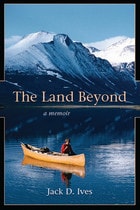
cover of Land Beyond: A Memoir

Land Beyond

A Memoir

Jack Ives

University of Alaska Press, 2010

Geographer Jack Ives moved to Canada in 1954, and soon after he played an instrumental role in the establishment of the McGill Sub-Arctic Research Laboratory in central Labrador-Ungava. This fascinating account of his fifty-plus years living and working in the arctic is simultaneously a light-hearted, winning memoir and a call to action on the issues of environmental awareness and conservation that are inextricably intertwined with life in the north. Mixing personal impressions of key figures of the postwar scientific boom with the intellectual drama of field research, The Land Beyond is a memorable depiction of a life in science.

[more]
cover of Nitinikiau Innusi: I Keep the Land Alive

Nitinikiau Innusi

I Keep the Land Alive

Tshaukuesh Elizabeth Penashue

University of Manitoba Press, 2019
[more]
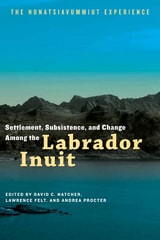
cover of Settlement, Subsistence, and Change Among the Labrador Inuit

Settlement, Subsistence, and Change Among the Labrador Inuit

David Natcher

University of Manitoba Press, 2012

[more]
cover of Skin for Skin: Death and Life for Inuit and Innu

Skin for Skin

Death and Life for Inuit and Innu

Gerald M. Sider

Duke University Press, 2014

Since the 1960s, the Native peoples of northeastern Canada, both Inuit and Innu, have experienced epidemics of substance abuse, domestic violence, and youth suicide. Seeking to understand these transformations in the capacities of Native communities to resist cultural, economic, and political domination, Gerald M. Sider offers an ethnographic analysis of aboriginal Canadians' changing experiences of historical violence. He relates acts of communal self-destruction to colonial and postcolonial policies and practices, as well as to the end of the fur and sealskin trades. Autonomy and dignity within Native communities have eroded as individuals have been deprived of their livelihoods and treated by the state and corporations as if they were disposable. Yet Native peoples' possession of valuable resources provides them with some income and power to negotiate with state and business interests. Sider's assessment of the health of Native communities in the Canadian province of Labrador is filled with potentially useful findings for Native peoples there and elsewhere. While harrowing, his account also suggests hope, which he finds in the expressiveness and power of Native peoples to struggle for a better tomorrow within and against domination.
 
[more]