Results by title
35 books match the query 'Lakes, Ponds & Swamps'
5 Years of 4th Genre
Martha Bates
Michigan State University Press, 2006
In 1999, Michigan State University Press launched Fourth Genre: Explorations in Creative Nonfiction, a journal that began with and has maintained a devotion to publishing notable, innovative work in nonfiction. The title reflects an intent to give nonfiction its due as a literary genre—to give writers of the 'fourth genre' a showcase for their work and to give readers a place to find the liveliest and most creative works in the form.
Given the genre's flexibility and expansiveness, journal editors Michael Steinberg and David Cooper have welcomed a variety of works— ranging from personal essays and memoirs to literary journalism and personal criticism. The essays are lyrical, self-interrogative, meditative, and reflective, as well as expository, analytical, exploratory, or whimsical. In short, Fourth Genre encourages a writer- to-reader conversation, one that explores the markers and boundaries of literary/creative nonfiction.
Since its inaugural issue, contributors have earned many literary awards: 5 Notable Essays of the Year (Best American Essay); the Lowell Thomas Travel Journalism Award; Notable Essay of the Year (Best American Travel Writing); and 4 Pushcart Prizes. Five Years of 4th Genre is a celebration of this significant literary journal. Culling a selection of some of the most creative of Fourth Genre’s first five years—the Pushcart winners are here, as well as those essays that are unique, those that tell us something new, those that startle us, and those that touch our hearts —this volume presents a representative sampling.
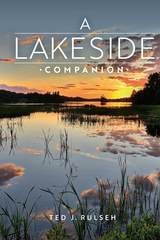
A Lakeside Companion
Ted J. Rulseh
University of Wisconsin Press, 2018
You'll discover the interconnected worlds of a lake: the water; the sand, gravel, rocks, and muck of the bottom; the surface of the lake; the air above; and the shoreline, a belt of land incredibly rich in flora and fauna. Explained, too, are the physical, biological, and chemical processes that determine how many and what kinds of fish live in the lake, which plants grow there, the color and clarity of the water, how ice forms in winter and melts in spring, and much more. Useful advice will help you look out for your lake and advocate for its protection.
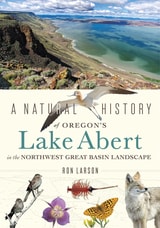
A Natural History of Oregon's Lake Abert in the Northwest Great Basin Landscape
Ron Larson
University of Nevada Press, 2023
A beautifully detailed exploration of flora and fauna.
Author Ron Larson offers a natural history of a Great Basin landscape that focuses on the northern region including Lake Abert and Abert Rim, and the adjacent area in southcentral Oregon. Although the jewel of this landscape is a lake, the real story is the many plants and animals—from the very primitive, reddish, bacteria-like archaea that thrive only in its high-salinity waters to the Golden Eagles and ravens that soar above the desert. The untold species in and around the lake are part of an ecosystem shaped by ageless processes from massive lava flows, repeated drought, and blinding snowstorms. It is an environment rich with biotic and physical interconnections going back millions of years.
The Great Basin, and in particular the Lake Abert region, is special and needs our attention to ensure it remains that way. We must recognize the importance of water for Great Basin ecosystems and the need to manage it better, and we must acknowledge how rich the Great Basin is in natural history. Salt lakes, wherever they occur, are valuable and provide critically important habitat for migratory water birds, which are unfortunately under threat from upstream water diversions and climate change. Larson’s book will help people understand that the Great Basin is unique and that wise stewardship is necessary to keep it unspoiled. The book is an essential reference source, drawing together a wide range of materials that will appeal to general readers and researchers alike.
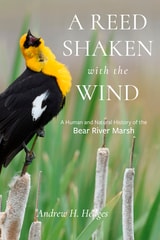
A Reed Shaken with the Wind
A Human and Natural History of the Bear River MarshAndrew H. Hedges
University of Utah Press, 2025
A Reed Shaken with the Wind tells the story of the Bear River Marsh, freshwater and sheltered grasslands on the northeast end of the Great Salt Lake with a complex past. Despite being one of Utah’s most renowned hunting and birdwatching locations, the marsh today holds only a shadow of its former ecological vitality.
Tracing the marsh from its creation during the last ice age to its current status as an imperiled national wildlife refuge, Andrew Hedges draws on geology, ecology, archaeology, wildlife biology, and water resource management to explore the natural and human forces that shaped the marsh and contributed to its decline. Covering Indigenous relationships with land, market economies’ impacts, and the intersection of ecology, science, and politics in establishing the Bear River Migratory Bird Refuge, this volume deepens discussions of humanity’s place in the environment and efforts to restore balance with our planet.

Black Swan Lake
Life of a WetlandRod Giblett
Intellect Books, 2013

Borne of the Wind
Michigan Sand DunesDennis A. Albert
University of Michigan Press, 2006
Borne of the Wind describes the environmental factors necessary for dune creation in an easy-to-understand format, introducing readers to the rich ecology of Michigan's dunes. Each of the distinct types of dunes encountered along the Great Lakes shoreline is explained and illustrated with color photographs and line drawings, while color photographs of the plants and animals found in duneland areas complement the story of these fragile, ever-changing landscapes.
For scholars and enthusiasts alike, Borne of the Wind provides a comprehensive and colorful introduction to one of our finest yet least-understood natural features.
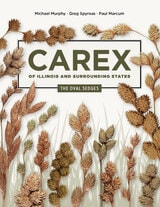
Carex of Illinois and Surrounding States
The Oval SedgesMichael Murphy, Greg Spyreas, and Paul Marcum
University of Illinois Press, 2025
Drawing on the study of thousands of specimens, Carex of Illinois and Surrounding States: The Oval Sedges is an invaluable resource for botanists, ecologists, environmental engineers, and professional and amateur environmentalists interested in a deeper understanding of these essential plants.

Coastal Marshes
Ecology and Wildlife ManagementRobert H. Chabreck
University of Minnesota Press, 1988
Coastal Marshes was first published in 1988. Minnesota Archive Editions uses digital technology to make long-unavailable books once again accessible, and are published unaltered from the original University of Minnesota Press editions.
The coastal regions of the United States form a highly diversified environment. In addition to sandy beaches and rocky shorelines, there are lagoons, rivers, estuaries, and marshes. The last are a dominant features of many coastal areas and serve as a transition between sea and uplands. Coastal marshes have been a zone for human development, attractive to industrial and residential building because they provide water frontage. But the public is becoming aware of the great value of these wetlands to fisheries and wildlife and to the local economy that depends on them.
This book describes coastal marshes in terms of form, function, ecology, wildlife value, and management. Robert H. Chabreck's emphasis is on the marshes of the northern coast of the Gulf of Mexico (there are 5,500 square miles of marshland in Louisiana alone), but he also deals with marshes on the Atlantic and Pacific coasts. Plant and animal communities are each given a chapter, and the book concludes with considerations of future uses and needs. The author provides references, a glossary, and a list of scientific names, along with numerous illustrations, including a section of color photographs.
For thirty years, Robert H. Chabreck has been engaged in research and management of coastal marshes and has often served as a consultant in wetland ecology. He is a professor of wildlife at Louisiana State University.
Ecology of the Bay of Quinte
Health, Management and Global ImplicationsC.K. Minns
Michigan State University Press, 2022
Ecosystem-Based Management of Laurentian Great Lakes Areas of Concern
Three Decades of U.S. - Canadian Cleanup and RecoveryJohn H. Hartig
Michigan State University Press, 2021
Environmental Change in the Lake Tahoe Basin
A Synthesis of Science and Public PolicyRobert N. Coats
University of Nevada Press, 2025
For over a century, scientific research and management efforts have aimed to mitigate the impacts of logging, mining, pollution, and invasive species while balancing urban development, tourism, and ecological preservation on the Lake. The book explores these challenges through a multidisciplinary lens, integrating environmental science, policy analysis, and case studies of both successful and failed management strategies. Written by experts who have played direct roles in key scientific discoveries and policy decisions, the book also examines the influence of environmental organizations and litigation in shaping conservation efforts.
At its core, the authors argue that the Tahoe Basin serves as a model for science-driven land and water stewardship. The book evaluates long-term monitoring programs, offering actionable recommendations for improving environmental oversight and resource management. Combining scientific analysis with accessible language, Environmental Change in the Lake Tahoe Basin serves as an up-to-date review of the region’s environmental challenges, providing an essential guide for scientists, resource managers, and policymakers.
The authors will donate all royalties from the sale of this volume to the Union of Concerned Scientist, www.ucs.org.
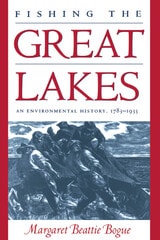
Fishing the Great Lakes
An Environmental History, 1783–1933Margaret Beattie Bogue
University of Wisconsin Press, 2000
Fishing the Great Lakes is a sweeping history of the destruction of the once-abundant fisheries of the great "inland seas" that lie between the United States and Canada. Though lake trout, whitefish, freshwater herring, and sturgeon were still teeming as late as 1850, Margaret Bogue documents here how overfishing, pollution, political squabbling, poor public policies, and commercial exploitation combined to damage the fish populations even before the voracious sea lamprey invaded the lakes and decimated the lake trout population in the 1940s.
From the earliest records of fishing by native peoples, through the era of European exploration and settlement, to the growth and collapse of the commercial fishing industry, Fishing the Great Lakes traces the changing relationships between the fish resources and the people of the Great Lakes region. Bogue focuses in particular on the period from 1783, when Great Britain and the United States first politically severed the geographic unity of the Great Lakes, through 1933, when the commercial fishing industry had passed from its heyday in the late nineteenth century into very serious decline. She shows how fishermen, entrepreneurial fish dealers, the monopolistic A. Booth and Company (which distributed and marketed much of the Great Lakes catch), and policy makers at all levels of government played their parts in the debacle. So, too, did underfunded scientists and early conservationists unable to spark the interest of an indifferent public. Concern with the quality of lake habitat and the abundance of fish increasingly took a backseat to the interests of agriculture, lumbering, mining, commerce, manufacturing, and urban development in the Great Lakes region. Offering more than a regional history, Bogue also places the problems of Great Lakes fishing in the context of past and current worldwide fishery concerns.
For Love of Lakes
Darby Nelson
Michigan State University Press, 2011
America has more than 130,000 lakes of significant size. Ninety percent of all Americans live within fifty miles of a lake, and our 1.8 billion trips to watery places make them our top vacation choice. Yet despite this striking popularity, more than 45 percent of surveyed lakes and 80 percent of urban lakes do not meet water quality standards. For Love of Lakes weaves a delightful tapestry of history, science, emotion, and poetry for all who love lakes or enjoy nature writing. For Love of Lakes is an affectionate account documenting our species’ long relationship with lakes—their glacial origins, Thoreau and his environmental message, and the major perceptual shifts and advances in our understanding of lake ecology. This is a necessary and thoughtful book that addresses the stewardship void while providing improved understanding of our most treasured natural feature.
Freshwater Marshes
Ecology and Wildlife ManagementMilton W. Weller
University of Minnesota Press, 1994
Freshwater Marshes was first published in 1994. Minnesota Archive Editions uses digital technology to make long-unavailable books once again accessible, and are published unaltered from the original University of Minnesota Press editions.
Prairie potholes, wetland edges of lakes and rivers, and other freshwater marshes play a vital role in maintaining a clean and plentiful water supply for wildlife and human use. These wetland areas provide habitat for spawning fish, feed waterfowl, purify and retain water, and control erosion. In this updated third edition, Milton W. Weller describes the components of the freshwater marsh: its annual and seasonal dynamics as affected by rainfall cycles and the plant and animal population's response to such changes. Weller discusses how such wetland areas are managed for wildlife populations and diversity, and how such processes can be used in wetland conservation and restoration. He considers the impact society has on wetlands and offers conservation goals for freshwater wetland complexes.
Weller broadens the third edition to include an analysis of how prairie wetlands compare in water dynamics with swamps, tidal marshes, and other wetlands. He also expands the discussion of wetland classification, evaluation, mitigation, and restoration, and introduces a new glossary of current wetland terminology.Freshwater Marshes is Volume 1 of Wildlife Habitats.
Milton W. Weller is professor emeritus and former Kleberg Chair in Wildlife Ecology, at Texas A&M University.
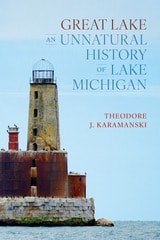
Great Lake
An Unnatural History of Lake MichiganTheodore J. Karamanski
University of Michigan Press, 2026
Great Lake is a comprehensive survey of the manifold ways Americans, from the first Native American communities to the present age, have abused, nurtured, loved, and neglected this massive freshwater resource. Extending 307 miles from north to south, the lake cuts across climatic, environmental, and physiographic zones, from the prairies of Illinois to the boreal forests of the north. Bordered by large cities like Chicago and Milwaukee as well as smaller Wisconsin resorts and northern Michigan mines and mill towns, the lake touches people in urban centers and countryside. Thus, the history of Lake Michigan combines the history of frontier resource extraction, agricultural abundance, industrialization, and dense urbanization in the American heartland. Great Lake is the story of the ever-escalating and divergent demands Americans have placed on Lake Michigan, how the lake’s ecosystem responded to those changes, and how together they have shaped the modern American Midwest.
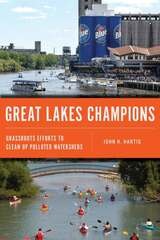
Great Lakes Champions
Grassroots Efforts to Clean Up Polluted WatershedsJohn H. Hartig
Michigan State University Press, 2022
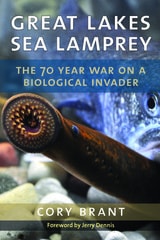
Great Lakes Sea Lamprey
The 70 Year War on a Biological InvaderCory Brant
University of Michigan Press, 2019
Threatening the complete collapse of the fishery, the sea lamprey invasion triggered an environmental awakening in the region and prompted an international treaty that secured unprecedented cooperation across political boundaries to protect the Great Lakes. Fueled by a pioneering scientific spirit, the war on Great Lakes sea lampreys led to discoveries that are the backbone of the program that eventually brought the creature under control and still protects the largest freshwater ecosystem in the world to this day.
Great Lakes Sea Lamprey draws on extensive interviews with individuals who experienced the invasion firsthand as well as a trove of unexplored archival materials to tell the incredible story of sea lamprey in the Great Lakes—what started the invasion, how it was halted, and what this history can teach us about the response to biological invaders in the present and future. Richly illustrated with color and black & white photographs, the book will interest readers concerned with the health of the Great Lakes, the history of the conservation movement, and the ongoing threat of invasive species.
In Search of Swampland
A Wetland Sourcebook and Field GuideRalph W. Tiner
Rutgers University Press, 2005
Lake Superior
Grace Lee Nute
University of Minnesota Press, 2000
The captivating history of the world’s largest freshwater lake.
This classic history of Lake Superior, from the earliest explorations to the explosion of industry on its shores, takes the reader on a tour from Duluth to Isle Royale, from Thunder Bay to Sault Ste. Marie, from Pictured Rocks to the Apostle Islands. Grace Lee Nute tells the fascinating stories of the Native Americans, voyageurs, missionaries, and others who created the way of life that many generations have known on the edge of this magnificent body of water.

Manatee Lagoon
PoemsJenna Le
Acre Books, 2022
In Manatee Lagoon, sonnets, ghazals, pantoums, villanelles, and a “failed georgic” weave in contemporary subject matter, including social-media comment threads, Pap smears, eclipse glasses, and gun violence. A recurring motif throughout the collection, manatees become a symbol with meanings as wide-ranging as the book itself. Le aligns the genial but vulnerable sea cow with mermaids, neurologists, the month of November, harmful political speech, and even a family photo at the titular lagoon.
In these poems, Le also reflects on the experience of being the daughter of Vietnamese refugees in today’s sometimes tense and hostile America. The morning after the 2016 election, as three women of color wait for the bus, one says, “In this new world, we must protect each other.”
Manatee Lagoon is a treasury of voices, bringing together the personal and the persona, with poems dedicated to Kate Spade, John Ashbery, and Uruguayan poet Delmira Agustini. With this book, Le establishes herself as a talented transcriber of the human condition—and as one of the finest writers of formal verse today.
Manoomin
The Story of Wild Rice in MichiganBarbara J Barton
Michigan State University Press, 2018
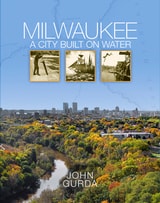
Milwaukee
A City Built on WaterJohn Gurda
Wisconsin Historical Society Press, 2026
The success and survival of Milwaukee lies in the rivers that meander through its streets and the great lake at its eastern boundary. The Indigenous peoples of the region recognized the value of an abundant, clean water supply for food and transportation. Generations of immigrants, entrepreneurs, innovators, and recreationists used the same waters to travel greater distances, power million-dollar industries, and even have a bit of fun.
In Milwaukee: A City Built on Water, celebrated historian John Gurda relates the history of the waters that gave Milwaukee life—and occasionally threatened the city through erosion, invasive species, and water-borne diseases. Telling tales of brewers, brickmakers, ecologists, and engineers, Gurda explores the city’s complicated connections with its most precious resource and greatest challenge. You’ll meet the generations of people, from a Potawatomi chief to fur traders and fishermen, who settled on the small spit of land known as Jones Island; learn how Milwaukee’s unique water composition creates its distinct cream-colored bricks; visit Wisconsin’s first waterparks; and see how city leaders transformed the Milwaukee River—once described as a “vast sewer” with an “odorous tide”—into today’s lively and lovely Riverwalk.
Now available in paperback, Milwaukee: A City Built on Water is the sweeping chronicle of a critical natural resource that has weathered heavy use and flagrant abuse to emerge as a focal point of both celebration and concern in the twenty-first century.
Mosses of the Great Lakes Forest
Howard Alvin Crum
Michigan Publishing Services, 2025
This comprehensive and richly illustrated account of the mosses found throughout the Great Lakes Basin and St. Lawrence River Valley is tailored for use in much of eastern North America. Detailed descriptions, keys, and a glossary are provided. 592 pages, frontispiece, hard cover.
Ripple Effects
How We're Loving Our Lakes to DeathTed J. Rulseh
University of Wisconsin Press, 2022
In his engaging and conversational style, Ted Rulseh details each of these challenges and proposes achievable solutions. He draws on personal experience, interviews, academic research, and government reports to describe the state of the lakes, the stresses they are under, and avenues to successful lakeside living for a sustainable future. Ripple Effects will be a go-to source for all who love lakes and who advocate for their protection; its driving question is summed up by one of Rulseh’s interviewees: “We love this lake. What can we do to keep it healthy?”
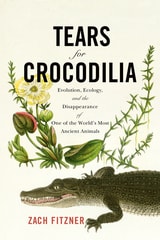
Tears for Crocodilia
Evolution, Ecology, and the Disappearance of One of the World's Most Ancient AnimalsZach Fitzner
Westholme Publishing, 2025
Seventy million years ago in what would become North America, a monstrous thirty-five-foot-long Cretaceous crocodile lurked on a marshy riverbank. Springing suddenly, its huge jaws trapped and crushed a juvenile hadrosaur. Today, the remains of that ancient crocodile are being painstakingly reconstructed in Colorado, where naturalist Zach Fitzner continues his life-long fascination with this amazing animal family.
In Tears for Crocodilia: Evolution, Ecology, and the Disappearance of One of the World’s Most Ancient Animals, Fitzner tracks the evolution of crocodilians from prehistoric predators to modern endangered wildlife, using his own experiences with these reptiles as a lens to understanding wildlife conservation and our relationship with the natural world. Traveling the world to interact with crocodiles, from observing alligators in a wildlife refuge in Texas and paddling a canoe in the Everglades searching for crocodiles to trekking the jungles in Nepal to find endangered gharials, the author expresses a wonder in exploring these diverse ecosystems, making a connection between crocodilians and the lands they live in. As the story follows crocodilians, it also illuminates their often complicated relationship with humans, from crocodile cults in ancient Egypt to American alligators living on golf courses. Fitzner also closely examines the dark side of this relationship, including habitat destruction and poaching as well as the mechanistic view of traditional conservation that turns these magnificent animals into agricultural products. Tears for Crocodilia delves deeply into issues of wildlife conservation, ethics, and how we can coexist with other creatures. It is also a tribute to a magnificent group of animals, survivors from the age of dinosaurs.
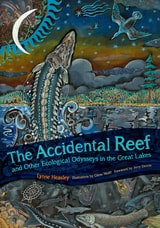
The Accidental Reef and Other Ecological Odysseys in the Great Lakes
Lynne Heasley
Michigan State University Press, 2022
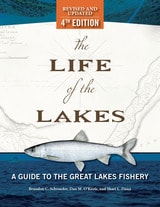
The Life of the Lakes, 4th Ed.
A Guide to the Great Lakes FisheryBrandon C. Schroeder, Dan M. O'Keefe, and Shari L. Dann
University of Michigan Press, 2019
Now in its fourth edition, The Life of the Lakes examines the complex portrait of the Great Lakes fishery, including the history of the fishery’s exploitation and management, the current health of the Lakes, and the outlook for the future. Featuring more graphics, photos, and illustrations than ever, all printed in full color, the new edition of this engaging book is a perfect resource for general readers, teachers, and students looking for an easy-to-follow guide to the Great Lakes fishery. This book is published in collaboration with Michigan Sea Grant (www.michiganseagrant.org), a cooperative program of the University of Michigan and Michigan State University.
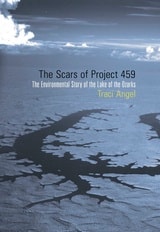
The Scars of Project 459
The Environmental Story of the Lake of the OzarksTraci Angel
University of Arkansas Press, 2014
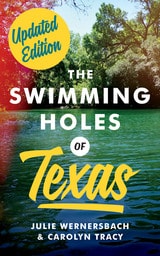
The Swimming Holes of Texas
By Julie Wernersbach and Carolyn Tracy; photography by Carolyn Tracy
University of Texas Press, 2020
Nothing beats a natural swimming hole for cooling off on a scorching summer day in Texas. Cold, clear spring water, big old shade trees, and a quiet stretch of beach or lawn offer the perfect excuse to pack a cooler and head out with family and friends to the nearest natural oasis. Whether you’re looking for a quick getaway or an unforgettable summer vacation, let The Swimming Holes of Texas be your guide.
Julie Wernersbach and Carolyn Tracy highlight one hundred natural swimming spots across the entire state. The book is organized by geographic regions, so you can quickly find local places to swim—or plan a trip to a more distant spot you’d like to explore. Each swimming hole is illustrated with an inviting color photo and a description of what it’s like to swim there, as well as the site’s history, ecology, and conservation. The authors include all the pertinent info about admission fees and hours, parking, and on-site amenities such as showers and restrooms. They also offer tips for planning your trips and lists of the swimming holes that are most welcoming to families and pets.
So when the temperature tops 100 and there’s nothing but traffic in sight, take a detour down the backroads and swim, sunbathe, revel, and relax in the swimming holes of Texas.
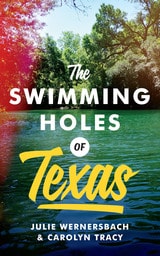
The Swimming Holes of Texas
By Julie Wernersbach and Carolyn Tracy; photography by Carolyn Tracy
University of Texas Press, 2017
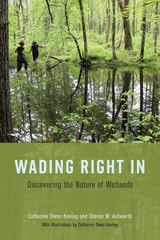
Wading Right In
Discovering the Nature of WetlandsCatherine Owen Koning and Sharon M. Ashworth
University of Chicago Press, 2019
In Wading Right In, Catherine Owen Koning and Sharon M. Ashworth take us on a journey into wetlands through stories from the people who wade in the muck. Traveling alongside scientists, explorers, and kids with waders and nets, the authors uncover the inextricably entwined relationships between the water flows, natural chemistry, soils, flora, and fauna of our floodplain forests, fens, bogs, marshes, and mires. Tales of mighty efforts to protect rare orchids, restore salt marshes, and preserve sedge meadows become portals through which we visit major wetland types and discover their secrets, while also learning critical ecological lessons.
The United States still loses wetlands at a rate of 13,800 acres per year. Such loss diminishes the water quality of our rivers and lakes, depletes our capacity for flood control, reduces our ability to mitigate climate change, and further impoverishes our biodiversity. Koning and Ashworth’s stories captivate the imagination and inspire the emotional and intellectual connections we need to commit to protecting these magical and mysterious places.
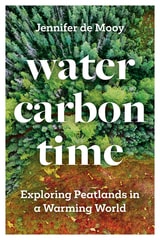
Water, Carbon, Time
Exploring Peatlands in a Warming WorldJennifer de Mooy
University of Minnesota Press, 2026
Revealing the hidden worlds of peatlands and their potential to fight climate change
Bogs, fens, mires, moors, muskegs, and pocosins—they are found in nearly all the world’s climatic zones but are easily overlooked in our landscapes. Yet these murky ecosystems formed of decay are both full of life and crucial to our planetary wellbeing: covering only about three percent of the earth’s surface, peatlands store more carbon than all the world’s forests combined. In Water, Carbon, Time, Jennifer de Mooy shares her personal discovery of these natural wonders in all their variety and understated beauty, bringing much-needed attention to the restorative possibilities of their spongy depths.
De Mooy first encountered peatlands on a trip to Ireland with her father, but her later work on climate change policy in the United States motivated her to investigate options for reducing greenhouse gases in the atmosphere. Her interest was practical: could peatlands combat global warming? To deepen her understanding of these unique wetlands, she embarked on a quest from bogs and fens in Minnesota and Maine to bofedales in Peru and muskegs in Canada and Alaska. A vivid account of her journey, Water, Carbon, Time describes these peatlands in all their richness and mystery: what they are and how to find them, the diversity of ecological life they support, and how their hidden systems promote climate resilience.
As she learns more about the importance of peatlands, de Mooy emphasizes all we lose when they are damaged by drainage, fire, and the broader sweep of climate change. When peatlands are threatened, we risk releasing stored carbon from their soil, where it has accumulated over millennia, into the atmosphere. In parts a travelogue, an ecological history, and a call to action, Water, Carbon, Time demonstrates there is still hope for these precious ecosystems—and their potential as a natural climate solution right beneath our feet.
Retail e-book files for this title are screen-reader friendly with images accompanied by short alt text and/or extended descriptions.
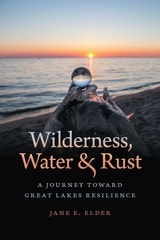
Wilderness, Water, and Rust
A Journey toward Great Lakes ResilienceJane Elder
Michigan State University Press, 2024
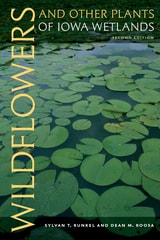
Wildflowers and Other Plants of Iowa Wetlands, 2nd edition
Sylvan T. Runkel, Dean M. Roosa, Thomas Rosburg
University of Iowa Press, 2015
In clear and accessible prose, authors Sylvan Runkel and Dean Roosa provide common, scientific, and family names; the Latin or Greek meaning of the scientific names; habitat and blooming times; and a complete description. Plants are presented by habitat (terrestrial or aquatic), then refined by habit (e.g., emergent, floating, or submerged) or taxonomic group (e.g., ferns and allies or trees, shrubs, and vines). Particularly interesting is the information on the many ways in which Native Americans and early pioneers used these plants for everything from pain relief to tonics to soup and the ways that wildlife today use them for food and shelter. Each of the more than 150 species accounts is accompanied by a brilliant full-page color photograph by botanist Thomas Rosburg, who has also updated the nomenclature and descriptions for certain species.
After decades of being considered an enemy of the settler, the farmer, and the citizen, Iowa’s wetlands have come into their own. We are finally caring for these important habitats. Runkel and Roosa’s updated field companion will be a valuable guide to today’s preservation and restoration initiatives.
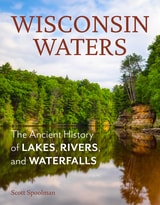
Wisconsin Waters
The Ancient History of Lakes, Rivers, and WaterfallsScott Spoolman
Wisconsin Historical Society Press, 2022