Results by title
14 books match the query 'Land use, Rural'
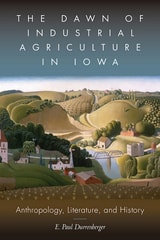
Dawn of Industrial Agriculture in Iowa
Anthropology, Literature, and HistoryE. Paul Durrenberger
University Press of Colorado, 2021
Durrenberger tells the story that Corey aimed to record and preserve of the industrialization of Iowa’s agriculture and the death of its family farms. He analyzes Corey’s regionalist focus on Iowa farming and regionalism’s contemporaneous association in Europe with rising fascism. He explores Corey’s adoption of naturalism, evident in his resistance to heroes and villains, to plot structure and resolution, and to moral judgment, as well as his ethnographic tendency to focus on groups rather than individuals.
An unusual and wide-ranging study, The Dawn of Industrial Agriculture in Iowa offers important insight into the relationships among fiction, individual lives, and anthropological practice, as well as into a pivotal period in American history.
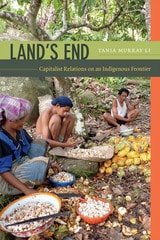
Land's End
Capitalist Relations on an Indigenous FrontierTania Murray Li
Duke University Press, 2014
The book challenges complacent, modernization narratives promoted by development agencies that assume inefficient farmers who lose out in the shift to high-value export crops can find jobs elsewhere. Decades of uneven and often jobless growth in Indonesia meant that for newly landless highlanders, land's end was a dead end. The book also has implications for social movement activists, who seldom attend to instances where enclosure is initiated by farmers rather than coerced by the state or agribusiness corporations. Li's attention to the historical, cultural, and ecological dimensions of this conjuncture demonstrates the power of the ethnographic method and its relevance to theory and practice today.

Learning from the Land
Wisconsin Land Use; 2nd EditionBobbie Malone
Wisconsin Historical Society Press, 2011
How has the landscape of Wisconsin affected its history? How have people living here changed that landscape over time? What are the implications for the future? The second edition of Learning from the Land addresses these and other questions, asking elementary and middle school readers to think about land use issues throughout Wisconsin's history. This revised edition includes expanded chapters on logging and the lumber industry, land use and planning, and agriculture in the 20th century from farmers' markets to organic farming. New profiles of Gaylord Nelson, pioneer of Earth Day, and Will Allen, founder of Growing Power in Milwaukee, round out this history of land use in Wisconsin.
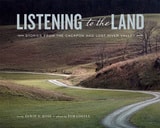
Listening to the Land
Stories from the Cacapon and Lost River ValleyJamie S. Ross
West Virginia University Press, 2013
Although still rural and mostly forested, development and land fragmentation in the Cacapon and Lost River Valley have increased over the last decades. Listening to the Land: Stories from the Cacapon and Lost River Valley is a conversation between the people of this Valley and their land, chronicling this community’s dedication to preserving its farms, forests, and rural heritage.
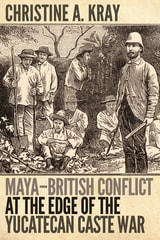
Maya-British Conflict at the Edge of the Yucatecan Caste War
Christine A. Kray
University Press of Colorado, 2023
Official British declarations of neutrality in the Caste War were confounded by a variety of political and economic factors, including competing land claims befuddled by a tangled set of treaties, mahogany extraction by British companies in contested territories, Maya rent demands, British trade in munitions to different groups of Maya combatants, and a labor system reliant on debt servitude. All these factors contributed to uneasy alliances and opportunistic crossings of imagined geopolitical borders in both directions, ultimately leading to a new military conflict in the western and northern regions of the territory claimed by Britain. What frequently began as hyper-local disputes spun out into international affairs as actors called upon more powerful groups for assistance. Evading reductionism, this work traces the decisions and actions of key figures as they maneuvered through the miasma of violence, abuse, deception, fear, flight, and glimpses of freedom.
Positioning the historiographic and ethnographic gaze on the English side without adopting the colonialist narratives and objectives found in English repositories, Maya-British Conflict at the Edge of the Yucatecan Caste War is an important and original contribution to a neglected area of study. It will appeal to students, scholars, and general readers interested in anthropology, Latin American cultures and history, Central American history, British imperialism, Indigenous rights, political anthropology, and colonialism and culture.
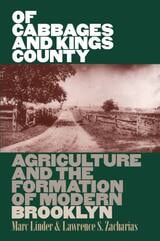
Of Cabbages and Kings County
Agriculture and the Formation of Modern BrooklynMarc Linder
University of Iowa Press, 1999
No one today thinks of Brooklyn, New York, as an agricultural center. Yet Kings County enjoyed over two centuries of farming prosperity. Even as late as 1880 it was one of the nation's leading vegetable producers, second only to neighboring Queens County.
In Of Cabbages and Kings County, Marc Linder and Lawrence Zacharias reconstruct the history of a lost agricultural community. Their study focuses on rural Kings County, the site of Brooklyn's tremendous expansion during the latter part of the nineteenth century. In particular, they question whether sprawl was a necessary condition of American industrialization: could the agricultural base that preceded and surrounded the city have survived the onrush of residential real estate speculation with a bit of foresight and public policies that the politically outnumbered farmers could not have secured on their own?
The first part of the book reviews the county's Dutch American agricultural tradition, in particular its conversion after 1850 from extensive farming (e.g., wheat, corn) to intensive farming of market garden crops. The authors examine the growing competition between local farmers and their southern counterparts for a share of the huge New York City market, comparing farming conditions and factors such as labor and transportation.
In the second part of the book, the authors turn their attention to the forces that eventually destroyed Kings County's farming—ranging from the political and ideological pressures to modernize the city's rural surroundings to unplanned, market-driven attempts to facilitate transportation for more affluent city dwellers to recreational outlets on Coney Island and, once transportation was at hand, to replace farms with residential housing for the city's congested population.
Drawing on a vast range of archival sources, the authors refocus the history of Brooklyn to uncover what was lost with the expansion of the city. For today, as urban planners, ecologists, and agricultural developers reevaluate urban sprawl and the need for greenbelts or agricultural-urban balance, the lost opportunities of the past loom larger.
Redeeming a People
The Critical Role of Historical Examination in Moving Cultural and Moral TrajectoriesDarius Gray
Utah State University Press, 2020
The Arrington Lecture series, established by one of the twentieth-century West's most distinguished historians, Leonard Arrington, has become a leading forum for prominent historians to address topics related to Mormon history. Utah State University hosts the Leonard J. Arrington Mormon History Lecture Series through the Merrill-Cazier Library Special Collections and Archives department.
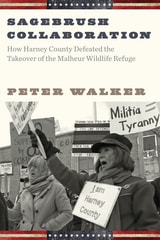
Sagebrush Collaboration
How Harney County Defeated the Takeover of the Malheur Wildlife RefugePeter Walker
Oregon State University Press, 2018
Every American is co-owner of the most magnificent estate in the world—federal public forests, grazing lands, monuments, national parks, wildlife refuges, and other public places. The writer Wallace Stegner famously referred to public lands as “America’s best idea,” but there have always been some who oppose the idea for ideological reasons, or because they have a vested economic interest. In the current decade, federal public lands have been under physical threat as never before, with armed standoffs and takeovers that the US government has proved stunningly unsuccessful at prosecuting in federal courts.
One such incident was the takeover of the Malheur National Wildlife Refuge in Harney County, Oregon, in 2016. Armed militants seized the headquarters of the refuge for forty-one days and occupied the community for three months. Militants threatened and harassed local residents, pledging to “give back” the land to unnamed “rightful owners” in their effort to enact a fringe interpretation of the US Constitution.
Drawing on more than two years of intensive fieldwork, Sagebrush Collaboration shows that the militants failed in their objectives because the sensible and hardworking citizens of Harney County had invested decades in collaboratively solving the very problems that the militia used to justify their anti–federal government revolution.
In Sagebrush Collaboration, Peter Walker offers the first book-length study of why the 2016 takeover of the Malheur National Wildlife Refuge failed. His nuanced and deeply researched account provides the full context for the takeover, including the response from local and federal officials and the grassroots community resistance. It will be essential reading for years to come for anyone who wants to understand the ongoing battle over the future of America’s public lands.
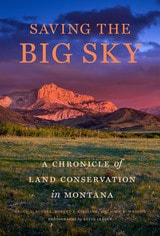
Saving the Big Sky
A Chronicle of Land Conservation in MontanaBruce A. Bugbee
Oregon State University Press, 2025
Winner of the 2026 Western Writers of America Spur Award for Best Western Contemporary Nonfiction
Winner of the 2025 Nature and the Environment National Outdoor Book Award
“The essential purpose of Saving the Big Sky is to inspire the reader to help conserve even more of Montana,” write Bruce Bugbee, Robert Kiesling, and John Wright in this compelling study of how six million acres of biodiverse land were conserved in Montana over the past fifty years. Indigenous and non-Indigenous knowledge about land stewardship has evolved and since the 1970s tribes, nonprofit organizations, land trusts, and government agencies have conserved land in many creative ways. Beautifully illustrated with more than ninety color photographs and thirty detailed maps, Saving the Big Sky showcases land conservation achievements across eight regions of the state: the Rocky Mountain Front, the Blackfoot Valley, the Greater Yellowstone, the Missoula Region, the Helena Region, Northwest Montana, the Flathead Indian Reservation, and the American Prairie.
Land protection is shown to work best when large, intact, connected landscapes can be conserved, rather than small, fragmented, isolated parcels. Conservationists have found that landowners in Montana more widely accept conservation easements and other voluntary, financially compensating tools that respect private property rights. The brilliant images and striking before-and-after maps featured here celebrate the ranches, farms, wildlife habitats, and scenic open spaces that are forever safeguarded.
In documenting conservation accomplishments and suggesting what more can be done, Saving the Big Sky invites readers to participate in conserving Montana—or whatever cherished landscape they call home.
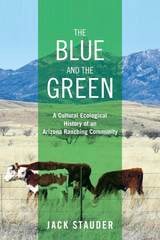
The Blue and the Green
A Cultural Ecological History of an Arizona Ranching CommunityJack Stauder
University of Nevada Press, 2016
In The Blue and the Green, anthropologist Jack Stauder analyzes how large-scale political, social, and environmental processes have transformed ranching and rural life in the West. Focusing on the community of Blue, Arizona, Stauder details how the problems of overgrazing, erosion, and environmental stresses on the open range in the early twentieth century coincided with a push by the newly created US Forest Service to develop fenced grazing allotments on federal lands. Later in the twentieth century, with the enactment of the Endangered Species Act and other laws, the growing power of urban-based environmental groups resulted in the reduction of federal grazing leases throughout the West.
The author combines historical research with oral interviews to explore the impact of these transformations on the ranchers residing in the Blue River Valley of eastern Arizona. Stauder gives voice to these ranchers, along with Forest Service personnel, environmental activists, scientists, and others involved with issues on “the Blue,” shedding light on how the ranchers’ rural way of life has changed dramatically over the course of the past century. This is a fascinating case study of the effects of increasing government regulations and the influence of outsiders on ranching communities in the American West.
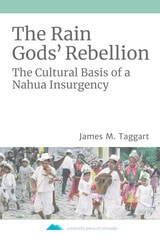
The Rain Gods' Rebellion
The Cultural Basis of a Nahua InsurgencyJames M. Taggart
University Press of Colorado, 2019
The Rain Gods’ Rebellion examines Nahua oral narratives to illuminate the cultural basis of the 1977–1984 rebellion against the local Hispanic elite in Huitzilan de Serdán, Mexico. Drawing from forty years of fieldwork in the region, James M. Taggart traces the sociopolitical role of Nahua rain gods—who took both human and divine forms—back hundreds of years and sheds new light on the connections between social experiences and the Nahua understanding of water and weather in stories. As Taggart shows, Nahua tales of the rain gods’ rebellion anticipated the actual 1977 land invasion in Huitzilan, in which some 200–300 Nahua were killed.
The Rain Gods’ Rebellion reveals how local culture evolves from the expression of unrest to organized insurgency and then into collective memory. Taggart records a tradition of storytelling in which Nahuas radicalized themselves through recounting the rain gods’ stories—stories of the gods organizing and striking with bolts of lightning the companion spirits of autocratic local leaders who worked closely with mestizos. The tales are part of a tradition of resisting the friars’ efforts to convert the Nahuas, Totonacs, Otomi, and Tepehua to Christianity and inspiring nativistic movements against invading settlers.Providing a rare longitudinal look at the cultural basis of this grassroots insurgency, The Rain Gods’ Rebellion offers rare insight into the significance of oral history in forming Nahua collective memory and, by extension, culture. It will be of significance to scholars of Indigenous studies, anthropology, oral history, and violence studies, as well as linguistic anthropologists and sociolinguists.
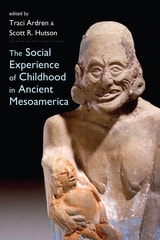
The Social Experience of Childhood in Ancient Mesoamerica
Traci Ardren
University Press of Colorado, 2015
Contributors examine material evidence, historical records, and iconography, productively criticizing the claim that children are invisible in the archaeological record and elucidating an ancient childhood comprising multiple and complex identities. They explore the methodological and theoretical difficulties created when investigating childhood - a category defined by each culture - in the archaeological record.
Sure to appeal widely to New World and Old World archaeologists and anthropologists, The Social Experience of Childhood in Ancient Mesoamerica opens up new avenues of research into the lives of this previously overlooked yet remarkably large population.
Contributors include Traci Ardren, Ximena Chávez Balderas, Billie Follensbee, Byron Hamann, Scott R. Hutson, Rosemary A. Joyce, Stacie M. King, Jeanne Lopiparo, Patricia McAnany, Geoffrey G. McCafferty, Sharisse D. McCafferty, Juan Alberto Román Berrelleza, Rebecca Storey, Rissa M. Trachman, Fred Valdez Jr.
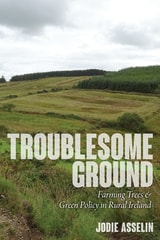
Troublesome Ground
Farming Trees and Green Policy in Rural IrelandJodie Asselin
University Press of Colorado, 2025
Through ethnographic description, Asselin illuminates how ephemeral worlds of green discourse and development plans manifest in rural areas, demonstrating the lived consequences of today’s competing demands on marginal regions. Troublesome Ground is a significant contribution to the anthropology of rural Ireland while offering insights into the wider realities of conflicting development and conservation strategies in global contemporary rural landscapes.

Understanding Peasant Agriculture
An Integrated Land-Use Model for the PunjabJoseph H. Astroth Jr.
University of Chicago Press, 1989