Results by title
2 books match the query 'Landscape architects'
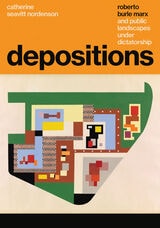
Depositions
Roberto Burle Marx and Public Landscapes under DictatorshipBy Catherine Seavitt Nordenson
University of Texas Press, 2018
Recipient of 2019 John Brinckerhoff Jackson Book Prize, Foundation for Landscape Studies
2021 On the Brinck Book Award Winner
“Burle Marx created a new and modern grammar for international landscape design.”
—Lauro Cavalcanti, quoted in the New York Times
“The real creator of the modern garden.”
—American Institute of Architects
Presenting the first English translation of Burle Marx’s “depositions,” this volume highlights the environmental advocacy of a preeminent Brazilian landscape architect who advised and challenged the country’s military dictatorship.
Roberto Burle Marx (1909–1994) is internationally known as one of the preeminent modernist landscape architects. He designed renowned public landscapes in Brazil, beginning with small plazas in Recife in the 1930s and culminating with large public parks in the early 1960s, most significantly the Parque do Flamengo in Rio de Janeiro. Depositions explores a pivotal moment in Burle Marx’s career—the years in which he served as a member of the Federal Cultural Council created by the military dictatorship in the mid-1960s. Despite the inherent conflict and risk in working with the military regime, Burle Marx boldly used his position to advocate for the protection of the unique Brazilian landscape, becoming a prophetic voice of caution against the regime’s policies of rapid development and resource exploitation.
Depositions presents the first English translation of eighteen environmental position pieces that Burle Marx wrote for the journal Cultura , a publication of the Brazilian Ministry of Education and Culture, from 1967 through 1973. Catherine Seavitt Nordenson introduces and contextualizes the depositions by analyzing their historical and political contexts, as well as by presenting pertinent examples of Burle Marx’s earlier public projects, which enables a comprehensive reading of the texts. Addressing deforestation, the establishment of national parks, the place of commemorative sculpture, and the unique history of the Brazilian cultural landscape, Depositions offers new insight into Burle Marx’s outstanding landscape oeuvre and elucidates his transition from prolific designer to prescient counselor.
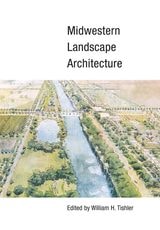
Midwestern Landscape Architecture
Edited by William H. Tishler
University of Illinois Press, 2000
The pioneers of landscape architecture in the Midwest are responsible for creating some of the most recognizable parks, cemeteries, recreation areas, and other public gathering places in the region. Midwestern Landscape Architecture includes essays on Adolph Strauch, who introduced a new concept of visually integrated landscape treatment in Cincinnati's Spring Grove Cemetery; William Le Baron Jenney, designer of Chicago's diverse West Parks; and Jens Jensen, who created the American Garden in Union Park in Chicago (a celebration of native flora) and founder of The Clearing, a unique school of the arts and humanities in Wisconsin. Other major figures include Frederick Law Olmsted Sr., co-designer of New York's Central Park, whose work in the Midwest included the layout of the 1893 World's Columbian Exposition, and Ossian Cole Simonds, who helped reconcile the formal approach of the City Beautiful movement with the naturalism of the Prairie School in urban park design.
This volume also details the contributions of crusaders for ecological awareness and an appreciation of the region's natural heritage. These include horticultural writer Wilhelm Miller, who spread the ideals of the Prairie style, and Genevieve Gillette, a landscape architect and conservationist whose preservation efforts led to the establishment of numerous Michigan state parks and wilderness areas.
Midwestern Landscape Architecture fosters a better understanding of how landscape design took shape in the Midwest and how the land itself inspired new solutions to enhance its understated beauty. Despite Olmsted's assessment of the Illinois prairie as "one of the most tiresome landscapes that I ever met with," the Midwest has amassed an important legacy of landscape design that continues to influence how people interact with their environment in the heartland.