Results by title
3 books match the query 'Landscape ecology'

Jens Jensen
Writings Inspired by NatureWilliam H. Tishler
Wisconsin Historical Society Press, 2012
Today, Jensen is perhaps best remembered for establishing The Clearing on Wisconsin's Door County Peninsula. But the outspoken views in his writings - many of which were included in ephemeral planning reports, early newspapers, and now out-of-print journals - are virtually forgotten, with the exception of his two small books. "Jens Jensen: Writings Inspired by Nature" is an anthology of Jensen's most significant yet lesser-known articles, including a "Saturday Evening Post" piece that enabled him to reach the largest audience of his publishing career. The scope of Jensen's thoughts represented in this collection will further solidify his legacy and rightful place alongside conservation leaders such as John Muir and Aldo Leopold.
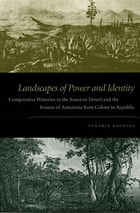
Landscapes of Power and Identity
Comparative Histories in the Sonoran Desert and the Forests of Amazonia from Colony to RepublicCynthia Radding
Duke University Press, 2005
Radding’s comparative approach illuminates what happened when similar institutions of imperial governance, commerce, and religion were planted in different physical and cultural environments. She draws on archival documents, published reports by missionaries and travelers, and previous histories as well as ecological studies and ethnographies. She also considers cultural artifacts, including archaeological remains, architecture, liturgical music, and religious dances. Radding demonstrates how colonial encounters were conditioned by both the local landscape and cultural expectations; how the colonizers and colonized understood notions of territory and property; how religion formed the cultural practices and historical memories of the Sonoran and Chiquitano peoples; and how the conflict between the indigenous communities and the surrounding creole societies developed in new directions well into the nineteenth century.
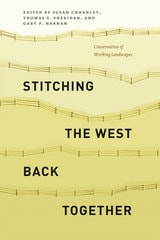
Stitching the West Back Together
Conservation of Working LandscapesEdited by Susan Charnley, Thomas E. Sheridan, and Gary P. Nabhan
University of Chicago Press, 2014
Featuring contributions from an impressive array of scientists, conservationists, scholars, ranchers, and foresters, Stitching the West Back Together explores that expanded, inclusive vision of environmentalism as it delves into the history and evolution of Western land use policy and of the working landscapes themselves. Chapters include detailed case studies of efforts to promote both environmental and economic sustainability, with lessons learned; descriptions of emerging institutional frameworks for conserving Western working landscapes; and implications for best practices and policies crucial to the future of the West’s working forests and rangelands. As economic and demographic forces threaten these lands with fragmentation and destruction, this book encourages a hopeful balance between production and conservation on the large, interconnected landscapes required for maintaining cultural and biological diversity over the longterm.