Results by title
12 books match the query 'Landscape gardening'
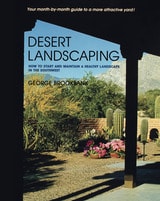
Desert Landscaping
How to Start and Maintain a Healthy Landscape in the SouthwestGeorge Brookbank
University of Arizona Press, 1992
CONTENTS
Part 1 - How to Start and Maintain a Desert Landscape
1. Desert Conditions: How They Are "Different"
2. Plants Are Like People: They're Not Alike
3. Use Arid-Land Plants to Save Water
4. How to Irrigate in the Desert
5. How to Design and Install a Drip Irrigation System
6. Soils and Their Improvement I: How to Plant in the Desert
7. Soils and Their Improvement II: How to Use Fertilizers
8. What to Do When Things Go Wrong: A Troubleshooter's Guide
9. How to Avoid—and Repair—Frost Damage
10. How to Control "Weeds"
11. Palo Verde Borer Beetle: What to Do
12. How to Avoid Texas Root Rot
13. When You Move Into an Empty House
14. What to Do About Roots in Drains
15. How to Dig Up Plants and Move Them
16. How to Have Flower Bed Color All Year
17. Landscape Gardening with Containers
18. Starting Wildflowers
19. Starting a Lawn
20. Making and Keeping a Good Hedge
21. Pruning Trees and Shrubs
22. Palm Tree Care
23. Caring for Saguaros, Ocotillos, Avages, and Prickly Pears
24. Roses in the Desert: Hard Work and Some Disappointments
25. Landscaping with Citrus
26. Swimming Pools: Plants, Play, and Water-Saving
27. Landscape Maintenance While You're Away
28. Condominiums: Common Grounds, Common Problems
Part 2 - A Month-by-Month Maintenance Guide
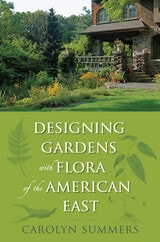
Designing Gardens with Flora of the American East
Summers, Carolyn
Rutgers University Press, 2010
Why indigenous plants, you may ask? What makes them so special to butterflies and bees and boys and girls? For Carolyn Summers, the answer is as natural as an ephemeral spring wildflower or berries of the gray dogwood, "As I studied indigenous plants, a strange thing happened. The plants grew on me. I began to love the plants themselves for their own unique qualities, quite apart from their usefulness in providing food and shelter for wildlife.
Emphasizing the importance of indigenous plant gardening and landscape design, Summers provides guidelines for skilled sowers and budding bloomers. She highlights . . .
- The best ways to use exotic and non-indigenous plants responsibly
- Easy-to-follow strategies for hosting wildlife in fields, forests, and gardens
- Designs for traditional gardens using native trees, shrubs, groundcovers as substitutes for exotic plants
- Examples of flourishing plant communities from freshwater streams to open meadows
- How to control plant reproduction, choose cultivars, open-pollinated indigenous plants, and different types of hybrids, and practice “safe sex in the garden

Designing Gardens with Flora of the American East, Revised and Expanded
Carolyn Summers
Rutgers University Press, 2024
In this fully revised second edition of the classic guide Designing Gardens with Flora of the American East, gardening expert Carolyn Summers draws on the most recent research on sustainable landscaping. She is joined in this edition by her daughter, landscape designer Kate Brittenham, offering an intergenerational dialogue about the importance of using indigenous plants that preserve insect and bird habitats. The practical information they provide is equally useful for home gardeners and professionals, including detailed descriptions of keystone trees, shrubs, perennials, vines, and grasses that are native to the eastern United States. Accompanied by entirely new illustrations and updated plant lists, they offer chic yet eco-friendly landscape designs fully customized for different settings, from suburban yards to corporate office parks.
The states covered in this book are CT, DE, IA, IL, IN, KY, MA, MD, ME, MI, MN, MO, NC, NH, NJ, NY, OH, PA, RI, TN, VA, VT, WI, and WV, as well as southern Quebec and Ontario.
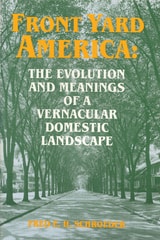
Front Yard America
The Evolution and Meanings of a Vernacular Domestic LandscapeFred E.H. Schroeder
University of Wisconsin Press, 1993
Throughout Front Yard America, Schroeder inquires into the functions, values, and meanings that Americans have found in the domestic landscapes of back yards and front yards, walls and fences, porches and patios.
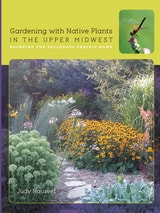
Gardening with Native Plants in the Upper Midwest
Bringing the Tallgrass Prairie HomeJudy Nauseef
University of Iowa Press, 2016
Nauseef emphasizes the need for careful planning and design to create comfortable, low-maintenance spaces that bring homeowners outside. Her designs solve problems such as a lack of privacy, shade, or sun; plan for water use; replace troublesome nonnative plants with native plants that attract pollinators; and enable homeowners to enjoy living sustainably on their land. Colorful photographs of projects around the Midwest show the wide range of possibilities, from newly created gardens using only native plants to traditional gardens that mix nonnative with native species. Whether you have a city yard, a suburban lot, or a rural acreage, there are ideas here for you, along with examples of well-designed landscapes in which native plants enhance paths, patios, pergolas, and steps.
Providing information on planting and maintaining native plants and prairies as well as seed and plant sources, organizations, and public arboretum and prairie sites, this book enables every gardener to master a new palette of plants and landforms. However small our personal landscapes, together they can slow the loss of many species of plants and wildlife and bring native flowers and grasses back where they belong. Ecologists, landscape architects and designers, master gardeners, landscape contractors, teachers, and home gardeners—everyone dedicated to conserving and improving our environment—will benefit from Nauseef’s approach.
Integrated Landscaping
Following Nature’s LeadLauren Chase-Rowell
University of New Hampshire Press, 2012
Most landscape manuals describe a linear sequence of processes: design, plant selection, installation, and ongoing maintenance. Integrated Landscaping is different. It uses natural ecosystems as models, taking a nonlinear, holistic approach that addresses these processes simultaneously. Integrated Landscaping treats each site as a system of plant and animal communities, considering their interrelationships with each other and their environment.
Integrated Landscaping: Following Nature's Lead is a valuable resource for anyone concerned with helping to shape the landscape we all share. When we see ourselves as part of the whole, we can see that what we do in places where we live, work, and play has a ripple effect far beyond the space each of us calls home.
Native Plants for Southwestern Landscapes
By Judy Mielke
University of Texas Press, 1993
Winner, Xeriscape Award of Recognition, Arizona Municipal Water Users Association
Southwest Book Award, Border Regional Library Association
For gardeners who want to conserve water, the color, fragrance, shade, and lush vegetation of a traditional garden may seem like a mirage in the desert. But such gardens can flourish when native plants grow in them. In this book, Judy Mielke, an expert on Southwestern gardening, offers the most comprehensive guide available to landscaping with native plants. Writing simply enough for beginning gardeners, while also providing ample information for landscape professionals, she presents over three hundred trees, shrubs, vines, grasses, groundcovers, wildflowers, cacti, and other native plants suited to arid landscapes.
The heart of the book lies in the complete descriptions and beautiful color photographs of plants native to the Mojave, Sonoran, and Chihuahuan desert regions of the southwestern United States and northern Mexico. Mielke characterizes each plant and gives detailed information on its natural habitat, its water, soil, light, temperature, and pruning requirements, and its possible uses in landscape design.
In addition, Mielke includes informative discussions of desert ecology, growing instructions for native plants and wildflowers, and "how-to" ideas for revegetation of disturbed desert areas using native plants. She concludes the book with an extensive list of plants by type, including those that have specific features such as shade or fragrance. She also supplies a list of public gardens that showcase native plants.

Organic Management for the Professional
The Natural Way for Landscape Architects and Contractors, Commercial Growers, Golf Course Managers, Park Administrators, Turf Managers, and Other Stewards of the LandBy Howard Garrett, John Ferguson, and Mike Amaranthus
University of Texas Press, 2012
Can you manage the landscape of a golf course, city park, or corporate campus without synthetic fertilizers and toxic pesticides? Absolutely! Organic landscaping is not only possible on a large scale, but it also makes sense both economically and environmentally. It promotes healthy soils and plants, which require less water and sequester more carbon—a winning combination for both your bottom line and the planet’s fight against resource depletion and global warming. Organic programs on a commercial scale have enormous potential to make a difference in the quality of our environment, our use of fuels, and our climate. And as those who have already converted to organics have discovered, they also cost a lot less over the long term.
Organic Management for the Professional is the first comprehensive guide to “going green” in large-scale landscaping. Nationally recognized organic gardening expert Howard Garrett, with associates John Ferguson and Mike Amaranthus, not only explains in detail how to manage projects with natural organic techniques, but also presents the material in clear, simple terms so that commercial and institutional property owners can understand what to ask of their landscape architects, contractors, growers, and maintenance people. They give detailed, proven instructions for the key components of organic landscaping—soil building, correct planting techniques, fertilizing, pest control, compost, and mulch. Then they show how to apply these organic methods in large-scale landscaping, commercial growing (orchards, tree farms, nurseries, and greenhouse operations), and recreational properties (golf courses, parks, and sports fields).
Our First Family’s Home
The Ohio Governor’s Residence and Heritage GardenMary Alice Mairose
Ohio University Press, 2008
This richly illustrated volume tells the story of thehome that has served as Ohio’s executive residence since 1957, and of the nine governors and their families who have lived in the house. Our First Family’s Home offers the first complete history of the residence and garden that represent Ohio to visiting dignitaries and the citizens of the state alike. Once in a state of decline, the house has been lovingly restored and improved by itsresidents. Development of the Ohio Heritage Garden has increased the educational potential of the house and has sparked an interest in the preservation of native plant species. Looking toward the future, the Residence is also taking the lead in promoting environmental issues such as solar powerand green energy.
Photographs by award-winning environmental photographer Ian Adams and botanical art by Dianne McElwain showcase the beauty of the home’s architecture and the myriad of native plants that grace the three acres on which the Residence stands. Dianne McElwain is a member of the American Society of Botanical Artists in New York. Her botanical paintings have won numerous awards and are found in prestigious collections throughout the United States.
Essays highlight the Jacobethan Revival architecture and the history of the home. The remaining pieces cover the garden and include an intimate tour of the Heritage Garden, which was inspired by Ohio’s diverse landscape. Finally, former Governor Ted Strickland and First Lady Frances Strickland discuss the increasing focus on green energy at the Governor’s Residence and First Lady Emerita Hope Taft explains how native plants can help sustain the environment.
Plants for Houston and the Gulf Coast
By Howard Garrett
University of Texas Press, 2008
Whether you're a first-time homeowner, dedicated gardener, or landscape professional, if you're gardening on the Gulf Coast, you need Howard Garrett's Plants for Houston and the Gulf Coast. Garrett is one of Texas's top organic gardening experts, and gardeners rely on him for accurate, sensible advice about what to plant and how to maintain healthy yards and landscapes without synthetic fertilizers and toxic pesticides. In Plants for Houston and the Gulf Coast, Garrett presents nearly 400 plants, both native and adapted, that grow well in Southeast Texas.
Like all of Howard Garrett's books, Plants for Houston and the Gulf Coast is loaded with indispensable gardening information:
- Nearly 400 trees, shrubs, groundcovers and vines, annuals and perennials, and grasses
- 400 full-color, close-up photos of the plants
- Expert information about each plant's appearance, growing requirements, landscape uses, potential problems, and other interesting facts
- Precise, easy-to-follow instructions about how to design a garden, prepare the soil, install trees and other plants, grow grass and control weeds, and maintain the landscape and control pests
- A detailed gardening calendar for Southeast Texas that lists specific plants to plant and maintenance tasks to perform each month
No other book currently available provides such extensive and reliable information for Texas Gulf Coast gardeners.
The Collected Writings of Beatrix Farrand
American Landscape Gardener, 1872-1959Beatrix Farrand
University Press of New England, 2009
The Northwest Gardens of Lord and Schryver
Valencia Libby
Oregon State University Press, 2021
Published in Cooperation with the Lord & Schryver Conservancy
Lord & Schryver, the first landscape architecture firm founded and operated by women in the Pacific Northwest, designed more than two hundred gardens in Oregon and Washington, including residential, civic, and institutional landscapes. Elizabeth Lord and Edith Schryver met as young women and in 1929 established their highly successful firm in Salem; their work is acknowledged as one of the milestones in the history of garden design in the Northwest and beyond. Theirs is the only Oregon firm recognized in Pioneers of Landscape Architecture, compiled by the National Park Service. The Cultural Landscape Foundation describes them as “consummate professionals in the broadest sense, as they worked to raise the profile of landscape architects by involving an audience beyond their clients. Their work represented a transition from a formal symmetrical style of garden design to one which responded in a distinctive way to the unique features of Northwest climate, soil, topography, and plant material.”
Gaiety Hollow, their purpose-built Salem home, garden, and studio, is now owned by the Lord & Schryver Conservancy and is open to the public. The conservancy has lovingly restored the gardens at Gaiety Hollow according to Lord & Schryver’s original plans. They have also restored and now maintain the gardens at Deepwood, a former residence that is now a public park.
Students of landscape architecture, garden design, Pacific Northwest history, ornamental horticulture, and general readers who are interested in the contributions of women to once male-dominated professions will find inspiration in these pages.
Learn more about Elizabeth Lord and Edith Schryver at www.lordschryver.org