Results by title
12 books match the query 'Landscape protection'
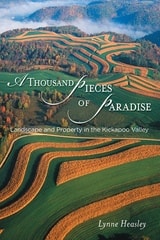
A Thousand Pieces of Paradise
Landscape and Property in the Kickapoo ValleyLynne Heasley
University of Wisconsin Press, 2012
A Thousand Pieces of Paradise is an ecological history of property and a cultural history of rural ecosystems set in one of the Midwest’s most historically significant regions, the Kickapoo River Valley. Whether examining the national war on soil erosion, Amish migration, a Corps of Engineers dam project, or Native American land claims, Lynne Heasley traces the history of modern American property debates. Her book holds powerful lessons for rural communities seeking to reconcile competing values about land and their place in it.
Beyond Preservation
Restoring and Inventing LandscapesDwight Baldwin
University of Minnesota Press, 1994
Beyond Preservation was first published in 1993. Minnesota Archive Editions uses digital technology to make long-unavailable books once again accessible, and are published unaltered from the original University of Minnesota Press editions.
Addressing current ecological issues, from the philosophical to the practical, Frederick Turner and William R. Jordan III Here offer a new paradigm for understanding the relationship between the humans and nature. Challenging the idea that preserving nature is the only solution to environmental problems, they advocate going beyond preservation to restoration and actual construction of our landscape. Fifteen respondents reflect on the implications and consequences of Turner’s and Jordan’s bold proposals.“Ecological restoration is the most helpful and provocative contribution to our thinking about nature to come along in many years, and Beyond Preservation is without a doubt the best book on the subject to date.” Michael Polan, Harper’sContributors include Gary W. Barrett, Ann Cline, David L. Gorchov, William Jordan III, G. Stanley Kane, Jack Temple Kirby, Dora G. Lodwick, Orie L. Loucks, Kimberly E. Medley, Constance Pierce, Ellen Price, Frederick Turner, John E. Wierwille, and Gene E. Willeke.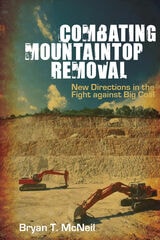
Combating Mountaintop Removal
New Directions in the Fight against Big CoalBryan T. McNeil
University of Illinois Press, 2012

Cultural Landscapes
Balancing Nature and Heritage in Preservation PracticeRichard Longstreth
University of Minnesota Press, 2008
Preservation has traditionally focused on saving prominent buildings of historical or architectural significance. Preserving cultural landscapes-the combined fabric of the natural and man-made environments-is a relatively new and often misunderstood idea among preservationists, but it is of increasing importance. The essays collected in this volume-case studies that include the Little Tokyo neighborhood in Los Angeles, the Cross Bronx Expressway, and a rural island in Puget Sound-underscore how this approach can be fruitfully applied. Together, they make clear that a cultural landscape perspective can be an essential underpinning for all historic preservation projects.
Contributors: Susan Calafate Boyle, National Park Service; Susan Buggey, U of Montreal; Michael Caratzas, Landmarks Preservation Commission (NYC); Courtney P. Fint, West Virginia Historic Preservation Office; Heidi Hohmann, Iowa State U; Hillary Jenks, USC; Randall Mason, U Penn; Robert Z. Melnick, U of Oregon; Nora Mitchell, National Park Service; Julie Riesenweber, U of Kentucky; Nancy Rottle, U of Washington; Bonnie Stepenoff, Southeast Missouri State U.
Richard Longstreth is professor of American civilization and director of the graduate program in historic preservation at George Washington University.

Depositions
Roberto Burle Marx and Public Landscapes under DictatorshipBy Catherine Seavitt Nordenson
University of Texas Press, 2018
Recipient of 2019 John Brinckerhoff Jackson Book Prize, Foundation for Landscape Studies
2021 On the Brinck Book Award Winner
“Burle Marx created a new and modern grammar for international landscape design.”
—Lauro Cavalcanti, quoted in the New York Times
“The real creator of the modern garden.”
—American Institute of Architects
Presenting the first English translation of Burle Marx’s “depositions,” this volume highlights the environmental advocacy of a preeminent Brazilian landscape architect who advised and challenged the country’s military dictatorship.
Roberto Burle Marx (1909–1994) is internationally known as one of the preeminent modernist landscape architects. He designed renowned public landscapes in Brazil, beginning with small plazas in Recife in the 1930s and culminating with large public parks in the early 1960s, most significantly the Parque do Flamengo in Rio de Janeiro. Depositions explores a pivotal moment in Burle Marx’s career—the years in which he served as a member of the Federal Cultural Council created by the military dictatorship in the mid-1960s. Despite the inherent conflict and risk in working with the military regime, Burle Marx boldly used his position to advocate for the protection of the unique Brazilian landscape, becoming a prophetic voice of caution against the regime’s policies of rapid development and resource exploitation.
Depositions presents the first English translation of eighteen environmental position pieces that Burle Marx wrote for the journal Cultura , a publication of the Brazilian Ministry of Education and Culture, from 1967 through 1973. Catherine Seavitt Nordenson introduces and contextualizes the depositions by analyzing their historical and political contexts, as well as by presenting pertinent examples of Burle Marx’s earlier public projects, which enables a comprehensive reading of the texts. Addressing deforestation, the establishment of national parks, the place of commemorative sculpture, and the unique history of the Brazilian cultural landscape, Depositions offers new insight into Burle Marx’s outstanding landscape oeuvre and elucidates his transition from prolific designer to prescient counselor.
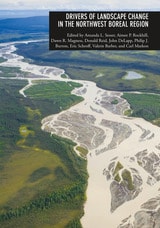
Drivers of Landscape Change in the Northwest Boreal Region
Edited by Carl Markon, Amanda L. Sesser, Aimee P. Rockhill, Dawn R. Magness, Don Reid, John DeLapp, Phil Burton, Eric Schroff, and Valerie Barber
University of Alaska Press, 2019
The NWB is a data-poor region, and the intention of the NWB Landscape Conservation Cooperative is to determine what data are not available and what data are available. For instance, historical baseline data describing the economic and social relationships in association with the ecological condition of the NWB landscape are often lacking. Likewise, the size and remoteness of this region make it challenging to measure basic biological information, such as species population sizes or trends. The paucity of weather and climate monitoring stations also compound the ability to model future climate trends and impacts, which is part of the nature of working in the north. The purpose of this volume is to create a resource for regional land and resource managers and researchers by synthesizing the latest research on the historical and current status of landscape-scale drivers (including anthropogenic activities) and ecosystem processes, future projected changes of each, and the effects of changes on important resources. Generally, each chapter is coauthored by researchers and land and natural resource managers from the United States and Canada.
Germany's Nature
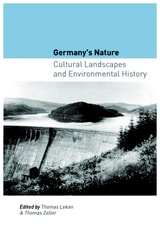
Cultural Landscapes and Environmental HistoryLekan, Thomas
Rutgers University Press, 2005
Now for the first time, a survey of the country's natural and cultural landscapes is available in one volume. Essays by leading scholars of history, geography, and the social sciences move beyond the Green movement to uncover the enduring yet ever-changing cultural patterns, social institutions, and geographic factors that have sustained Germany's relationship to its land.
Unlike the American environmental movement, which is still dominated by debates about wilderness conservation and the retention of untouched spaces, discussions of the German landscape have long recognized human impact as part of the "natural order." Drawing on a variety of sites as examples, including forests, waterways, the Autobahn, and natural history museums, the essays demonstrate how environmental debates in Germany have generally centered on the best ways to harmonize human priorities and organic order, rather than on attempts to reify wilderness as a place to escape from industrial society.
Germany's Nature is essential reading for students and professionals working in the fields of environmental studies, European history, and the history of science and technology.
Jens Jensen
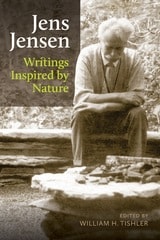
Writings Inspired by NatureWilliam H. Tishler
Wisconsin Historical Society Press, 2012
Today, Jensen is perhaps best remembered for establishing The Clearing on Wisconsin's Door County Peninsula. But the outspoken views in his writings - many of which were included in ephemeral planning reports, early newspapers, and now out-of-print journals - are virtually forgotten, with the exception of his two small books. "Jens Jensen: Writings Inspired by Nature" is an anthology of Jensen's most significant yet lesser-known articles, including a "Saturday Evening Post" piece that enabled him to reach the largest audience of his publishing career. The scope of Jensen's thoughts represented in this collection will further solidify his legacy and rightful place alongside conservation leaders such as John Muir and Aldo Leopold.
Remedies for a New West
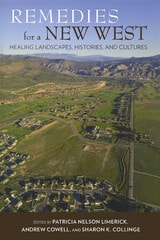
Healing Landscapes, Histories, and CulturesEdited by Patricia Nelson Limerick, Andrew Cowell, and Sharon K. Collinge
University of Arizona Press, 2009
The signs of illness and trauma can seem omnipresent in today’s West: land and soil disrupted from mining, overgrazing, logging, and farming; wildlife habitat reduced and fragmented; native societies disturbed and threatened; open space diminished by cities and suburbs; wilderness destroyed by roads and recreation-seekers. But as these essays suggest, the “treatment program” for healing the West has many healthful side effects. Engaging in the kinds of projects suggested by contributors is therapeutic not only for the environment but for participants as well. Restoration, repair, and recovery can counter symptoms of despair with concentrated doses of promise and possibility.
The more “lesions” the West has, this book suggests, the more opportunities there are for westerners to revive and ultimately cure the ailing patient they have helped to create. The very idea of restoring the West to health, contributors and editors contend, unleashes our imaginations, sharpens our minds, and gives meaning to the ways we choose to live our lives. At the same time, acknowledging the profound difficulties of the work that lies ahead immunizes us against our own arrogance as we set about the task of healing the West.
Revolutionary Parks
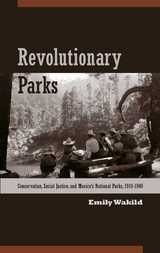
Conservation, Social Justice, and Mexico’s National Parks, 1910–1940Emily Wakild
University of Arizona Press, 2011
Revolutionary Parks tells the surprising story of how forty national parks were created in Mexico during the latter stages of the first social revolution of the twentieth century. By 1940 Mexico had more national parks than any other country. Together they protected more than two million acres of land in fourteen states. Even more remarkable, Lázaro Cárdenas, president of Mexico in the 1930s, began to promote concepts akin to sustainable development and ecotourism.
Conventional wisdom indicates that tropical and post-colonial countries, especially in the early twentieth century, have seldom had the ability or the ambition to protect nature on a national scale. It is also unusual for any country to make conservation a political priority in the middle of major reforms after a revolution. What emerges in Emily Wakild’s deft inquiry is the story of a nature protection program that takes into account the history, society, and culture of the times. Wakild employs case studies of four parks to show how the revolutionary momentum coalesced to create early environmentalism in Mexico.
According to Wakild, Mexico’s national parks were the outgrowth of revolutionary affinities for both rational science and social justice. Yet, rather than reserves set aside solely for ecology or politics, rural people continued to inhabit these landscapes and use them for a range of activities, from growing crops to producing charcoal. Sympathy for rural people tempered the radicalism of scientific conservationists. This fine balance between recognizing the morally valuable, if not always economically profitable, work of rural people and designing a revolutionary state that respected ecological limits proved to be a radical episode of government foresight.
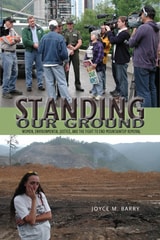
Standing Our Ground
Women, Environmental Justice, and the Fight to End Mountaintop RemovalJoyce M. Barry
Ohio University Press, 2012
Standing Our Ground: Women, Environmental Justice, and the Fight to End Mountaintop Removal examines women’s efforts to end mountaintop removal coal mining in West Virginia. Mountaintop removal coal mining, which involves demolishing the tops of hills and mountains to provide access to coal seams, is one of the most significant environmental threats in Appalachia, where it is most commonly practiced.
The Appalachian women featured in Barry’s book have firsthand experience with the negative impacts of Big Coal in West Virginia. Through their work in organizations such as the Coal River Mountain Watch and the Ohio Valley Environmental Coalition, they fight to save their mountain communities by promoting the development of alternative energy resources. Barry’s engaging and original work reveals how women’s tireless organizing efforts have made mountaintop removal a global political and environmental issue and laid the groundwork for a robust environmental justice movement in central Appalachia.
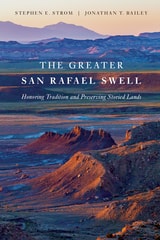
The Greater San Rafael Swell
Honoring Tradition and Preserving Storied LandsStephen E. Strom and Jonathan T. Bailey
University of Arizona Press, 2022
Natural and human history come together in The Greater San Rafael Swell, which spans much of Emery County in Utah. Authors Stephen Strom and Jonathan Bailey paint a multi-faceted picture of a singular place through photographs, along with descriptions of geology, paleontology, archaeology, history, and dozens of interviews with individuals who devoted more than two decades to developing a shared vision of the future of both the Swell and the County. At its core, the book relates the important story of how a coalition of ranchers, miners, off-road enthusiasts, conservationists, recreationists, and Native American tribal nations worked together for nearly 25 years to forge and pass the Emery County Public Lands Management Act in 2019.
This book chronicles hopeful stories for our times: how citizens of Emery and three other counties in the rural West worked to resolve perhaps the most volatile issue in the region – the future of public lands. Both their successes and the processes by which they found common ground serve as beacons in today’s uncertain landscape – beacons that can illuminate paths toward rebuilding our shared democracy from the ground up.