Results by title
18 books match the query 'Landscapes & Seascapes'
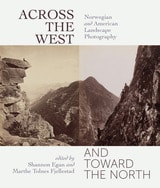
Across the West and Toward the North
Norwegian and American Landscape PhotographyEdited by Shannon Egan and Marthe Tolnes Fjellestad
University of Utah Press, 2021
In this edited volume, Norwegian and American scholars offer the first study of the striking parallels in the production, distribution, and reception of these modern expressions of landscape and nationhood. In recognizing how landscape photographs were made meaningful to international audiences—such as tourists, visitors to world’s fairs, scientists, politicians, and immigrants—the authors challenge notions of American exceptionalism and singularly nationalistic histories.
The book includes stunning photographs of mountainous landscapes, glaciers, and forests, punctuated by signs of human development and engineering, with more than one hundred rarely seen plates by photographers Knud Knudsen, Anders Beer Wilse, Timothy O’Sullivan, Charles R. Savage, and others.
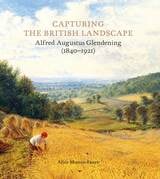
Capturing the British Landscape
Alfred Augustus Glendening (1840–1921)Alice Munro-Faure
Paul Holberton Publishing, 2022
Though critics often reviewed Alfred Augustus Glendening’s exhibitions, very little has been written about the artist himself. Here, new and extensive research removes layers of mystery and misinformation about his life, family, and career, accurately placing him amid the British art world during much of the nineteenth and into the twentieth century. Glendening was a man from humble origins, working full-time as a railway clerk when he managed to make his London exhibition debut at the age of twenty—a feat that would have been almost impossible before the Victorian era ushered in new possibilities of social mobility. Although his paintings show a tranquil and unspoiled landscape, his environment was rapidly being transformed by social, scientific, and industrial developments, while advances in transport, photography, and other technical discoveries undoubtedly influenced him and his fellow painters.
Celebrating his uniquely Victorian story, the book places Glendening within his proper historical context. Running alongside the main text is a timeline outlining significant landmarks, from political and social events to artistic and technical innovations. Thoroughly researched, the narrative explores why and for whom he painted, his artistic training, and his various inspirations. The book uncovers new information about the Victorian art world and embraces such aspects as Royal Academy prejudices, the popularity of Glendening’s work at home and abroad, his use of photography, and the sourcing of his art materials.
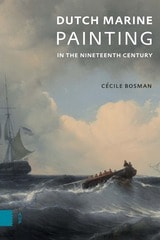
Dutch Marine Painting in the Nineteenth Century
Cécile Bosman
Amsterdam University Press, 2026
It turns out that throughout the nineteenth century, marine painting was seen in Dutch art circles as a vehicle for patriotism. This kind of cultural nationalism was rooted in the country's historical connection with the water and, in particular, the glorification of the Netherlands as a seafaring nation. An enduring myth that is now the subject of intense public debate. This beautifully illustrated book fills a gap in art and cultural-historical knowledge of marine painting, while offering an insightful look at the still influential nineteenth century.
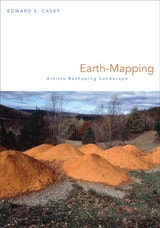
Earth-Mapping
Artists Reshaping LandscapeEdward S. Casey
University of Minnesota Press, 2005
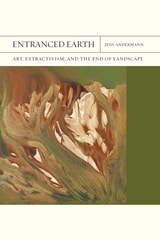
Entranced Earth
Art, Extractivism, and the End of LandscapeJens Andermann
Northwestern University Press, 2023
A sweeping analysis of the lasting effects of neocolonial extractivism in Latin American aesthetic modernity from 1920 to the present
Looking to the extractive frontier as a focal point of Latin American art, literature, music, and film, Jens Andermann asks what emerges at the other end of landscape. Art in the Global South has long represented and interrogated “insurgent nature”—organic and inorganic matter, human and nonhuman life, thrown into turmoil.
In Entranced Earth: Art, Extractivism, and the End of Landscape, Andermann traces the impact of despaisamiento—world-destroying un-landscaping—throughout the Latin American modernist archive. At the same time, he explores innovative, resilient modes of allyship forged between diverse actors through their shared experiences of destruction. From the literary regionalism of the 1930s to contemporary bio art, from modernist garden architecture to representations of migration and displacement in sound art and film, Entranced Earth tracks the crisis of landscape and environmental exhaustion beyond despair toward speculative, experimental forms of survival.
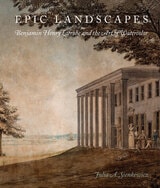
Epic Landscapes
Benjamin Henry Latrobe and the Art of WatercolorJulia Sienkewicz
University of Delaware Press, 2011
Published by University of Delaware Press. Distributed worldwide by Rutgers University Press.
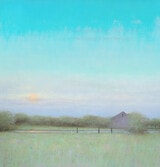
Every Hour of the Light
The Paintings of Mary Sipp GreenMary Sipp Green
The Artist Book Foundation, 2014
American landscape painter Mary Sipp Green, based in the bucolic Berkshire Hills of Massachusetts, has a superlative ability to engage the viewer in the emotive atmosphere of her landscapes and seascapes. The intensely saturated colors in her works evoke an immediate sense of place and a unique perspective on an intimate tableau. Sipp Green achieves an ethereal, nuanced quality in her paintings that imparts a refined and inimitable serenity. In Every Hour of the Light: The Paintings of mary Sipp Green, many of the subjects she paints—salt marshes, barns, meadows, rivers, and the occasional cityscape—are captured in the exquisite twilight of early evenings or a luminescent sunrise. The effect is dreamy yet grounded and familiar.
Sipp Green states, "While my preferred medium has always been oil on linen, my methods, techniques, and aesthetic aims have all undergone significant transformations since I first began. I learned my craft in the studio, painting still lifes and portraits, as well as landscapes drawn directly from nature. Over time, I became increasingly engaged with more abstract and spiritual aspects of the landscape form and I began to pursue a less representational, more expressive style." When describing her "diffuse quality of color," she explains, "I use many layers of paint, allowing each to dry before the next is applied. Along the way, the surface of the paint is often refigured in unpredictable ways, and there is much that has to be scraped, sanded, destroyed and reapplied before the essence of a place, its mood and atmosphere, finally emerges onto the canvas."
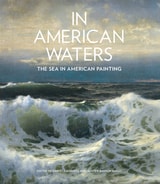
In American Waters
The Sea in American PaintingDaniel Finamore
University of Arkansas Press, 2021
In American Waters is the catalog of an exhibition co-organized by Crystal Bridges Museum of American Art in Bentonville, Arkansas, and Peabody Essex Museum in Salem, Massachusetts.
The exhibition and this associated catalog invite visitors to discover the sea as an expansive way to reflect on American culture and environment, learn how coastal and maritime symbols moved inland across the United States, and question what it means to be “in American waters.” Work by Georgia O’Keeffe, Amy Sherald, Kay WalkingStick, Norman Rockwell, Hale Woodruff, Paul Cadmus, Thomas Hart Benton, Jacob Lawrence, Valerie Hegarty, Stuart Davis, and many others is included, along with essays from scholars, critics, and the curators.
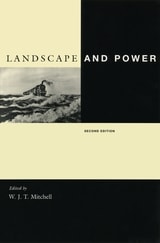
Landscape and Power, Second Edition
Edited by W. J. T. Mitchell
University of Chicago Press, 2002
The first edition of this book, published in 1994, reshaped the direction of landscape studies by considering landscape not simply as an object to be seen or a text to be read, but as an instrument of cultural force, a central tool in the creation of national and social identities. This second edition adds not only a new preface, but five new essays—from Edward Said, W. J. T. Mitchell, Jonathan Bordo, Michael Taussig, and Robert Pogue Harrison—extending the scope of the book in remarkable ways.
Landscape and Power continues to be a central text for students and scholars who want to understand the importance of landscape to the making of our social, political, and cultural world.
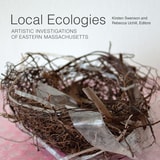
Local Ecologies
Artistic Investigations of Eastern MassachusettsEdited by Kirsten Swenson and Rebecca Uchill
Amherst College Press, 2026
Local Ecologies: Artistic Investigations of Eastern Massachusetts is an innovative multimedia exploration of the entangled natural and cultural ecologies of Eastern Massachusetts. The book’s rich archive of essays, interviews, and artistic projects reveals the region’s layered Indigenous, colonial, and industrial histories, showing how art can deepen understanding of place. The volume foregrounds multiple ways of knowing and making place—through observation, research, memory, and collective action—offering the reader models for ongoing engagement with the region and beyond.
Developed through a multiyear collaboration among artists, scholars, activists, and community stakeholders, this volume takes its name from an initiative hosted by three University of Massachusetts campuses (Boston, Dartmouth, and Lowell) in 2019 and 2020. Through essays, videos, sound artworks, artist books, and other intermedia offerings, the book’s contributors reflect on sites such as Walden Pond, Deer Island in Boston Harbor, New Bedford Harbor, and the Merrimack River, tracing histories of use and interpretation of place, and exploring contemporary responses to those legacies through creative acts of reclamation. At a moment when the infrastructures of cultural memory are increasingly under threat, Local Ecologies insists on art as a vital mode of collective reckoning and possibility.
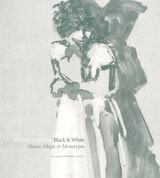
Richard Segalman Black & White
Muses, Magic & MonotypesRichard Segalman
The Artist Book Foundation, 2015
For many, the name Richard Segalman conjures up a vision of light-infused paintings of women gathered on a beach, gazing out the window of a New York City brownstone, or dressed in vcostumes from another era. But just as Edgar Degas, approaching his 60th year, surprised gallery goers with an exhibition not of ballerinas or race horses, but of highly atmospheric monotype landscapes, so too does Segalman surprise us with this exceptional collection of monotypes he began to produce in 1993, at nearly 60. "I reached a sort of plateau and needed a new direction," says the artist. "I came across a monotype... took a course... made one and I was hooked."
The significance of Segalman's shift into this medium is most powerfully conveyed through his arresting black-and-white prints that range from anonymous crowds on Coney Island beaches or New York City streets to a solitary figure in private contemplation. This monochromatic focus makes perfect sense: Segalman's first gallery appearance in New York—a sold-out show that gave him the courage to embrace the life of an artist—consisted entirely of black-and-white charcoal drawings, several stunning examples of which open this book.
Author Susan F. Castle's essay about the artist and his muses—the people, places, and things for which Richard Segalman has an abiding love—illuminates the exceptional work collected for this monograph. She combines excerpts from interviews with the artist and the three master printmakers with whom he has worked in Woodstock and Brooklyn, New York, and in Santa Fe, New Mexico. In addition, Anthony Kirk's insightful introudction provides an essential historical perspective on the artist and his printmaking process.
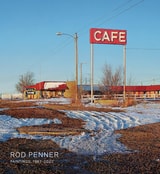
Rod Penner
Paintings, 1987–2022Rod Penner
The Artist Book Foundation, 2022
Rod Penner infuses his photorealistic paintings of the American southwest with a cinematic quality in the first major monograph on this contemporary realist artist.
The abandoned and forgotten landscapes of rural southwestern towns are the favored subjects of Rod Penner's paintings. His deft use of contrasts in his images—despondency and hope, isolation and nostalgia—evokes memories of The Last Picture Show and elicits complex responses from viewers. "I'm interested in the look of things and the quality of being there," he says. "A moment that is completely frozen with all the variety of textures; rust on poles, crumbling asphalt, light hitting the grass."
Penner's works are based on his photographs, digital video stills, and his experience of the rural landscapes of Texas and New Mexico. He depicts desolate, often deserted locations, the character of old houses and abandoned buildings, weather, and unique geography. His chosen scenes are infused with a cinematic quality that is the result of the exquisite light that he captures with his meticulous process. "The finished paintings should evoke contrasting responses of melancholy and warmth, desolation and serenity," he says.
Penner's hyperrealistic technique meticulously records both the iconic imagery and the beauty in the ashes of these once-prosperous streets and nighborhoods that still endure. The incredible poignant scenes evoke a universalism, a collective experience seen through the lens of Americana. "You won't find any hidden or overt socio-political meaning in my work and at the same time I hope that by utilizing what I find in the American landscape I'm able to connect to viewers on a deeper psychological level."
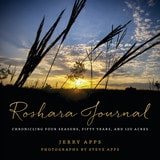
Roshara Journal
Chronicling Four Seasons, Fifty Years, and 120 AcresJerry Apps
Wisconsin Historical Society Press, 2016
A photographic diary of a small Midwestern farm and the family who’ve made it their home
In Roshara Journal, father-and-son team Jerry and Steve Apps share the monthly happenings at their family’s farm in central Wisconsin. Featuring Steve’s stunning photos and fifty years of Jerry’s journal entries, Roshara Journal captures the changes—both from month to month and over the decades—on the landscape and farmstead.
The Apps family has owned Roshara since 1966. There they nurture a prairie restoration and pine plantation, maintain a large garden that feeds three generations, observe wildlife species by the dozens, and support a population of endangered butterflies. In documenting life on this piece of land, Jerry and Steve remind us how, despite the pace and challenges of modern life, the seasons continue to influence our lives in ways large and small. Jerry explains that his journal entries become much more than mere observations: "It seems that when I write about something—a bur oak tree, for example—that old tree becomes a part of me. . . . Writing takes me to a place that goes beyond observation and understanding, a place filled with feeling and meaning."
In the tradition of Bernd Heinrich in Maine, Barry Lopez in the Canadian Arctic, and Aldo Leopold just an hour down the road in Baraboo, Jerry and Steve Apps combine observation, experience, and reflection to tell a profound story about one place in the world.
Social Formation and Symbolic Landscape
Denis E. Cosgrove
University of Wisconsin Press, 1998
Hailed as a landmark in its field since its first publication in 1984, Denis E. Cosgrove’s Social Formation and Symbolic Landscape has been influential well beyond geography. It has continued to spark lively debate among historians, geographers, art historians, social theorists, landscape architects, and others interested in the social and cultural politics of landscape.
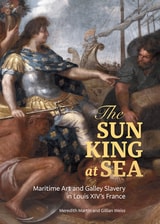
The Sun King at Sea
Maritime Art and Galley Slavery in Louis XIV's FranceMeredith Martin
J. Paul Getty Trust, The, 2022
Winner of the 2023 Leo Gershoy Award
2023 Winner of The David H. Pinkney Prize
Honorable Mention for The Mediterranean Seminar Best Book Prize 2023
Winner of the 2022 Kenshur Prize
Shortlisted for Apollo Magazine's 2022 Book of the Year
This richly illustrated volume, the first devoted to maritime art and galley slavery in early modern France, shows how royal propagandists used the image and labor of enslaved Muslims to glorify Louis XIV.
Mediterranean maritime art and the forced labor on which it depended were fundamental to the politics and propaganda of France’s King Louis XIV (r. 1643–1715). Yet most studies of French art in this period focus on Paris and Versailles, overlooking the presence or portrayal of galley slaves on the kingdom’s coasts. By examining a wide range of artistic productions—ship design, artillery sculpture, medals, paintings, and prints—Meredith Martin and Gillian Weiss uncover a vital aspect of royal representation and unsettle a standard picture of art and power in early modern France.
With an abundant selection of startling images, many never before published, The Sun King at Sea emphasizes the role of esclaves turcs (enslaved Turks)—rowers who were captured or purchased from Islamic lands—in building and decorating ships and other art objects that circulated on land and by sea to glorify the Crown. Challenging the notion that human bondage vanished from continental France, this cross-disciplinary volume invites a reassessment of servitude as a visible condition, mode of representation, and symbol of sovereignty during Louis XIV’s reign.
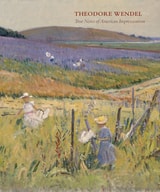
Theodore Wendel
True Notes of American ImpressionismTheodore Wendel
The Artist Book Foundation, 2019
One of the original "Duveneck boys" who studied in Munich at the Royal Academy, Theodore Wendel followed his mentor to Florence and Venice; he later went on to Paris and ultimately joined a colony of young artists at Giverny. The scenes and subject matter in the works he completed there are among the earliest by an American artist to adopt and evolve Impressionist strategies. Upon his return to America, he spent the next decades rendering scenes of the farmland and coast north of Boston that contemporary critics acclaimed as some of the best they had seen. Yet despite his talent and the significant accolades earned during his career, in the near-century following his death the recognition of his achievements has faded. The Artist Book Foundation is delighted to have the opportunity to remedy this siutation with its forthcoming monograph on the artist, Theodore Wendel: True Notes of American Impressionism.
Laurene Buckley's years of exhaustive research inform an engaging and detailed narrative of Wendel's time in Europe and his many years capturing the essence of the farms and fishing villages along the rural coast of Massachusetts. Thanks to her efforts, the book will feature many of his best works, a number of which are in private collections. An informative introduction by William H. Gerdts provides significant artistic context for Wendel and explains the artist's deft ability to draw the viewer into a scene. Concluding the monograph, an extensive chronology, exhibition history, and bibliography complete the scholarship on this long overdue tribute to a master of American Impressionism.
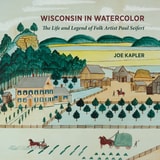
Wisconsin in Watercolor
The Life and Legend of Folk Artist Paul SeifertJoe Kapler
Wisconsin Historical Society Press, 2018
In 1867, German immigrant Paul Seifert settled in the Driftless Area of southwestern Wisconsin and began capturing the distinctive farms and landscapes of his new home in vivid, detailed watercolors. Today, these paintings are coveted by American folk art collectors across the country, but Seifert’s life remains shrouded in mystery.
In this first book written about Paul Seifert, author Joe Kapler examines the life of this enigmatic artist and provides context for his extraordinary art. The book features high-quality reproductions of twenty-two Seifert watercolors (more than half of which have never been published) and many close-ups of his characteristic details, from horses and hay wagons to dogs and dinner bells. Part art history treatment, part coffee table book, part research memoir, and part love letter to the Driftless Area, Wisconsin in Watercolor shines a long-awaited light on Seifert and the land he so carefully rendered over a hundred years ago.
Wyeth People
Gene Logsdon
Ohio University Press, 2003