Results by title
6 books match the query 'Laramie, Michael G.'
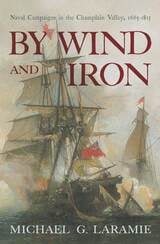
By Wind and Iron
Naval Campaigns in the Champlain Valley, 1665–1815Michael Laramie
Westholme Publishing, 2027
Contested for More than a Century, a Natural Invasion Route into the Heart of North America
For more than 150 years, the natural invasion route along the waterways of the Champlain and Richelieu valleys into northeastern North America was among the most fiercely contested in the history of the continent. Whether the French and their Indian allies attacking British forts and settlements during the Seven Years’ War, the American Continentals striking north into Canada during the American Revolution, or the British battling French and later American forces in these wars and the War of 1812, it was clear to policy makers in Quebec, London, Paris, Philadelphia, and Washington that whoever controlled this corridor and its lakes and rivers, controlled the heart of the continent. In By Wind and Iron: Naval Campaigns in the Champlain Valley, 1665–1815, Michael G. Laramie details the maritime history of this region from the first French fortifications along the Richelieu River in the late seventeenth century through the tremendous American victory over the British at the Battle of Plattsburgh on Lake Champlain in 1814. Using period letters, journals, and other primary source materials, the author examines the northeastern waterways and their tributaries within the framework of the soldiers and sailors who faced the perils of the campaigns, while at the same time clarifying the key role played by this region in the greater struggle for North America and American independence.
In support of the narrative, the book also contains appendices that include after action reports from various fleet commanders, tables of fleet strengths, additional battle maps, a glossary, and a dictionary of lake warships with notes on vessel types, typical armament, construction, deployment, and fates.
[more]
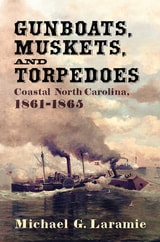
Gunboats, Muskets, and Torpedoes
Coastal North Carolina, 1861–1865Michael G. Laramie
Westholme Publishing, 2027
The Clash of Arms and Technology for a Critical Region that Lasted the Entire American Civil War
From the first shots at Cape Hatteras in the summer of 1861 to the fall of Fort Fisher in early 1865, the contest for coastal North Carolina during the American Civil War was crucial to the Union victory. With a clear naval superiority over the South, the North conducted blockading and amphibious operations from Virginia to Texas, including the three-hundred-mile seacoast of North Carolina. With its Pamlico and Albemarle Sounds—fed by navigable rivers that reached deep into the interior—and major Confederate port of Wilmington, the Carolina coast was essential for the distribution of foreign goods and supplies to Confederate forces in Virginia and elsewhere. If the Union was able to capture Wilmington or advance on the interior waters, they would cripple the South’s war efforts.
In Gunboats, Muskets, and Torpedoes: Coastal North Carolina, 1861–1865, award-winning historian Michael G. Laramie chronicles both the battle over supplying the South by sea as well as the ways this region proved to be a fertile ground for the application of new technologies. With the advent of steam propulsion, the telegraph, rifled cannon, repeating firearms, ironclads, and naval mines, the methods and tactics of the old wooden walls soon fell to those of this first major conflict of the industrial age. Soldiers and sailors could fire farther and faster than ever before. With rail transportation available, marches were no longer weeks but days or even hours, allowing commanders to quickly shift men and materials to meet an oncoming threat or exploit an enemy weakness. Fortifications changed to meet the challenges imposed by improved artillery, while the telegraph stretched the battlefield even further. Yet for all the technological changes, many of which would be harbingers of greater conflicts to come, the real story of this strategic coast is found in the words and actions of the soldiers and sailors who vied for this region for nearly four years. It is here, where the choices made—whether good or bad, misinformed, or not made at all—intersected with logistical hurdles, geography, valor, and fear to shape the conflict; a conflict thatwould ultimately set the postwar nation on track to becoming a modern naval power.
[more]
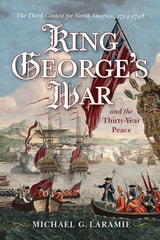
King George's War and the Thirty Year Peace
The Third Contest for North AmericaMichael G. Laramie
Westholme Publishing, 2027
The Final Volume in the Award-Winning Wars for North America Trilogy: King William's, Queen Anne's and King George's Wars
King George’s War and the Thirty-Year Peace continues the contest for North America from the end of Queen Anne’s War in 1713, marking the beginning of the Thirty-Year Peace, through the start of King George’s War in 1744, to its conclusion with the signing of Treaty of Aix-la-Chapelle four years later. While there would be little fighting between the French, Spanish, and British colonies in North America during the Thirty-Year Peace—the Franco-Spanish conflict of 1719 being an exception—for the French and British internally it did not prove to be peaceful. Conflicts with former Indigenous allies erupted, including with the Three Years War, the Yamassee War, and the Natchez and Chickasaw Wars. In the south the peace was ruptured by the opening of the War of Jenkin’s Ear in 1739, which led to an attempt by South Carolina and the new colony of Georgia to seize Spanish St. Augustine, and a counter-attack by St. Augustine and Cuba aimed at the destruction of the two British colonies. While this Anglo-Spanish conflict would shift farther south into the Caribbean, to the north, news of another war between France and Britain would arrive in 1744. King George’s War, the North American component of Europe’s War of Austrian Succession, would start in Nova Scotia with French attacks on the weakly held British colony. This provocation inspired a response in the form of one of the boldest expeditions of the colonial period—Massachusetts Governor William Shirley’s successful campaign against Louisbourg on Cape Breton Island. With the French fortress in British hands and the cry of delenda est Canadaechoing through the American colonial assemblies, Shirley turned to the conquest of French Canada and convinced London to dispatch a fleet to assist in the capture of Montreal and Quebec. In Paris, news of Louisbourg’s surrender elicited an unexpected reaction in the form of one of the largest French naval expeditions ever sent to North America, with explicit orders to retake Cape Breton and expel the British from Nova Scotia. Thus, by the summer of 1746, both British and French sentries scanned the eastern horizon daily for a fleet that would determine the destiny of the conflict, but neither would be happy with what they found.
The final volume in Michael G. Laramie’s acclaimed histories of the European struggle for North America that set the stage for the French and Indian War, King George’s War and the Thirty-Year Peace: The Third Contest for North America, 1714–1748, takes the reader along with the combatants into the field and waterways, including Native American, French, Spanish, Provincial, and British. Based on a rich variety of primary sources and fully illustrated with original maps, this volume joins the author’s King William’s War and Queen Anne’s War as the modern history of these lesser-known—but enormously important—conflicts that shaped the political story of North America.
[more]
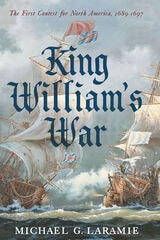
King William's War
The First Contest for North America, 1689–1697Michael Laramie
Westholme Publishing, 2027
Winner of the New York Society of Colonial Wars Annual Book Award
Fought in New York, New England, and Canada, the Conflict that Began the Long French and English Struggle for the New World
While much has been written on the French and Indian War of 1754–1763, the colonial conflicts that preceded it have received comparatively little attention. Yet in King William’s War, the first clash between England and France for control of North America, the patterns of conflict for the next seventy years were laid, as were the goals and objectives of both sides, as well as the realization that the colonies of the two nations could not coexist.
King William’s War actually encompassed several proxy wars being fought by the English and the French through their native allies. The Beaver Wars was a long running feud between the Iroquois Confederacy, New France, and New France’s native allies over control of the lucrative fur trade. Fueled by English guns and money, the Iroquois attempted to divert the French fur trade towards their English trading partners in Albany, and in the process gain control over other Indian tribes. To the east the pro-French Wabanaki of Maine, Nova Scotia, and New Brunswick had earlier fought a war with New England, but English expansion and French urgings, aided by foolish moves and political blunders on the part of New England, erupted into a second Wabanaki War on the eve of King William’s War. Thus, these two conflicts officially became one with the arrival of news of a declaration of war between France and England in 1689. The next nine years saw coordinated attacks, including French assaults on Schenectady, New York, and Massachusetts, and English attacks around Montreal and on Nova Scotia. The war ended diplomatically, but started again five years later in Queen Anne’s War.
A riveting history full of memorable characters and events, and supported by extensive primary source material, King William’s War: The First Contest for North America, 1689–1697 by Michael G. Laramie is the first book-length treatment of a war that proved crucial to the future of North America.
[more]

Queen Anne's War
The Second Contest for North America, 1702–1713Michael G. Laramie
Westholme Publishing, 2027
Although King William’s War (1689–1697) had established the basic disputes between New France and the English colonies, the conflict had resolved little beyond making it clear that the smaller French colony was more than capable of defending itself. When news of the War of Spanish Succession (1701–1714), or Queen Anne’s War as it would become known in North America, arrived in 1702, few envisioned that the resumption of the previous conflict would grow to engulf eastern North America from Newfoundland to Florida, pitting the Spanish, English, and French colonies along with their respective native allies into a concerted contest for control of the continent. From the storming of Spanish St. Augustine and the opening shots along the Maine frontier, through the implementation of a series of profit-driven Indian Wars and the destruction of the Spanish mission system in Georgia and Florida, to the direct involvement of Britain in the closing days of the conflict, Queen Anne’s War: The Second Contest for North America, 1702–1713 carries the reader through this oft forgotten, but crucial period in North American history.
Told from the halls of power in North America and Europe, and through the eyes of the men and women who found themselves embroiled in this brutal realignment of colonial interests, Queen Anne’s War recreates the world of early North American expansion at the ground level, providing riveting accounts of the battles across settlements and wilderness as well as the motives, conditions, triumphs, and failures of the Europeans and their respective Native American allies. Based on extensive primary source research and command of English, French, and Spanish sources, the narrative not only describes the economic and geopolitical ramifications of the war that reshaped North America, but intriguingly reveals the sense of independence emerging in the colonies, from Puritan New England to plantation South Carolina, at the close of the war.
Told from the halls of power in North America and Europe, and through the eyes of the men and women who found themselves embroiled in this brutal realignment of colonial interests, Queen Anne’s War recreates the world of early North American expansion at the ground level, providing riveting accounts of the battles across settlements and wilderness as well as the motives, conditions, triumphs, and failures of the Europeans and their respective Native American allies. Based on extensive primary source research and command of English, French, and Spanish sources, the narrative not only describes the economic and geopolitical ramifications of the war that reshaped North America, but intriguingly reveals the sense of independence emerging in the colonies, from Puritan New England to plantation South Carolina, at the close of the war.
[more]

The Road to Ticonderoga
The Campaign of 1758 in the Champlain ValleyMichael G. Laramie
Westholme Publishing, 2027
The British campaign to capture Fort Carillon on the Ticonderoga Peninsula in 1758 resulted in the largest battle of the French and Indian War. Crafted by Prime Minister William Pitt, the scope and scale of the British effort was staggering, calling for their northern colonies to raise 20,000 men to rendezvous with the British Regulars at Albany. The directive would test the patience, resources, and will of the colonial governments as well as that of the newly appointed the British commander-in-chief, General James Abercrombie. For the defenders of New France matters were dire. Reports were arriving that Abercrombie’s numbers were over twice the entire fighting strength of Canada. For the French field commander, the Marquis de Montcalm, there were few options. The Marquis had long opposed defending frontier forts, calling for abandoning these posts at the first sign of threat in order to conserve the colony’s resources. The French Governor disagreed and dispatched Montcalm and his white-coated French regulars with orders to defend Fort Carillon. With his army the only thing that stood between the British and the interior of Canada, there appeared to be a single path before the Marquis. Whether the Governor liked it or not, a rearguard action followed by a retreat down Lake Champlain was the only answer that would leave the army of Canada in position to fight again. Yet, within the span of a few days Montcalm would set these views aside, and suddenly risk both his army and the fate of Canada on a single risky battle.
Based on journals, letters, and accounts of the participants on both sides, The Road to Ticonderoga: The Campaign of 1758 in the Champlain Valley by Michael G. Laramie recounts this unexpected tale of victory and defeat on the North American frontier. Here we learn how the unexpected death of a dynamic leader, George Howe, elder brother of Richard and William, nearly crushed “the soul of General Abercrombie’s army,” leading to misinterpreted orders and hesitation on the part of the British. At the same time, the French commander perilously underestimated the ability of his own forces while overestimating his enemy’s before his fateful and unexpected decision to make his stand at Ticonderoga. With lessons and repercussions for future warfare in North America, The Road to Ticonderoga shows how a series of small mistakes can cascade into a catastrophe under weak leadership—or be exploited by a strong one.
Based on journals, letters, and accounts of the participants on both sides, The Road to Ticonderoga: The Campaign of 1758 in the Champlain Valley by Michael G. Laramie recounts this unexpected tale of victory and defeat on the North American frontier. Here we learn how the unexpected death of a dynamic leader, George Howe, elder brother of Richard and William, nearly crushed “the soul of General Abercrombie’s army,” leading to misinterpreted orders and hesitation on the part of the British. At the same time, the French commander perilously underestimated the ability of his own forces while overestimating his enemy’s before his fateful and unexpected decision to make his stand at Ticonderoga. With lessons and repercussions for future warfare in North America, The Road to Ticonderoga shows how a series of small mistakes can cascade into a catastrophe under weak leadership—or be exploited by a strong one.
[more]