Results by title

32 books match the query 'Latin (Hispanic & Latino)'
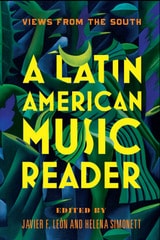
cover of A Latin American Music Reader: Views from the South

A Latin American Music Reader

Views from the South

Javier F Leon

University of Illinois Press, 2016

Javier F. León and Helena Simonett curate a collection of essential writings from the last twenty-five years of Latin American music studies. Chosen as representative, outstanding, and influential in the field, each article appears in English translation. A detailed new introduction by León and Simonett both surveys and contextualizes the history of Latin American ethnomusicology, opening the door for readers energized by the musical forms brought and nurtured by immigrants from throughout Latin America.

Contributors include Marina Alonso Bolaños, Gonzalo Camacho Díaz, José Jorge de Carvalho, Claudio F. Díaz, Rodrigo Cantos Savelli Gomes, Juan Pablo González, Rubén López-Cano, Angela Lühning, Jorge Martínez Ulloa, Maria Ignêz Cruz Mello, Julio Mendívil, Carlos Miñana Blasco, Raúl R. Romero, Iñigo Sánchez Fuarros, Carlos Sandroni, Carolina Santamaría-Delgado, Rodrigo Torres Alvarado, and Alejandro Vera.
[more]
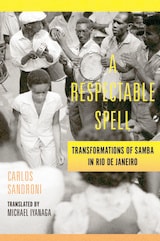
cover of A Respectable Spell: Transformations of Samba in Rio de Janeiro

A Respectable Spell

Transformations of Samba in Rio de Janeiro

Carlos Sandroni

University of Illinois Press, 2021

A landmark in Brazilian music scholarship, A Respectable Spell introduces English-speaking readers to the rich history of samba from its nineteenth century origins to its emergence as a distinctive genre in the 1930s. Merging storytelling with theory, Carlos Sandroni profiles performers, composers, and others while analyzing the complex ideologies their music can communicate in their lyrics and rhythms, and how the meaning of songs and musical genres can vary depending on social and historical context. He also delves into lundu, modinha, maxixe, and many other genres of Brazilian music; presents the little-heard voices and perspectives of marginalized Brazilians like the African-descended sambistas; and presents a study in step with the types of decolonial approaches to ethnomusicology that have since emerged, treating the people being studied not only as makers of music but also of knowledge.

Incisive and comprehensive, A Respectable Spell tells the compelling story of an iconic Brazilian musical genre.

[more]
cover of Amplifications of Black Sound from Colonial Mexico: Vocality and Beyond

Amplifications of Black Sound from Colonial Mexico

Vocality and Beyond

Sarah Finley

Vanderbilt University Press, 2024

Thinkers like W. E. B. Du Bois and Paul Gilroy have long championed sound as an affective register of Black subjectivity, particularly in the African Atlantic. Prior studies in this vein focus on Anglophone or Caribbean contexts, a tendency that furthers Mexico’s marginalization within narratives of the Black and African diaspora and mutes Afro-descendant traditions that date back to the sixteenth century. Indeed, the New Spanish archive contains whispers of the region’s Black sound cultures, including monetary records for the voices of enslaved singers and representations of Black music in casta paintings. Despite such evidence, it is difficult to attend fully to these subaltern voices, for the cultural filters of the lettered elite often mute or misinterpret non-European sounds.

Amplifications of Black Sound from Colonial Mexico is the first extensive study of Afro-descendant sonorities in New Spain or elsewhere in colonial Latin America. In this context, it attends to Black sounds through a framework that remixes Jacques Derrida’s reading of the ear’s anatomy with theories like Gilroy’s lower frequencies or Fred Moten’s phonic materiality. Sarah Finley’s aim is to unsettle the divide between self and other so the auditory archive might emerge as a polyphonic record that exceeds dichotomies of sounding object / listening subject. Through sampling the Afro-descendant sounds of this archive, this book recovers and rearticulates Black voices and auditory practices in New Spain.
[more]
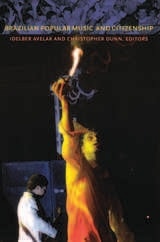
cover of Brazilian Popular Music and Citizenship

Brazilian Popular Music and Citizenship

Idelber Avelar and Christopher Dunn, eds.

Duke University Press, 2011

Covering more than one hundred years of history, this multidisciplinary collection of essays explores the vital connections between popular music and citizenship in Brazil. While popular music has served as an effective resource for communities to stake claims to political, social, and cultural rights in Brazil, it has also been appropriated by the state in its efforts to manage and control a socially, racially, and geographically diverse nation. The question of citizenship has also been a recurrent theme in the work of many of Brazil’s most important musicians. These essays explore popular music in relation to national identity, social class, racial formations, community organizing, political protest, and emergent forms of distribution and consumption. Contributors examine the cultural politics of samba in the 1930s, the trajectory of middle-class musical sensibility associated with Música Popular Brasileira (MPB), rock and re-democratization in the 1980s, music and black identity in Bahia, hip hop and community organizing in São Paulo, and the repression of baile funk in Rio in the 1990s. Among other topics, they consider the use of music by the Landless Workers’ Movement, the performance of identity by Japanese Brazilian musicians, the mangue beat movement of Recife, and the emergence of new regional styles, such as lambadão and tecnobrega, that circulate outside of conventional distribution channels. Taken together, the essays reveal the important connections between citizenship, national belonging, and Brazilian popular music.

Contributors. Idelber Avelar, Christopher Dunn, João Freire Filho, Goli Guerreiro, Micael Herschmann, Ari Lima, Aaron Lorenz, Shanna Lorenz, Angélica Madeira, Malcolm K. McNee, Frederick Moehn, Flávio Oliveira, Adalberto Paranhos, Derek Pardue, Marco Aurélio Paz Tella, Osmundo Pinho, Carlos Sandroni, Daniel Sharp, Hermano Vianna, Wivian Weller
[more]
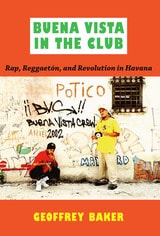
cover of Buena Vista in the Club: Rap, Reggaetón, and Revolution in Havana

Buena Vista in the Club

Rap, Reggaetón, and Revolution in Havana

Geoffrey Baker

Duke University Press, 2011
In Buena Vista in the Club, Geoffrey Baker traces the trajectory of the Havana hip hop scene from the late 1980s to the present and analyzes its partial eclipse by reggaetón. While Cuban officials initially rejected rap as “the music of the enemy,” leading figures in the hip hop scene soon convinced certain cultural institutions to accept and then promote rap as part of Cuba’s national culture. Culminating in the creation of the state-run Cuban Rap Agency, this process of “nationalization” drew on the shared ideological roots of hip hop and the Cuban nation and the historical connections between Cubans and African Americans. At the same time, young Havana rappers used hip hop, the music of urban inequality par excellence, to critique the rapid changes occurring in Havana since the early 1990s, when the Soviet Union fell, its subsidy of Cuba ceased, and a tourism-based economy emerged. Baker considers the explosion of reggaetón in the early 2000s as a reflection of the “new materialism” that accompanied the influx of foreign consumer goods and cultural priorities into “sociocapitalist” Havana. Exploring the transnational dimensions of Cuba’s urban music, he examines how foreigners supported and documented Havana’s growing hip hop scene starting in the late 1990s and represented it in print and on film and CD. He argues that the discursive framing of Cuban rap played a crucial part in its success.
[more]
cover of Caribbean Currents: Caribbean Music from Rumba to Reggae

Caribbean Currents

Caribbean Music from Rumba to Reggae

Peter Manuel

Temple University Press, 2006

Music is the most popular and dynamic aspect of Caribbean expressive culture. From the well-known genres—salsa, merengue, reggae, calypso, and bachata—to more localized forms like chutney and kaseko, this wide-ranging book surveys Caribbean music's prodigious diversity and colorful history. Enhanced with numerous illustrations and musical examples, Caribbean Currents is an up-to-date overview of the region's music, covering Cuba, Puerto Rico, the Dominican Republic, Haiti, Jamaica, Trinidad, Suriname, and smaller islands like Martinique and Guadeloupe. Engaging descriptions of musical forms and innovations, festivals and dance halls, as well as musicians and fans, are situated in

This revised and expanded version features:

* Twenty-seven new illustrations

* Recent developments in the region's music, such as the emergence of reggaetón and timba

* A new and extensive study of Jamaican dancehall
[more]
cover of Caribbean Currents: Caribbean Music from Rumba to Reggae

Caribbean Currents

Caribbean Music from Rumba to Reggae

Peter Manuel

Temple University Press, 2016

First published in 1995, Caribbean Currents has become the definitive guide to the distinctive musics of this region of the world. This third edition of the award-winning book is substantially updated and expanded, featuring thorough coverage of new developments, such as the global spread of reggaeton and bachata, the advent of music videos, the restructuring of the music industry, and the emergence of new dance styles. It also includes many new illustrations and links to accompanying video footage.
 
The authors succinctly and perceptively situate the musical styles and developments in the context of themes of gender and racial dynamics, sociopolitical background, and diasporic dimensions. Caribbean Currents showcases the rich and diverse musics of Cuba, Puerto Rico, the Dominican Republic, Jamaica, Trinidad, the French Caribbean, the lesser Antilles, and their transnational communities in the United States and elsewhere to provide an engaging panorama of this most dynamic aspect of Caribbean culture. 
[more]
cover of Contemporary Carioca: Technologies of Mixing in a Brazilian Music Scene

Contemporary Carioca

Technologies of Mixing in a Brazilian Music Scene

Frederick Moehn

Duke University Press, 2012
Brazilian popular music is widely celebrated for its inventive amalgams of styles and sounds. Cariocas, native residents of Rio de Janeiro, think of their city as particularly conducive to musical mixture, given its history as a hub of Brazilian media and culture. In Contemporary Carioca, the ethnomusicologist Frederick Moehn introduces a generation of Rio-based musicians who collaboratively have reinvigorated Brazilian genres, such as samba and maracatu, through juxtaposition with international influences, including rock, techno, and funk. Moehn highlights the creativity of individual artists, including Marcos Suzano, Lenine, Pedro Luís, Fernanda Abreu, and Paulinho Moska. He describes how these artists manage their careers, having reclaimed some control from record labels. Examining the specific meanings that their fusions have in the Carioca scene, he explains that musical mixture is not only intertwined with nationalist discourses of miscegenation, but also with the experience of being middle-class in a country confronting neoliberal models of globalization. At the same time, he illuminates the inseparability of race, gender, class, place, national identity, technology, and expressive practice in Carioca music and its making. Moehn offers vivid depictions of Rio musicians as they creatively combine and reconcile local realities with global trends and exigencies.
[more]
cover of Cortijo's Wake / El entierro de Cortijo

Cortijo's Wake / El entierro de Cortijo

Edgardo Rodríguez Juliá

Duke University Press, 2004

A bilingual edition of a renowned work of Puerto Rican literature, Cortijo’s Wake/El entierro de Cortijo is novelist Edgardo Rodríguez Juliá’s vivid description of the funeral of legendary Puerto Rican musician Rafael Cortijo. El entierro de Cortijo became an immediate bestseller following its original publication in Puerto Rico in 1983. An unparalleled Afro-Puerto Rican percussionist and bandleader, Cortijo (1928–1982) revolutionized the country’s musical culture. His band, Cortijo y Su Combo, captivated Caribbean and Latin American audiences as it emerged in the mid-1950s. Immensely popular across Puerto Rican social classes, the band both “modernized” the traditional vernacular forms of bomba and plena and forcefully reestablished their African and working-class roots. The group’s innovations have been integral to salsa since the 1960s.

Winding through the streets of working-class San Juan with Cortijo’s funeral procession, Rodríguez Juliá’s autobiographical chronicle provides a rare portrait of the impoverished society from which Cortijo’s music emerged. Along with detailed renderings of grief-stricken mourners—including Cortijo’s childhood friend and fellow musician, the celebrated singer Ismael ("Maelo") Rivera—Rodríguez Juliá records his feelings as he, a light-skinned, middle-class writer, confronts the world of poor black Puerto Ricans. The author’s masterful shifting of linguistic registers, his acute sensitivity to Puerto Rican social codes, his broad knowledge of popular music, and his sardonic ruminations on death and immortality make this one of the most widely read books of modern Puerto Rican literature. Well-known critic and cultural historian Juan Flores has provided a scrupulous translation of Rodríguez Juliá’s text and an introduction situating the book in relation to Puerto Rican music and culture and the careers of Cortijo and Rodríguez Juliá.
[more]
cover of Cuban Music from A to Z

Cuban Music from A to Z

Helio Orovio

Duke University Press, 2004

Available in English for the first time, Cuban Music from A to Z is an encyclopedic guide to one of the world’s richest and most influential musical cultures. It is the most extensive compendium of information about the singers, composers, bands, instruments, and dances of Cuba ever assembled. With more than 1,300 entries and 150 illustrations, this volume is an essential reference guide to the music of the island that brought the world the danzón, the son, the mambo, the conga, and the cha-cha-chá.

The life’s work of Cuban historian and musician Helio Orovio, Cuban Music from A to Z presents the people, genres, and history of Cuban music. Arranged alphabetically and cross-referenced, the entries span from Abakuá music and dance to Eddy Zervigón, a Cuban bandleader based in New York City. They reveal an extraordinary fusion of musical elements, evident in the unique blend of African and Spanish traditions of the son musical genre and in the integration of jazz and rumba in the timba style developed by bands like Afrocuba, Chucho Valdés’s Irakeke, José Luis Cortés’s ng La Banda, and the Buena Vista Social Club. Folk and classical music, little-known composers and international superstars, drums and string instruments, symphonies and theaters—it’s all here.
[more]
cover of Cumbia!: Scenes of a Migrant Latin American Music Genre

Cumbia!

Scenes of a Migrant Latin American Music Genre

Héctor Fernández L Hoeste and Pablo Vila, eds.

Duke University Press, 2013

Cumbia is a musical form that originated in northern Colombia and then spread throughout Latin America and wherever Latin Americans travel and settle. It has become one of the most popular musical genre in the Americas. Its popularity is largely due to its stylistic flexibility. Cumbia absorbs and mixes with the local musical styles it encounters. Known for its appeal to workers, the music takes on different styles and meanings from place to place, and even, as the contributors to this collection show, from person to person. Cumbia is a different music among the working classes of northern Mexico, Latin American immigrants in New York City, Andean migrants to Lima, and upper-class Colombians, who now see the music that they once disdained as a source of national prestige. The contributors to this collection look at particular manifestations of cumbia through their disciplinary lenses of musicology, sociology, history, anthropology, linguistics, and literary criticism. Taken together, their essays highlight how intersecting forms of identity—such as nation, region, class, race, ethnicity, and gender—are negotiated through interaction with the music.

Contributors
. Cristian Alarcón, Jorge Arévalo Mateus, Leonardo D'Amico, Héctor Fernández L'Hoeste, Alejandro L. Madrid, Kathryn Metz, José Juan Olvera Gudiño, Cathy Ragland, Pablo Semán, Joshua Tucker, Matthew J. Van Hoose, Pablo Vila

[more]
cover of Fernando Ortiz on Music: Selected Writing on Afro-Cuban Culture

Fernando Ortiz on Music

Selected Writing on Afro-Cuban Culture

Robin D. Moore

Temple University Press, 2018

Fernando Ortiz (1881–1969) is recognized as one of the most influential Latin American authors of the twentieth century. Although he helped establish the field of Afro-diasporic studies, his writings are still relatively unknown to the English-speaking world. In Fernando Ortiz on Music, accomplished ethnomusicologist Robin Moore has collected and translated an essential selection of Ortiz’s publications. These essays on Afro-Cuban expressive culture, music and dance are now available for the first time in English.

Ortiz’s writings are accompanied by an extended introduction that contextualizes the author’s life, intellectual influences, and collaborators as well as his fieldwork and interviews. Fernando Ortiz on Music also charts the writer’s changing views of black heritage through the years. This comprehensive anthology, which includes examples of his early scholarship as well as publications from the 1940s and ’50s, extends the life and legacy of this important and under-known scholar of Latin American and Caribbean music. 

Contributors include: David Garcia, Sarah Lahasky, Cary Peñate, Susan Thomas, and the editor
[more]
cover of Flaco’s Legacy: The Globalization of Conjunto

Flaco’s Legacy

The Globalization of Conjunto

Erin E. Bauer

University of Illinois Press, 2023

A combination of button accordion and bajo sexto, conjunto originated in the Texas-Mexico borderlands as a popular dance music and became a powerful form of regional identity. Today, listeners and musicians around the world have embraced the genre and the work of conjunto masters like Flaco Jiménez and Mingo Saldívar.

Erin E. Bauer follows conjunto from its local origins through three processes of globalization--migration via media, hybridization, and appropriation--that boosted the music’s reach. As Bauer shows, conjunto’s encounter with globalizing forces raises fundamental questions. What is conjunto stylistically and socioculturally? Does context change how we categorize it? Do we consider the music to be conjunto based on its musical characteristics or due to its performance by Jiménez and other regional players? How do similar local genres like Tejano and norteño relate to ideas of categorization?

A rare look at a fascinating musical phenomenon, Flaco’s Legacy reveals how conjunto came to encompass new people, places, and styles.
[more]
cover of Flamenco Music: History, Forms, Culture

Flamenco Music

History, Forms, Culture

Peter Manuel

University of Illinois Press, 2023

An expert explains and analyzes the beloved art form

An iconic symbol of Spain, flamenco has become a global phenomenon. Peter Manuel offers English-language readers a rare portrait of the music’s history, styles, and cultural impact. Beginning with flamenco’s Moorish and Roma influences, Manuel follows the music’s evolution through its consolidation in the mid-1800s and on to the vibrant contemporary scene. An investigation of flamenco’s major song-types looks at rhythm and compás, guitar technique, and many other aspects of the music while Manuel’s description and analysis of the repertoire range from soleares and bulerías to tangos. His overview of contemporary flamenco culture provides insight into issues that surround the music, including globalization, gender dynamics, notions of ownership, and the ongoing debates on purity versus innovation and the relative roles played by Gitanos and non-Gitanos.

Multifaceted and entertaining, Flamenco Music is an in-depth study of the indelible art form that inspires enthusiasts and practitioners around the world.
[more]
cover of Gentleman Troubadours and Andean Pop Stars: Huayno Music, Media Work, and Ethnic Imaginaries in Urban Peru

Gentleman Troubadours and Andean Pop Stars

Huayno Music, Media Work, and Ethnic Imaginaries in Urban Peru

Joshua Tucker

University of Chicago Press, 2013
Exploring Peru’s lively music industry and the studio producers, radio DJs, and program directors that drive it, Gentleman Troubadours and Andean Pop Stars is a fascinating account of the deliberate development of artistic taste. Focusing on popular huayno music and the ways it has been promoted to Peru’s emerging middle class, Joshua Tucker tells a complex story of identity making and the marketing forces entangled with it, providing crucial insights into the dynamics among art, class, and ethnicity that reach far beyond the Andes.
 
Tucker focuses on the music of Ayacucho, Peru, examining how media workers and intellectuals there transformed the city’s huayno music into the country’s most popular style. By marketing contemporary huayno against its traditional counterpart, these agents, Tucker argues, have paradoxically reinforced ethnic hierarchies at the same time that they have challenged them. Navigating between a burgeoning Andean bourgeoisie and a music industry eager to sell them symbols of newfound sophistication, Gentleman Troubadours and Andean Pop Stars is a deep account of the real people behind cultural change.
[more]
cover of La Verdad: An International Dialogue on Hip Hop Latinidades

La Verdad

An International Dialogue on Hip Hop Latinidades

Edited by Melissa Castillo-Garsow and Jason Nichols

The Ohio State University Press, 2016

From its earliest days, hip hop was more than just music, encapsulating the ideas of community and exchange. Artists like Mellow Man Ace and Kid Frost opened doors by infusing Spanish into their lyrics, calling for racial and social equality; others employed hip hop to comment on the effects of neo-liberalization and global capital. In recent decades, the cultural exchange has expanded—the music traveling from the United States to Latin America and back as visual artists, music producers, MCs, vocalists, and dancers combine their Latin cultures with influences from north of the U.S. border to create new artistic experiences. And while there is an extensive body of work on U.S. hip hop, it continues to evolve in an increasingly multilingual, multiethnic, intergenerational, and global collection of cultural expressions.
 
A truly international effort, La Verdad: An International Dialogue on Hip Hop Latinidades brings together exciting new work about Latino/a hip hop across more than a dozen countries, from scholars and practitioners in the United States and in Latin America, highlighting in new ways the participation of women, indigenous peoples, and Afro-descendants in a reimagined global, hip hop nation. From graffitera crews in Costa Rica and Nicaragua to Mexican hip hop in New York, from Aymara rap in Bolivia to Chicano rap in Taiwan, this volume explodes stereotypes of who and how hip hop is consumed, lived, and performed.  Examining hip hop movements in Spanish, English, Portuguese, Aymara, and Creole, La Verdad demonstrates that Latino hip hop is a multilingual expression of gender, indigeneity, activism, and social justice.
[more]
cover of Listening in Detail: Performances of Cuban Music

Listening in Detail

Performances of Cuban Music

Alexandra T. Vazquez

Duke University Press, 2013
Listening in Detail is an original and impassioned take on the intellectual and sensory bounty of Cuban music as it circulates between the island, the United States, and other locations. It is also a powerful critique of efforts to define "Cuban music" for ethnographic examination or market consumption. Contending that the music is not a knowable entity but a spectrum of dynamic practices that elude definition, Alexandra T. Vazquez models a new way of writing about music and the meanings assigned to it. "Listening in detail" is a method invested in opening up, rather than pinning down, experiences of Cuban music. Critiques of imperialism, nationalism, race, and gender emerge in fragments and moments, and in gestures and sounds through Vazquez's engagement with Alfredo Rodríguez's album Cuba Linda (1996), the seventy-year career of the vocalist Graciela Pérez, the signature grunt of the "Mambo King" Dámaso Pérez Prado, Cuban music documentaries of the 1960s, and late-twentieth-century concert ephemera.
[more]
cover of Los Lobos: Dream in Blue

Los Lobos

Dream in Blue

By Chris Morris

University of Texas Press, 2015

Los Lobos leaped into the national spotlight in 1987, when their cover of “La Bamba” became a No. 1 hit. But what looked like an overnight achievement to the band’s new fans was actually a way station in a long musical journey that began in East Los Angeles in 1973 and is still going strong. Across four decades, Los Lobos (Cesar Rosas, Conrad Lozano, David Hidalgo, Louie Pérez, and Steve Berlin) have ranged through virtually the entire breadth of American vernacular music, from rockabilly to primal punk rock, R&B to country and folk, Mexican son jarocho to Tex-Mex conjunto and Latin American cumbia. Their sui generis sound has sold millions of albums and won acclaim from fans and critics alike, including three Grammy Awards.

Los Lobos, the first book on this unique band, traces the entire arc of the band’s career. Music journalist Chris Morris draws on new interviews with Los Lobos members and their principal collaborators, as well as his own reporting since the early 1980s, to recount the evolution of Los Lobos’s music. He describes the creation of every album, lingering over highlights such as How Will the Wolf Survive?, La Pistola y El Corazon, and Kiko, while following the band’s trajectory from playing Mexican folk music at weddings and dances in East L.A. to international stardom and major-label success, as well as their independent work in the new millennium. Giving one of the longest-lived and most-honored American rock bands its due, Los Lobos celebrates the expansive reach and creative experimentalism that few other bands can match.

[more]
cover of Making Music Indigenous: Popular Music in the Peruvian Andes

Making Music Indigenous

Popular Music in the Peruvian Andes

Joshua Tucker

University of Chicago Press, 2019
When thinking of indigenous music, many people may imagine acoustic instruments and pastoral settings far removed from the whirl of modern life. But, in contemporary Peru, indigenous chimaycha music has become a wildly popular genre that is even heard in the nightclubs of Lima. In Making Music Indigenous, Joshua Tucker traces the history of this music and its key performers over fifty years to show that there is no single way to “sound indigenous.” The musicians Tucker follows make indigenous culture and identity visible in contemporary society by establishing a cultural and political presence for Peru’s indigenous peoples through activism, artisanship, and performance. This musical representation of indigeneity not only helps shape contemporary culture, it also provides a lens through which to reflect on the country’s past. Tucker argues that by following the musicians that have championed chimaycha music in its many forms, we can trace shifting meanings of indigeneity—and indeed, uncover the ways it is constructed, transformed, and ultimately recreated through music.
[more]
cover of Music In Cuba

Music In Cuba

Alejo Carpentier

University of Minnesota Press, 2002
[more]
cover of Musicians in Transit: Argentina and the Globalization of Popular Music

Musicians in Transit

Argentina and the Globalization of Popular Music

Matthew B. Karush

Duke University Press, 2017
In Musicians in Transit Matthew B. Karush examines the transnational careers of seven of the most influential Argentine musicians of the twentieth century: Afro-Argentine swing guitarist Oscar Alemán, jazz saxophonist Gato Barbieri, composer Lalo Schifrin, tango innovator Astor Piazzolla, balada singer Sandro, folksinger Mercedes Sosa, and rock musician Gustavo Santaolalla. As active participants in the globalized music business, these artists interacted with musicians and audiences in the United States, Europe, and Latin America and contended with genre distinctions, marketing conventions, and ethnic stereotypes. By responding creatively to these constraints, they made innovative music that provided Argentines with new ways of understanding their nation’s place in the world. Eventually, these musicians produced expressions of Latin identity that reverberated beyond Argentina, including a novel form of pop ballad; an anti-imperialist, revolutionary folk genre; and a style of rock built on a pastiche of Latin American and global genres. A website with links to recordings by each musician accompanies the book.
[more]
cover of On Site, In Sound: Performance Geographies in América Latina

On Site, In Sound

Performance Geographies in América Latina

Kirstie A. Dorr

Duke University Press, 2018
In On Site, In Sound Kirstie A. Dorr examines the spatiality of sound and the ways in which the sonic is bound up in perceptions and constructions of geographic space. Focusing on the hemispheric circulation of South American musical cultures, Dorr shows how sonic production and spatial formation are mutually constitutive, thereby pointing to how people can use music and sound to challenge and transform dominant conceptions and configurations of place. Whether tracing how the evolution of the Peruvian folk song "El Condor Pasa" redefined the boundaries between national/international and rural/urban, or how a pan-Latin American performance center in San Francisco provided a venue through which to challenge gentrification, Dorr highlights how South American musicians and activists created new and alternative networks of cultural exchange and geopolitical belonging throughout the hemisphere. In linking geography with musical sound, Dorr demonstrates that place is more than the location where sound is produced and circulated; it is a constructed and contested domain through which social actors exert political influence.
[more]
cover of Oye Como Va!: Hybridity and Identity in Latino Popular Music

Oye Como Va!

Hybridity and Identity in Latino Popular Music

Deborah Pacini Hernandez

Temple University Press, 2009

Listen Up! When the New York-born Tito Puente composed "Oye Como Va!" in the 1960s, his popular song was called "Latin" even though it was a fusion of Afro-Cuban and New York Latino musical influences. A decade later, Carlos Santana, a Mexican immigrant, blended Puente’s tune with rock and roll, which brought it to the attention of national audiences. Like Puente and Santana, Latino/a musicians have always blended musics from their homelands with other sounds in our multicultural society, challenging ideas of what "Latin" music is or ought to be. Waves of immigrants further complicate the picture as they continue to bring their distinctive musical styles to the U.S.—from merengue and bachata to cumbia and reggaeton.

In Oye Como Va!, Deborah Pacini Hernandez traces the trajectories of various U.S. Latino musical forms in a globalizing world, examining how the blending of Latin music reflects Latino/a American lives connecting across nations. Exploring the simultaneously powerful, vexing, and stimulating relationship between hybridity, music, and identity, Oye Como Va! asserts that this potent combination is a signature of the U.S. Latino/a experience.

[more]
cover of Polka Heartland: Why the Midwest Loves to Polka

Polka Heartland

Why the Midwest Loves to Polka

Rick March

Wisconsin Historical Society Press, 2015

"Polka Heartland" captures the beat that pulses in the heart of Midwestern culture--the polka--and offers up the fascinating history of how "oompah-pah" came to be the sound of middle America. From the crowded dance tent at Pulaski Polka Days to an off-the-grid Mexican polka dance in small-town Wisconsin, "Polka Heartland" explores the people, places, and history behind the Midwest's favorite music.

From polka's surprising origin story as a cutting-edge European fad to an exploration of the modern-day polka scene, author Rick March and photographer Dick Blau take readers on a joyful romp through this beloved, unique, and richly storied genre. "Polka Heartland" describes the artists, venues, instruments, and music-makers who have been pivotal to polka's popularity across the Midwest and offers six full-color photo galleries to immerse readers in today's vibrant polka scene.
[more]
cover of Rebel Dance, Renegade Stance: Timba Music and Black Identity in Cuba

Rebel Dance, Renegade Stance

Timba Music and Black Identity in Cuba

Umi Vaughan

University of Michigan Press, 2013

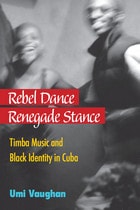
Rebel Dance, Renegade Stanceshows how community music-makers and dancers take in all that is around them socially and globally, and publicly and bodily unfold their memories, sentiments, and raw responses within open spaces designated or commandeered for local popular dance. Umi Vaughan, an African American anthropologist, musician, dancer, and photographer "plantao" in Cuba—planted, living like a Cuban—reveals a rarely discussed perspective on contemporary Cuban society during the 1990s, the peak decade of timba, and beyond, as the Cuban leadership transferred from Fidel Castro to his brother. Simultaneously, the book reveals popular dance music in the context of a young and astutely educated Cuban generation of fierce and creative performers.

By looking at the experiences of black Cubans and exploring the notion of "Afro Cuba," Rebel Dance, Renegade Stanceexplains timba's evolution and achieved significance in the larger context of Cuban culture. Vaughan discusses a maroon aesthetic extended beyond the colonial era to the context of contemporary society; describes the dance spaces of Cuba; and examines the performance of identity and desire through the character of the "especulador." This book will find an audience with musicians, anthropologists, ethnomusicologists, interdisciplinary specialists in performance studies, cultural studies, and Latin American and Caribbean studies, as well as laypeople who are interested in Atlantic/African and African American/Africana studies and/or Cuban culture.
[more]
cover of Reggaeton

Reggaeton

Raquel Z. Rivera, Wayne Marshall, and Deborah Pacini Hernandez, eds.

Duke University Press, 2009

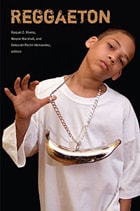
A hybrid of reggae and rap, reggaeton is a music with Spanish-language lyrics and Caribbean aesthetics that has taken Latin America, the United States, and the world by storm. Superstars—including Daddy Yankee, Don Omar, and Ivy Queen—garner international attention, while aspiring performers use digital technologies to create and circulate their own tracks. Reggaeton brings together critical assessments of this wildly popular genre. Journalists, scholars, and artists delve into reggaeton’s local roots and its transnational dissemination; they parse the genre’s aesthetics, particularly in relation to those of hip-hop; and they explore the debates about race, nation, gender, and sexuality generated by the music and its associated cultural practices, from dance to fashion.

The collection opens with an in-depth exploration of the social and sonic currents that coalesced into reggaeton in Puerto Rico during the 1990s. Contributors consider reggaeton in relation to that island, Panama, Jamaica, and New York; Cuban society, Miami’s hip-hop scene, and Dominican identity; and other genres including reggae en español, underground, and dancehall reggae. The reggaeton artist Tego Calderón provides a powerful indictment of racism in Latin America, while the hip-hop artist Welmo Romero Joseph discusses the development of reggaeton in Puerto Rico and his refusal to embrace the upstart genre. The collection features interviews with the DJ/rapper El General and the reggae performer Renato, as well as a translation of “Chamaco’s Corner,” the poem that served as the introduction to Daddy Yankee’s debut album. Among the volume’s striking images are photographs from Miguel Luciano’s series Pure Plantainum, a meditation on identity politics in the bling-bling era, and photos taken by the reggaeton videographer Kacho López during the making of the documentary Bling’d: Blood, Diamonds, and Hip-Hop.

Contributors. Geoff Baker, Tego Calderón, Carolina Caycedo, Jose Davila, Jan Fairley, Juan Flores, Gallego (José Raúl González), Félix Jiménez, Kacho López, Miguel Luciano, Wayne Marshall, Frances Negrón-Muntaner, Alfredo Nieves Moreno, Ifeoma C. K. Nwankwo, Deborah Pacini Hernandez, Raquel Z. Rivera, Welmo Romero Joseph, Christoph Twickel, Alexandra T. Vazquez
[more]
cover of Remixing Reggaetón: The Cultural Politics of Race in Puerto Rico

Remixing Reggaetón

The Cultural Politics of Race in Puerto Rico

Petra R. Rivera-Rideau

Duke University Press, 2015
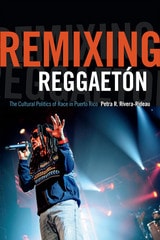
Puerto Rico is often depicted as a "racial democracy" in which a history of race mixture has produced a racially harmonious society. In Remixing Reggaetón, Petra R. Rivera-Rideau shows how reggaetón musicians critique racial democracy's privileging of whiteness and concealment of racism by expressing identities that center blackness and African diasporic belonging. Stars such as Tego Calderón criticize the Puerto Rican mainstream's tendency to praise black culture but neglecting and marginalizing the island's black population, while Ivy Queen, the genre's most visible woman, disrupts the associations between whiteness and respectability that support official discourses of racial democracy. From censorship campaigns on the island that sought to devalue reggaetón, to its subsequent mass marketing to U.S. Latino listeners, Rivera-Rideau traces reggaetón's origins and its transformation from the music of San Juan's slums into a global pop phenomenon. Reggaetón, she demonstrates, provides a language to speak about the black presence in Puerto Rico and a way to build links between the island and the African diaspora.
 
[more]
cover of Replaying Marc Anthony: Sonic, Political, and Cultural Resonances

Replaying Marc Anthony

Sonic, Political, and Cultural Resonances

Frances R. Aparicio

The Ohio State University Press, 2025
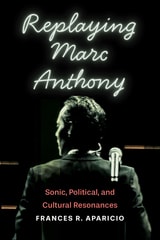
Replaying Marc Anthony is the first book-length study of Marc Anthony’s cultural, aesthetic, and political contributions to Latinx popular music and Latinx communities. Despite the trivializing label of “Latino pop,” Anthony’s repertoire has had a tremendous impact on his audience, particularly within the US Latinx community. Considering his music outside of limiting frameworks imposed by the music industry, Frances R. Aparicio situates Anthony’s songs within specific musical genealogies and histories, demonstrating that his songs not only foster healing from colonial violence but also produce, textually and sonically, multiple identities that resonate with his listeners. Relistening to five of Anthony’s most canonical songs—“Preciosa,” “Hasta Que Te Conocí,” “I Need to Know,” “Aguanile,” and “Vivir Mi Vida”—Aparicio traces the circulation of these sonic texts, examining their social, cultural, gender, and political meanings. Among the myriad topics Marc Anthony’s music critically reflects on are Puerto Rican and Diasporican itinerant subjectivities, Blackness, environmental crises, MexiRican sonic exchanges, Latinidad, masculinities, struggles with belonging as an “American,” and Global South solidarities.
[more]
cover of Salsa Consciente: Politics, Poetics, and Latinidad in the Meta-Barrio

Salsa Consciente

Politics, Poetics, and Latinidad in the Meta-Barrio

Andrés Espinoza Agurto

Michigan State University Press, 2021
This volume explores the significations and developments of the Salsa consciente movement, a Latino musico-poetic and political discourse that exploded in the 1970s but then dwindled in momentum into the early 1990s. This movement is largely linked to the development of Nuyolatino popular music brought about in part by the mass Latino migration to New York City beginning in the 1950s and the subsequent social movements that were tied to the shifting political landscapes. Defined by its lyrical content alongside specific sonic markers and political and social issues facing U.S. Latinos and Latin Americans, Salsa consciente evokes the overarching cultural-nationalist idea of Latinidad (Latin-ness). Through the analysis of over 120 different Salsa songs from lyrical and musical perspectives that span a period of over sixty years, the author makes the argument that the urban Latino identity expressed in Salsa consciente was constructed largely from diasporic, deterritorialized, and at times imagined cultural memory, and furthermore proposes that the Latino/Latin American identity is in part based on African and Indigenous experience, especially as it relates to Spanish colonialism. A unique study on the intersection of Salsa and Latino and Latin American identity, this volume will be especially interesting to scholars of ethnic studies and musicology alike.
[more]
cover of Salsa World: A Global Dance in Local Contexts

Salsa World

A Global Dance in Local Contexts

Sydney Hutchinson

Temple University Press, 2013

Since its emergence in the 1960s, salsa has transformed from a symbol of Nuyorican pride into an emblem of pan-Latinism and finally a form of global popular culture. While Latinos all over the world have developed and even exported their own “dance accents,” local dance scenes have arisen in increasingly far-flung locations, each with their own flavor and unique features.

Salsa World
examines the ways in which bodies relate to culture in specific places. The contributors, a notable group of scholars and practitioners, analyze dance practices in the U.S., Japan, Spain, France, Colombia, Cuba, Puerto Rico, and the Dominican Republic. Writing from the disciplines of ethnomusicology, anthropology, sociology, and performance studies, the contributors explore salsa’s kinetopias - places defined by movement, or vice versa- as they have arisen through the dance’s interaction with local histories, identities, and musical forms.
Taken together, the essays in this book examine contemporary salsa dancing in all its complexity, taking special note of how it is localized and how issues of geography, race and ethnicity, and identity interact with the global salsa industry.

Contributors include Bárbara Balbuena Gutiérrez,Katherine Borland, Joanna Bosse, Rossy Díaz, Saúl Escalona, Kengo Iwanaga, Isabel Llano, Jonathan S. Marion, Priscilla Renta, Alejandro Ulloa Sanmiguel, and the editor.

In the series Studies in Latin American and Caribbean Music, edited by Peter Manuel
[more]
cover of The Great Woman Singer: Gender and Voice in Puerto Rican Music

The Great Woman Singer

Gender and Voice in Puerto Rican Music

Licia Fiol-Matta

Duke University Press, 2017

Licia Fiol-Matta traces the careers of four iconic Puerto Rican singers—Myrta Silva, Ruth Fernández, Ernestina Reyes, and Lucecita Benítez—to explore how their voices and performance style transform the possibilities for comprehending the figure of the woman singer. Fiol-Matta shows how these musicians, despite seemingly intractable demands to represent gender norms, exercised their artistic and political agency by challenging expectations of how they should look, sound, and act. Fiol-Matta also breaks with conceptualizations of the female pop voice as spontaneous and intuitive, interrogating the notion of "the great woman singer" to deploy her concept of the "thinking voice"—an event of music, voice, and listening that rewrites dominant narratives. Anchored in the work of Lacan, Foucault, and others, Fiol-Matta's theorization of voice and gender in The Great Woman Singer makes accessible the singing voice's conceptual dimensions while revealing a dynamic archive of Puerto Rican and Latin American popular music.
[more]
cover of The Tango Machine: Musical Culture in the Age of Expediency

The Tango Machine

Musical Culture in the Age of Expediency

Morgan James Luker

University of Chicago Press, 2016

In Argentina, tango isn’t just the national music—it’s a national brand. But ask any contemporary Argentine if they ever really listen to it and chances are the answer is no: tango hasn’t been popular for more than fifty years. In this book, Morgan James Luker explores that odd paradox by tracing the many ways Argentina draws upon tango as a resource for a wide array of economic, social, and cultural—that is to say, non-musical—projects. In doing so, he illuminates new facets of all musical culture in an age of expediency when the value and meaning of the arts is less about the arts themselves and more about how they can be used.
           
Luker traces the diverse and often contradictory ways tango is used in Argentina in activities ranging from state cultural policy-making to its export abroad as a cultural emblem, from the expanding nonprofit arts sector to tango-themed urban renewal projects. He shows how projects such as these are not peripheral to an otherwise “real” tango—they are the absolutely central means by which the values of this musical culture are cultivated. By richly detailing the interdependence of aesthetic value and the regimes of cultural management, this book sheds light on core conceptual challenges facing critical music scholarship today.  
 
[more]