Results by title
6 books match the query 'Latin American influences'

A Kiss across the Ocean
Transatlantic Intimacies of British Post-Punk and US LatinidadRichard T. Rodríguez
Duke University Press, 2022

Fitness Fiesta!
Selling Latinx Culture through ZumbaPetra R. Rivera-Rideau
Duke University Press, 2024
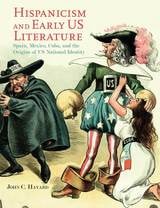
Hispanicism and Early US Literature
Spain, Mexico, Cuba, and the Origins of US National IdentityJohn C. Havard
University of Alabama Press, 2018
Revealing how Spain, Mexico, and Cuba helped shape the literary origins of American national identity.
In Hispanicism and Early US Literature, author John C. Havard posits that representations of Spain, Spanish America, Spanishness, and Spanish Americanness are integral elements in the evolution of early national and antebellum US literature. He argues that Spanish-speaking countries have long held a broad fascination for Americans and that stock narratives regarding these peoples were central to the period’s US literature.
Beginning with the work of eighteenth-century literary nationalists such as Joel Barlow, US literature has been drawn to reflect on Spain and Spanish America. Such reflection was often inspired by geopolitical conflicts such as US expansion into Spanish Louisiana and the US-Mexican War. Havard terms the discourse emerging from these reflections “Hispanicism.” This discourse was used to portray the dominant viewpoint of classical liberalism that propounded an American exceptionalism premised on the idea that Hispanophone peoples were comparatively lacking the capacity for self-determination, hence rationalizing imperialism. On the conservative side were warnings against progress through conquest.
Havard delves into selected works of early national and antebellum literature on Spain and Spanish America to illuminate US national identity. Poetry and novels by Joel Barlow, James Fenimore Cooper, and Herman Melville are mined to further his arguments regarding identity, liberalism, and conservatism. Understudied authors Mary Peabody Mann and José Antonio Saco are held up to contrast American and Cuban views on Hispanicism and Cuban annexation as well as to develop the focus on nationality and ideology via differences in views on liberalism.
More than just a work of literary criticism, there is a substantial amount of cultural and political history discussed. Havard’s use of archival sources such as political articles and personal correspondence elucidates not just literary genres and movements such as early national epic poetry, abolitionist fiction, and the American Renaissance, but also US prominent culture.
The Inverted Conquest
The Myth of Modernity and the Transatlantic Onset of ModernismAlejandro Mejias-Lopez
Vanderbilt University Press, 2009
Expanding Bourdieu's concepts of cultural field and symbolic capital beyond national boundaries, The Inverted Conquest shows how modernismo originated in Latin America and traveled to Spain, where it provoked a complete renovation of Spanish letters and contributed to a national identity crisis. In the process, described by Latin American writers as a reversal of colonial relations, modernismo wrested literary and cultural authority away from Spain, moving the cultural center of the Hispanic world to the Americas.
Mejias-Lopez further reveals how Spanish American modernistas confronted the racial supremacist claims and homogenizing force of an Anglo-American modernity that defined the Hispanic as un-modern. Constructing a new Hispanic genealogy, modernistas wrote Spain as the birthplace of modernity and themselves as the true bearers of the modern spirit, moved by the pursuit of knowledge, cosmopolitanism, and cultural miscegenation, rather than technology, consumption, and scientific theories of racial purity.
Bound by the intrinsic limits of neocolonial and postcolonial theories, scholarship has been unwilling or unable to explore modernismo's profound implications for our understanding of Western modernities.
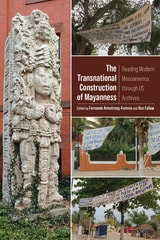
Transnational Construction of Mayanness
Reading Modern Mesoamerica through US ArchivesFernando Armstrong-Fumero
University Press of Colorado, 2023
Contributors tap documentary, ethnographic, and ethnoarchaeological sources from North America to expand established categories of fieldwork and archival research conducted within the national spaces of Mexico and Central America. A particularly rich and diverse set of case studies interrogate the historical processes that remove sources from their place of production in the “field” to the US, challenge the conventional wisdom regarding the geography of data sources that are available for research, and reveal a range of historical relationships that enabled US actors to shape the historical experience of Maya-speaking peoples.
The Transnational Construction of Mayanness offers rich insight into transnational relations and suggests new avenues of research that incorporate an expanded corpus of materials that embody the deep-seated relationship between Maya-speaking peoples and various gringo interlocutors. The work is an important bridge between Mayanist anthropology and historiography and broader literatures in American, Atlantic, and Indigenous studies.
Contributors: David Carey, M. Bianet Castellanos, Matilde Córdoba Azcárate, Lydia Crafts, John Gust, Julio Cesar Hoil Gutierréz, Jennifer Mathews, Matthew Watson

Visualizing Latinx
Creative Practices in Fashion, Film, and BeyondArlene Dávila
Duke University Press, 2026