Results by title
4 books match the query 'Latin Letters'
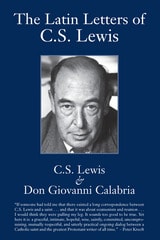
Latin Letters of C.S. Lewis
C.S. Lewis and Don Giovanni Calabria
St. Augustine's Press, 1999
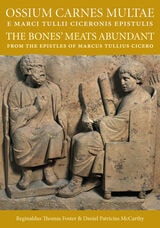
Ossium Carnes Multae e Marci Tullii Ciceronis Epistulis / The Bones’ Meats Abundant from the Epistles of Marcus Tullius Cicero
Reginaldus Thomas Foster
Catholic University of America Press, 2021
Q. Aurelius Symmachus
A Political BiographyCristiana Sogno
University of Michigan Press, 2010
Symmachus was a brilliant orator, writer, and statesman, often flatly labeled as one of the last pagan senators. Cristiana Sogno offers a reconstruction of the political career of Symmachus through close analysis of his extensive writings, while also proposing a critical reevaluation of his historical importance. In contrast to traditional interpretation, Sogno's study demonstrates that Symmachus was primarily an influential politician, rather than a mere pagan zealot.
By portraying the individual experience of Symmachus, the book sets forth a new approach for interpreting the political aspirations, mentality, and attitudes of Roman senators. The much-studied question of the Christianization of the Western aristocracy has created the illusion of a Christian and a pagan aristocracy rigidly separated from each other. Through her study of Symmachus, Sogno demonstrates the primary importance of politics over religion in the public activity of the late Roman aristocracy. Although the book is specifically addressed to scholars and students of Late Antiquity, it will also be of interest to classicists, ancient historians, and non-specialists who wish to know more about this pivotal period in Roman history.
Cristiana Sogno received her Ph.D. in Classics and History from Yale University. Currently she is Townsend Assistant Professor of Classics at Cornell University. Visit Professor Sogno's website at: http://www.fordham.edu.
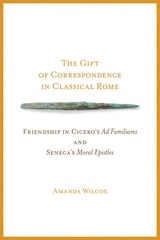
The Gift of Correspondence in Classical Rome
Friendship in Cicero's Ad Familiares and Seneca's Moral EpistlesAmanda Wilcox
University of Wisconsin Press, 2012
Amanda Wilcox offers an innovative approach to two major collections of Roman letters—Cicero’s Ad Familiares and Seneca’s Moral Epistles—informed by modern cross-cultural theories of gift-giving.
By viewing letters and the practice of correspondence as a species of gift exchange, Wilcox provides a nuanced analysis of neglected and misunderstood aspects of Roman epistolary rhetoric and the social dynamics of friendship in Cicero’s correspondence. Turning to Seneca, she shows that he both inherited and reacted against Cicero’s euphemistic rhetoric and social practices, and she analyzes how Seneca transformed the rhetoric of his own letters from an instrument of social negotiation into an idiom for ethical philosophy and self-reflection. Though Cicero and Seneca are often viewed as a study in contrasts, Wilcox extensively compares their letters, underscoring Cicero’s significant influence on Seneca as a prose stylist, philosopher, and public figure.