Results by title

4 books match the query 'Laughing'
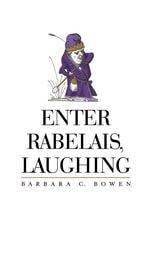
cover of Enter Rabelais, Laughing

Enter Rabelais, Laughing

Barbara C. Bowen

Vanderbilt University Press, 1998

Francois Rabelais is a difficult and often misunderstood author, whose reputation for coarse "Rabelaisian" jesting and "Gargantuan" indulgence in food, drink, and sex is highly misleading. He was in fact a committed humanist who expressed strong views on religion, good government, education, and much more through the mock-heroic adventures of his giants.

While most books about Rabelais have relatively little to say about his comedic genius, Enter Rabelais, Laughing analyzes the many sides of Rabelais's humor, focusing on why his writing was so hilariously funny to sixteenth-century readers. The author begins by discussing how the Renaissance defined laughter and situates Rabelais in a long tradition of literary laughter. Subsequent chapters examine specific contexts relevant to Gargantua and Pantagruel, beginning with the comic aspects of epic, chronicle, mock-epic, and farce, and proceeding to Renaissance and Reformation humanist satire, rhetoric, medicine, and law. All of these chapters combine information, much of it new, on the humanist message Rabelais wanted to convey to his readers, with an analysis of how he used his wit to reinforce his message.

Rarely is a writer's work treated in such illuminating detail. On a broad level, Enter Rabelais, Laughing serves as an excellent introduction to French Renaissance literature and exhibits a remarkably charming and lucid writing style, free of jargon. To Rabelais scholars in particular it offers a thorough and innovative analysis that corrects misconceptions and questions commonly held views.
[more]
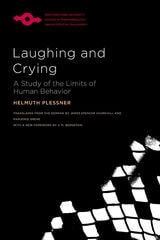
cover of Laughing and Crying: A Study of the Limits of Human Behavior

Laughing and Crying

A Study of the Limits of Human Behavior

Helmuth Plessner; Translated from the German by James Spencer Churchill and Marjorie Grene and with a new foreword by J. M. Bernstein

Northwestern University Press, 2020

First published in German in 1940 and widely recognized as a classic of philosophical anthropology, Laughing and Crying is a detailed investigation of these two particularly significant types of expressive behavior, both in themselves and in relation to human nature. Elaborating the philosophical account of human life he developed in Levels of Organic Life and the Human: An Introduction to Philosophical Anthropology, Plessner suggests that laughing and crying are expressions of a crisis brought about in certain situations by the relation of a person to their body.
 
With a new foreword by J. M. Bernstein that situates the book within the broader framework of Plessner’s philosophical anthropology and his richly suggestive and powerful account of human bodily life, Laughing and Crying is essential reading for anyone interested in the philosophy of the body, emotions, and human behavior.

 
[more]
cover of Laughing in the Light

Laughing in the Light

Jimmy Santiago Baca

Museum of New Mexico Press, 2020
Jimmy Santiago Baca’s newest collection of essays picks up where his earlier acclaimed book, Working in the Dark, left off. Laughing in the Light is the writer’s first attempt to revisit his past, launching into the past twenty years with a renewed heart and wizened spirit as he shares his experiences, what he has learned along the way, and how his views have changed. Baca delves deeper into contemporary issues as he explores themes ranging from arts, culture, education, and justice reform.
[more]
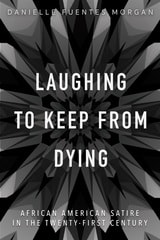
cover of Laughing to Keep from Dying: African American Satire in the Twenty-First Century

Laughing to Keep from Dying

African American Satire in the Twenty-First Century

Danielle Fuentes Morgan

University of Illinois Press, 2020

By subverting comedy's rules and expectations, African American satire promotes social justice by connecting laughter with ethical beliefs in a revolutionary way. Danielle Fuentes Morgan ventures from Suzan-Lori Parks to Leslie Jones and Dave Chappelle to Get Out and Atlanta to examine the satirical treatment of race and racialization across today's African American culture. Morgan analyzes how African American artists highlight the ways that society racializes people and bolsters the powerful myth that we live in a "post-racial" nation. The latter in particular inspires artists to take aim at the idea racism no longer exists or the laughable notion of Americans "not seeing" racism or race. Their critique changes our understanding of the boundaries between staged performance and lived experience and create ways to better articulate Black selfhood.

Adventurous and perceptive, Laughing to Keep from Dying reveals how African American satirists unmask the illusions and anxieties surrounding race in the twenty-first century.

[more]