Results by title
4 books match the query 'Laurie, Bruce'
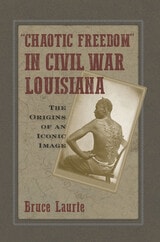
"Chaotic Freedom" in Civil War Louisiana
The Origins of an Iconic ImageBruce Laurie
University of Massachusetts Press, 2021
Bruce Laurie uncovers the people and events that created this seminal image, telling the tale of three men, two Yankee soldiers from western Massachusetts who were serving the Union Army in Louisiana and a man named Peter whose scarred back horrified all who saw it. The two soldiers were so shocked by what had been done to Peter, they sought to capture the image and document slavery's cruelty, the likes of which was all too common among those fleeing bondage in Louisiana. Meticulously researched and briskly told, this short volume unearths the story behind an iconic image.

Artisans into Workers
LABOR IN NINETEENTH-CENTURY AMERICABruce Laurie
University of Illinois Press, 1989
history, Bruce Laurie examines the character of working-class factionalism, plebian expectations of government, and relations between the organized few and the unorganized many. Laurie also examines the republican tradition and the movements that drew on it, from the General Trades Unions in the age of Jackson to the Knights of Labor later in the century.
Labor Histories
Class, Politics, and the Working-Class ExperienceEdited by Eric Arnesen, Julie Greene, and Bruce Laurie
University of Illinois Press, 1998
Rebels in Paradise
Sketches of Northampton AbolitionistsBruce Laurie
University of Massachusetts Press, 2014
Long ago dubbed the “Paradise of America,” Northampton, Massachusetts, is also known as the home of visionaries—from the Reverend Jonathan Edwards, father of the First Great Awakening, to George W. Benson, brother-in-law of William Lloyd Garrison and a founder of the utopian Northampton Association for Education and Industry. During the mid-nineteenth century the town became a center of political abolitionism and a hub in the Underground Railroad. In this book, Bruce Laurie profiles five rebellious figures who launched Northampton's abolitionist movement—Sylvester Judd Jr., John Payson Williston, David Ruggles, Henry Sherwood Gere, and Erastus Hopkins. Through their individual stories he traces the evolution of the antislavery movement in western Massachusetts and links it to broader developments in economics, civil life, and political affairs.
Northampton's abolitionists were a heterodox group, yet most were intrepid devotees of democracy and racial equality, idealists who enjoyed genuine friendships and political alliances with African Americans. Several even took the bold step of hiring African Americans in their businesses. They avoided the doctrinal rivalries that sometimes troubled the antislavery movement in other places, skillfully steering clear of the xenophobic nativism that infected Massachusetts politics in the mid–1850s and divided the Republican Party at large. Although a prohibitionist faction disrupted the Northampton abolitionist movement for a time, the leaders prevailed on the strength of their personal prestige and political experience, making the seat of Hampshire County what one of them called an abolitionist “stronghold.”