Results by title
7 books match the query 'Lead'
Choosing to Lead
Understanding Congressional Foreign Policy EntrepreneursRalph G. Carter and James M. Scott
Duke University Press, 2009
Carter and Scott combine extensive quantitative analysis, interviews with members of Congress and their staff, and case studies of key foreign policy entrepreneurs, including Frank Church, William Fulbright, Jesse Helms, Edward Kennedy, Pat McCarran, and Curt Weldon. Drawing on their empirical data, the authors identify the key variables in foreign policy entrepreneurship, including membership in the Senate or House, seniority and committee assignments, majority or minority party status, choice of foreign policy issues, and the means used to influence policy. By illuminating the roles and impact of individual members of Congress, Carter and Scott contribute to a more nuanced understanding of the broader U.S. foreign policy-making process.

Designing Businesses
How to develop and lead a high technology companyGeorge Young
The Institution of Engineering and Technology, 1997
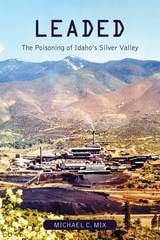
Leaded
The Poisoning of Idaho's Silver ValleyMichael C. Mix
Oregon State University Press, 2016
During the first half of the 20th century, industrial mining operations caused severe environmental damage to area waterways and lands from releases of lead and other toxic metals, and sulfur gases. Despite the obvious devastation, no effective federal laws regulating mining and smelting operations were passed until the 1970s, due to the influence of the mine and lead industry in state and federal politics, and scientific uncertainties about pollution effects. Harmful human health effects were evident soon after the smelter opened in 1917, when Bunker Hill workers suffered from lead poisoning, but no federal laws regulating workplace lead were passed until the 1970s.
In 1974, lead smelter emissions from Bunker Hill caused the largest epidemic of childhood lead poisoning in U.S. history. That landmark event ultimately led to the EPA mandating federal air lead standards in 1978 and, at the same time, NIOSH passed national standards reducing occupational lead exposures. Bunker Hill could not meet the new standards; consequently, the company closed in 1981, leaving behind a contaminated geographic area that was classified as the largest Superfund site in the United States in 1983.
Leaded is a deeply researched account of one of the greatest environmental disasters in our history. It belongs on the bookshelf of every student of environmental history, western history, mining history, environmental ethics, and environmental law.
Learning to Lead
Grassroots Organizing in Immigrant CommunitiesVeronica Terriquez
Russell Sage Foundation, 2026
Children of immigrants make up more than one in four people in the United States under the age of thirty. Amid today’s multipronged attacks on immigrant communities and growing threats to democratic participation, these young people often encounter significant barriers to political participation. Despite these challenges, some children of immigrants and refugees engage in nonpartisan grassroots campaigns, addressing issues such as education, health, environmental justice, immigrant rights, housing, and voting rights. In Learning to Lead, sociologist Veronica Terriquez examines how youth organizing groups facilitate the civic and political engagement of low-income, second-generation immigrant adolescents, enabling them to collectively exercise power alongside their non-immigrant peers and adult allies.
Drawing on extensive survey, semi-structured interview, and other data, Terriquez shows that nonprofit youth organizing groups strengthen adolescents’ capacity to address the systemic challenges facing their communities through political engagement. Although these groups vary in the quality of their programming, they generally share a commitment to supporting young people’s healthy development, offer a critical form of civics education, and provide extensive guidance on how to participate in civic life. These groups adapt their programming in response to local demographic and political dynamics.
Many adolescents who join grassroots organizing groups face overlapping stresses related to poverty, immigration status, neighborhood violence, and other hardships. In response, youth organizing groups create spaces that support emotional well-being while also encouraging academic success and job-readiness. At the same time, they help young people develop a critical understanding of social inequality, power, and public policy. Through ethnic studies workshops and other activities, youth explore their own identities and learn about the histories and struggles of diverse communities.
This education often motivates second-generation immigrant and refugee youth to work in solidarity with their non-immigrant Black and Indigenous peers and deepens their understanding of the historical, economic, and political roots of community problems, as well as potential policy solutions. Unlike many youth-focused interventions, organizing groups also provide sustained, hands-on training in how to collectively exercise their voice in policy debates and government elections, effectively functioning as civic apprenticeships. Staff and experienced members mentor newer participants in basic civic skills such as public speaking, event planning, and community outreach, while also coaching them on strategies for mobilize peers and adult allies to contribute to nonpartisan campaigns.
Because of these intensive and formative experiences, adolescents who participate in youth organizing during high school tend to remain highly active in civic life into early adulthood. Terriquez concludes that these groups offer important lessons for schools and other youth-serving institutions seeking to strengthen engagement in a multiracial democracy.
Learning to Lead offers a thorough examination of the role of how young people acquire the capacities to become a meaningful political force.
Learning to Lead
Undocumented Students Mobilizing EducationJennifer R. Nájera
Duke University Press, 2024

The Selected Papers of Jane Addams
vol. 1: Preparing to Lead, 1860-81Edited by Mary Lynn McCree Bryan, Barbara Bair, and Maree de Angury
University of Illinois Press, 2002
Unleaded
How Changing Our Gasoline Changed EverythingCarrie Nielsen
Rutgers University Press, 2021
Unleaded tells the story of how crusading scientists and activists convinced the U.S. government to ban lead additives in gasoline. It also reveals how, for nearly fifty years, scientific experts paid by the oil and mining industries abused their authority to convince the public that leaded gasoline was perfectly harmless.
Combining environmental history, sociology, and neuroscience, Carrie Nielsen explores how lead exposure affects the developing brains of children and is linked to social problems including academic failure, teen pregnancies, and violent crime. She also shows how, even after the nationwide outrage over Flint’s polluted water, many poor and minority communities and communities of color across the United States still have dangerously high lead levels. Unleaded vividly depicts the importance of sound science and strong environmental regulations to protect our nation’s most vulnerable populations.