Results by title

7 books match the query 'Learning disabilities'
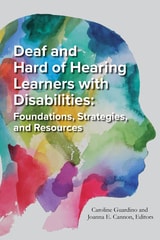
cover of Deaf and Hard of Hearing Learners with Disabilities: Foundations, Strategies, and Resources

Deaf and Hard of Hearing Learners with Disabilities

Foundations, Strategies, and Resources

Caroline Guardino

Gallaudet University Press, 2021

Professionals and families must be prepared to support the unique needs of deaf and hard of hearing learners with one or more disabilities, as they constitute approximately half the population of deaf and hard of hearing pre-K through 12th grade students. There is an ongoing need for up-to-date strategies and resources to effectively meet the needs of these students. Caroline Guardino and Joanna E. Cannon address this gap with Deaf and Hard of Hearing Learners with Disabilities: Foundations, Strategies, and Resources. This comprehensive volume presents an overview of the existing literature and provides research-based strategies that can be implemented when working with these individuals.

       The disabilities covered in this volume include developmental delays, autism spectrum disorder, intellectual and learning disabilities, deafblindness, emotional and behavioral disorders, attention deficit hyperactivity disorder, and a variety of high incidence syndromes. Contributors share best practices using an open-minded, asset-based approach. They examine the literature within each disability category, as well as demographics/characteristics, intervention/identification, placement, communication/language, psychosocial issues, assistive technologies/accommodations, assessments, and transition/post-secondary outcomes. Each chapter begins with learning objectives and concludes with a list of resources and discussion questions. A supplemental instructor’s manual provides valuable material for each chapter, including: (a) sample answers to the discussion questions, (b) investigation activities with grading rubrics, (c) quiz banks, (d) interpreted and captioned summary videos, and (e) PowerPoint slides. Deaf and Hard of Hearing Learners with Disabilities is an essential book for courses at the undergraduate and graduate level, and in workshops and webinars for in-service teachers, professionals, and families.
[more]
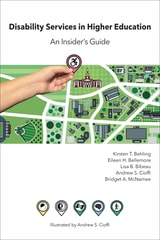
cover of Disability Services in Higher Education: An Insider's Guide

Disability Services in Higher Education

An Insider's Guide

Kirsten T. Behling, Eileen H. Bellemore, Lisa B. Bibeau, Andrew S. Cioffi, and Bridget A. McNamee

Temple University Press, 2023

Disability Services in Higher Education is the first comprehensive guide for people working in the field of ADA compliance in higher education. The authors examine how disabilities are supported to ensure students receive appropriate accommodations throughout their collegiate experience as well as provide guidance on overall campus accessibility. 

This volume provides an overview of the responsibilities of a Disabilities Service professional through an examination of relevant literature, laws and regulatory language, case law, and narrative on established practices. It also offers resources that current professionals can modify for use in their day-to-day practice immediately. The authors explore the complexities of accessibility, paying careful attention to the nuances of disability evaluation, accommodation decisions, management of a disability service office, advocating for resources and collaboration within and outside of higher education institutions. 

This practitioner-friendly book will help newcomers and seasoned professionals explore and evaluate best practices in the field through questions, examples, and functional job aids available for immediate use.  
 
[more]
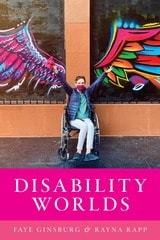
cover of Disability Worlds

Disability Worlds

Faye Ginsburg and Rayna Rapp

Duke University Press, 2024
In Disability Worlds, Faye Ginsburg and Rayna Rapp chronicle and theorize two decades of immersion in New York City’s wide-ranging disability worlds as parents, activists, anthropologists, and disability studies scholars. They situate their disabled children’s lives among the experiences of advocates, families, experts, activists, and artists in larger struggles for recognition and rights. Disability consciousness, they show, emerges in everyday politics, practices, and frictions. Chapters consider dilemmas of genetic testing and neuroscientific research, reimagining kinship and community, the challenges of “special education,” and the perils of transitioning from high school. They also highlight the vitality of neurodiversity activism, disability arts, politics, and public culture. Disability Worlds reflects the authors’ anthropological commitments to recognizing the significance of this fundamental form of human difference. Ginsburg and Rapp’s conversations with diverse New Yorkers reveal the bureaucratic constraints and paradoxes established in response to the disability rights movement, as well as the remarkable creativity of disabled people and their allies who are opening pathways into both disability justice and disability futures.
[more]
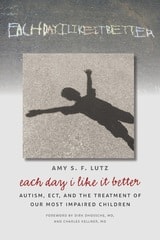
cover of Each Day I Like It Better: Autism, ECT, and the Treatment of Our Most Impaired Children

Each Day I Like It Better

Autism, ECT, and the Treatment of Our Most Impaired Children

Amy S. F. Lutz

Vanderbilt University Press, 2014

In the fall of 2009, Amy Lutz and her husband, Andy, struggled with one of the worst decisions parents could possibly face: whether they could safely keep their autistic ten-year-old son, Jonah, at home any longer. Multiple medication trials, a long procession of behavior modification strategies, and even an almost year-long hospitalization had all failed to control his violent rages. Desperate to stop the attacks that endangered family members, caregivers, and even Jonah himself, Amy and Andy decided to try the controversial procedure of electroconvulsive therapy or ECT. Over the last three years, Jonah has received 136 treatments. His aggression has greatly diminished, and for the first time Jonah, now fourteen, is moving to a less restricted school.


Each Day I Like It Better recounts the journeys of Jonah and seven other children and their families (interviewed by the author) in their quests for appropriate educational placements and therapeutic interventions. The author describes their varied, but mostly successful, experiences with ECT.


A survey of research on pediatric ECT is incorporated into the narrative, and a foreword by child psychiatrist Dirk Dhossche and ECT researcher and practitioner Charles Kellner explains how ECT works, the side effects patients may experience, and its current use in the treatment of autism, catatonia, and violent behavior in children.
[more]
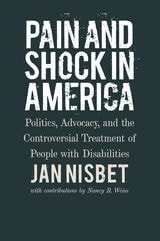
cover of Pain and Shock in America: Politics, Advocacy, and the Controversial Treatment of People with Disabilities

Pain and Shock in America

Politics, Advocacy, and the Controversial Treatment of People with Disabilities

Jan Nisbet

Brandeis University Press, 2021

The first book to be written on the Judge Rotenberg Center and their use of painful interventions to control the behavior of children and adults with disabilities.

For more than forty years, professionals in the field of disability studies have engaged in debates over the use of aversive interventions (such as electric shock) like the ones used at the Judge Rotenberg Center. Advocates and lawyers have filed complaints and lawsuits to both use them and ban them, scientists have written hundreds of articles for and against them, and people with disabilities have lost their lives and, some would say, lived their lives because of them. There are families who believe deeply in the need to use aversives to control their children’s behavior. There are others who believe the techniques used are torture. All of these families have children who have been excluded from numerous educational and treatment programs because of their behaviors. For most of the families, placement at the Judge Rotenberg Center is the last resort.

This book is a historical case study of the Judge Rotenberg Center, named after the judge who ruled in favor of keeping its doors open to use aversive interventions. It chronicles and analyzes the events and people involved for over forty years that contributed to the inability of the state of Massachusetts to stop the use of electric shock, and other severe forms of punishment on children and adults with disabilities. It is a long story, sad and tragic, complex, filled with intrigue and questions about society and its ability to protect and support its most vulnerable citizens.
 
[more]
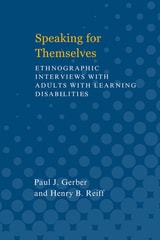
cover of Speaking for Themselves: Ethnographic Interviews with Adults with Learning Disabilities

Speaking for Themselves

Ethnographic Interviews with Adults with Learning Disabilities

Paul J. Gerber and Henry B. Reiff

University of Michigan Press, 1991
Speaking for Themselves: Ethnographic Interviews with Adults with Learning Disabilities by Paul J. Gerber and Henry B. Reiff investigates the personal and academic experiences of adults diagnosed with learning disabilities. Taking an ethnographic approach, the authors present in-depth interviews with nine adults, aged 22 to 56, exploring how their learning disabilities affect various aspects of their lives, such as education, vocational achievement, social and emotional adjustment, and daily living skills. The study categorizes subjects into three groups based on educational and vocational achievements: high, moderate, and marginal adjustment to adulthood. Through personal narratives, the book reveals the nuances of struggle and success in this often-overlooked adult demographic, offering valuable insights for researchers, educators, and policymakers. Particularly, it emphasizes the need for a better understanding of the challenges and needs faced by adults with learning disabilities, while calling for the expansion of personalized and effective support systems beyond childhood and adolescence into adult life. The findings highlight a significant variance in experiences, illustrating that the degree of success in adulthood often correlates with educational attainment and the ability to compensate for learning challenges. This research asserts the importance of inclusive practices and further studies to continue improving the quality of life and support for adults with learning disabilities.
[more]
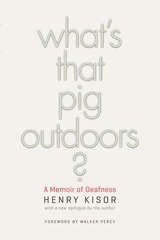
cover of What's That Pig Outdoors?: A Memoir of Deafness

What's That Pig Outdoors?

A Memoir of Deafness

Henry Kisor

University of Illinois Press, 2010

Henry Kisor lost his hearing at age three to meningitis and encephalitis but went on to excel in the most verbal of professions as a literary journalist. This new and expanded edition of Kisor's engrossing memoir recounts his life as a deaf person in a hearing world and addresses heartening changes over the last two decades due to the Americans with Disabilities Act of 1990 and advancements in cochlear implants and modes of communication.
 
Kisor tells of his parents' drive to raise him as a member of the hearing and speaking world by teaching him effective lip-reading skills at a young age and encouraging him to communicate with his hearing peers. With humor and much candor, he narrates his time as the only deaf student at Trinity College in Connecticut and then as a graduate student at Northwestern University, as well as his successful career as the book review editor at the Chicago Sun-Times and the Chicago Daily News. Life without hearing, Kisor says, has been fine and fulfilling.
 
Widely praised in popular media and academic journals when it was first published in 1990, What's That Pig Outdoors? opened new conversations about the deaf. Bringing those conversations into the twenty-first century, Kisor updates the continuing disagreements between those who advocate sign language and those who practice speech and lip-reading, discusses the increased acceptance of deaf people's abilities and idiosyncrasies, and considers technological advancements such as blogging, instant messaging, and hand-held mobile devices that have enabled deaf people to communicate with the hearing world on its own terms.
[more]