Results by title
5 books match the query 'Leave'
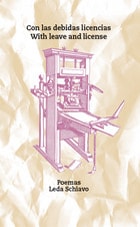
Con las debidas licencias / With Leave and License
Poemas / PoemsLeda Schiavo
Swan Isle Press, 2000
'Con las debidas licencias' is the Spanish version of 'imprimatur' or 'nihil obstat,' the Latin used for books published under Catholic censorship. In Spanish, the title plays with the semiotic richness of the word 'license,' meaning 'liberty of action conceded' and 'abuse of freedom.' The poems of With Leave and License strike the imagination with tenderness and nostalgia, powerful in this intelligent vision of life considered as an irreversible journey.
[more]
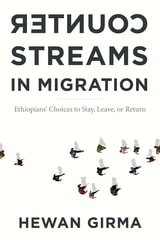
Counterstreams in Migration
Ethiopians' Choices to Stay, Leave, or ReturnHewan Girma
Temple University Press, 2026
Migration journeys are not unidirectional. In Counterstreams in Migration, Hewan Girma reveals a more complex circuit of migration, concentrating on the motivations behind non-migration, return migration, and repeat migration to show how these flows mutually affect and influence the migrant as well as the family members who remain at home.
Weaving together nearly 100 stories of non-migrants, returnees, and repeat migrants from Ethiopia, Girma advances a theory of migra-emotions, emotions specific to migration, to understand decisions and experiences, such as the imaginary of home and the lived reality of alienation, disaffection abroad, and feelings of duty to one’s homeland.
Looking beyond the meanings of migration or processes of integration, Girma explores the emotional subtext of migration aspirations. In doing so, Counterstreams of Migration complicates conventional understandings of migration and provides a more complete picture of migrant stories.
[more]
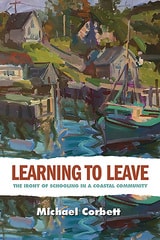
Learning to Leave
The Irony of Schooling in a Coastal CommunityMichael Corbett
West Virginia University Press, 2020
Published with a new preface, this innovative case study from Nova Scotia analyzes the relationship between rural communities and contemporary education. Rather than supporting place-sensitive curricula and establishing networks within community populations, the rural school has too often stood apart from local life, with the generally unintended consequence that many educationally successful rural youth come to see their communities and lifestyles as places to be left behind. They face what Michael Corbett calls a mobility imperative, which, he shows, has been central to contemporary schooling. Learning to Leave argues that if education is to be democratic and serve the purpose of economic, social, and cultural development, then it must adapt and respond to the specificity of its locale, the knowledge practices of the people, and the needs of those who struggle to remain in challenged rural places.
[more]
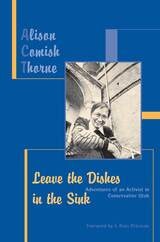
Leave The Dishes In The Sink
Alison Comish Thorne
Utah State University Press, 2002
Alison Thorne provides a small-town Utah perspective on the progressive social movements that in the mid to late twentieth century dramatically affected American society. A born activist, Thorne has fought for women's rights, educational reform in public schools and universities, the environment, peace, and the war on poverty. Her efforts have been all the more challenging because of the conservative social and cultural environment in which she has undertaken them. Yet, Thorne, who has deep personal and familial roots in the politically conservative and predominantly Mormon culture of Utah and much of the West, has worked well with people with varied political and social perspectives and agendas. She has been able to establish effective coalitions in contexts that seem inherently hostile. She demonstrated this through her election to the local school board and through her appointment by both Republican and Democratic governors, eventually as chair, to the statewide Governor's Committee on the Status of Women.
[more]
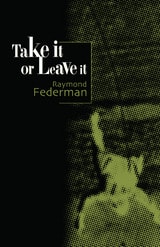
Take It or Leave It
Raymond Federman
University of Alabama Press, 1976
As told, or rather retold second-hand, by the narrator, Take It or Leave It relates the hilarious and amorous adventures of a young Frenchman who has been drafted into the U.S. Army and is being shipped Overseas to fight in Korea. The obsessed narrator retells, as best as he can, what the young man supposedly told him as they sat under a tree. He recounts how the young man escaped German persecution during World War Two, how he came to America and struggled to survive before joining the "rah rah spitshine" 82nd Airborne Division, and how, because of a "typical Army goof," he must travel in an old beat-up Buick Special from Fort Bragg to Camp Drum to collect the money the Army owes him, before he can set out for "the great journey cross-country" to San Francisco where he will embark for Overseas.
Moving freely from past to present (and Vice Versa), and from place to place leap-frogging from digression to digression, Take It or Leave It explores new possibilities of narrative technique. Whie the story of Frenchy is being told, the narrator involves his listeners in digressive arguments about politics, sex, America, literature, laughter, death, and the telling of the story itself. Consequently, as this "exaggerated second-hand tale to be read aloud either standing or sitting" progresses, it also deviates from its course, and eventually cancels itself as the voices of the fiction multiply. Take It or Leave It, the ultimate postmodern novel, makes a shamble of traditional fiction and conventional modes of writing, and does so with effrontery and laughter.
Moving freely from past to present (and Vice Versa), and from place to place leap-frogging from digression to digression, Take It or Leave It explores new possibilities of narrative technique. Whie the story of Frenchy is being told, the narrator involves his listeners in digressive arguments about politics, sex, America, literature, laughter, death, and the telling of the story itself. Consequently, as this "exaggerated second-hand tale to be read aloud either standing or sitting" progresses, it also deviates from its course, and eventually cancels itself as the voices of the fiction multiply. Take It or Leave It, the ultimate postmodern novel, makes a shamble of traditional fiction and conventional modes of writing, and does so with effrontery and laughter.
[more]