Results by title
15 books match the query 'Lectures'

A Woman Speaks
The Lectures, Seminars, and Interviews of Anaïs NinEvelyn J. Hinz
Ohio University Press, 1975
In this book Anaïs Nin speaks with warmth and urgency on those themes which have always been closest to her: relationships, creativity, the struggle for wholeness, the unveiling of woman, the artist as magician, women reconstructing the world, moving from the dream outward, and experiencing our lives to the fullest possible extent.

An Innocent Abroad
Lectures in ChinaJ. Hillis Miller
Northwestern University Press, 2015
Since 1988, J. Hillis Miller has traveled to China to lecture on literary theory, especially the role of globalization in literary theory. Over time, he has assisted in the development of distinctively Chinese forms of literary theory, Comparative Literature, and World Literature. The fifteen lectures gathered in An Innocent Abroad span both time and geographic location, reflecting his work at universities across China for more than twenty-five years. More important, they reflect the evolution of Miller’s thinking and of the lectures’ contexts in China as these have markedly changed over the years, especially on either side of Tiananmen Square and in light of China’s economic growth and technological change. A foreword by the leading theorist Fredric Jameson provides additional context.
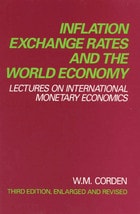
Inflation, Exchange Rates, and the World Economy
Lectures on International Monetary EconomicsW. Max Corden
University of Chicago Press, 1986
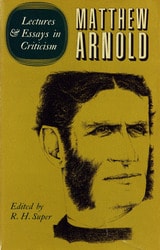
Lectures and Essays in Criticism
The Complete Prose Works of Matthew ArnoldMatthew Arnold; Edited by R. H. Super
University of Michigan Press, 1962
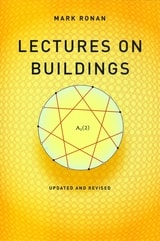
Lectures on Buildings
Updated and RevisedMark Ronan
University of Chicago Press, 2009
In mathematics, “buildings” are geometric structures that represent groups of Lie type over an arbitrary field. This concept is critical to physicists and mathematicians working in discrete mathematics, simple groups, and algebraic group theory, to name just a few areas.
Almost twenty years after its original publication, Mark Ronan’s Lectures on Buildings remains one of the best introductory texts on the subject. A thorough, concise introduction to mathematical buildings, it contains problem sets and an excellent bibliography that will prove invaluable to students new to the field. Lectures on Buildings will find a grateful audience among those doing research or teaching courses on Lie-type groups, on finite groups, or on discrete groups.
“Ronan’s account of the classification of affine buildings [is] both interesting and stimulating, and his book is highly recommended to those who already have some knowledge and enthusiasm for the theory of buildings.”—Bulletin of the London Mathematical Society
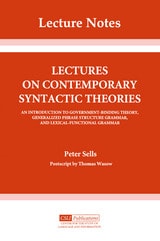
Lectures on Contemporary Syntactic Theories
An Introduction to Government-Binding Theory, Generalized Phrase Structure Grammar, and Lexical-Function GrammarPeter Sells
CSLI, 1985
Lectures on Deixis
Charles Fillmore
CSLI, 1997
Lectures on Ethics, 1900 - 1901
John DeweyDonald F. Koch
Southern Illinois University Press, 1991
In Lectures on Ethics, 1900–1901,Donald F. Koch supplies the only extant complete transcription of the annual three-course sequence on ethics John Dewey gave at the University of Chicago.
In his introduction Koch argues that these lectures offer the best systematic, overall introduction to Dewey’s approach to moral philosophy and are the only account showing the unity of his views in nearly all phases of ethical inquiry. These lectures are the only work by Dewey to set forth a complete theory of moral language. They offer a clear illustration of the central methodological questions in the development of a pragmatic instrumentalist ethic and the actual working out of the instrumentalist approach as distinct from simply presenting it as a conclusion.

Lectures on Exceptional Lie Groups
J. F. Adams
University of Chicago Press, 1996
Because Lie groups form a staple of most mathematics graduate students' diets, this work on exceptional Lie groups should appeal to many of them, as well as to researchers of algebraic geometry and topology.
J. Frank Adams was Lowndean professor of astronomy and geometry at the University of Cambridge. The University of Chicago Press published his Lectures on Lie Groups and has reprinted his Stable Homotopy and Generalized Homology.
Chicago Lectures in Mathematics Series
Lectures on Imagination
Paul Ricoeur
University of Chicago Press, 2024
The eminent philosopher Paul Ricoeur was devoted to the imagination. These previously unpublished lectures offer Ricoeur’s most significant and sustained reflections on creativity as he builds a new theory of imagination through close examination, moving from Aristotle, Pascal, Spinoza, Hume, and Kant to Ryle, Price, Wittgenstein, Husserl, and Sartre. These thinkers, he contends, underestimate humanity’s creative capacity. While the Western tradition generally views imagination as derived from the reproductive example of the image, Ricoeur develops a theory about the mind’s power to produce new realities. Modeled most clearly in fiction, this productive imagination, Ricoeur argues, is available across conceptual domains. His theory provocatively suggests that we are not constrained by existing political, social, and scientific structures. Rather, our imaginations have the power to break through our conceptual horizons and remake the world.
Lectures on Kant's Political Philosophy
Hannah Arendt
University of Chicago Press, 1982
Lectures on Lie Groups
J. F. Adams
University of Chicago Press, 1983
Lectures on Linear Logic
A. S. Troelstra
CSLI, 1992
Lectures on Quantum Field Theory
Jirí Horejší
Karolinum Press, 2024
This book covers the material of the two-semester quantum field theory course that Jirí Horejší has taught at Charles University and Czech Technical University in Prague for over two decades. In the individual chapters, one may find the discussion of selected topics in relativistic quantum mechanics and relativistic quantum field theory; the dominant theme is quantum electrodynamics. The technique of Feynman diagrams is described in detail, along with methods of regularization and renormalization, including some basic applications.
The selection of topics presented in the book is intended to provide the reader with the technical skills necessary for the subsequent study of theoretical particle physics. In keeping with the author’s typical lecture style, the text contains many detailed explicit calculations to a degree not entirely typical in other available sources. With primary appeal for university students specializing in theoretical physics or nuclear and particle physics, it may also be useful for any scientifically minded reader seriously interested in the foundations of modern physics.
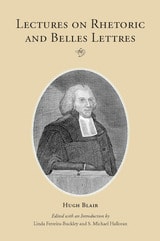
Lectures on Rhetoric and Belles Lettres
Hugh Blair. Edited by Linda Ferreira-Buckley and S. Michael Halloran
Southern Illinois University Press, 2005
This new edition of Hugh Blair’s Lectures on Rhetoric and Belles Lettres, edited by Linda Ferreira-Buckley and S. Michael Halloran, answers the need for a complete, reliable text. The book seeks to generate a renewed interest in Blair by provoking new inquiries into the tradition of belletristic rhetoric and by serving as both aid and incentive to others who may join in the project of improving understanding of this landmark rhetorical scholarship.
This editioncontains forty-seven lectures and remains faithful to the text of the 1785 London edition. The editors contextualize Hugh Blair’s motivations and thinking by providing in their introduction an extended account of Blair’s life and era. The bibliography of works by and about Blair is an invaluable aid, surpassing previous research on Blair.
Although the extent of its influence cannot be measured fully, Blair’s Lectures on Rhetoric and Belles Lettres was undoubtedly a primary vehicle for introducing many eighteenth- and nineteenth-century scholars to classical rhetoric and French belletristic rhetoric—its success due in part to the ease with which the lectures combine neoclassical and Enlightenment thought, accommodating emerging social concerns. Ferreira-Buckley and Halloran’s extensive treatment revives the tradition of belletristic rhetoric, improving the understanding of Blair’s place in the study of eighteenth- and nineteenth-century discourse, while finding him relevant in the twenty-first century.