Results by title
28 books match the query 'Left'

A Milwaukee Woman's Life on the Left
The Autobiography of Meta BergerMeta Berger
Wisconsin Historical Society Press, 2001

Black Internationalist Feminism
Women Writers of the Black Left, 1945-1995Cheryl Higashida
University of Illinois Press, 2013

Clowns to the Left of Me, Jokers to the Right
American Life in ColumnsMichael A. Smerconish
Temple University Press, 2020
Opinionated talk show host and columnist Michael Smerconish has been chronicling local, state, and national events for the Philadelphia Daily News and the Philadelphia Inquirer for more than 15 years. He has sounded off on topics as diverse as the hunt for Osama bin Laden and what the color of your Christmas lights says about you. In this collection of 100 of his most memorable columns, Smerconish reflects on American political life with his characteristic feistiness. A new Afterword for each column provides updates on both facts and feelings, indicating how the author has evolved over the years, moving from a reliable Republican voter to a political Independent.
Clowns to the Left of Me, Jokers to the Right covers the post-9/11 years, Barack Obama’s ascension, and the rise of Donald Trump. Smerconish describes meeting Ronald Reagan, having dinner with Fidel Castro, barbequing with the band YES in his backyard, spending the same night with Pete Rose and Ted Nugent, drinking champagne from the Stanley Cup, and conducting Bill Cosby’s only pretrial interview. He also writes about local Philadelphia culture, from Sid Mark to the Rizzo statue.
Smerconish’s outlook as expressed in these impassioned opinion pieces goes beyond “liberal” or “conservative.” His thought process continues to evolve and change, and as it does, he aims to provoke readers to do the same.
All author proceeds benefit the Children’s Crisis Treatment Center, a Philadelphia- based, private, nonprofit agency that provides behavioral health services to children and their families.
Democracy and the Left
Social Policy and Inequality in Latin AmericaEvelyne Huber and John D. Stephens
University of Chicago Press, 2012
Although inequality in Latin America ranks among the worst in the world, it has notably declined over the last decade, offset by improvements in health care and education, enhanced programs for social assistance, and increases in the minimum wage.
Haunted by Hitler
Liberals, the Left, and the Fight against Fascism in the United StatesChristopher Vials
University of Massachusetts Press, 2014
Although fascism is typically associated with Europe, the threat of fascism in the United States haunted the imaginations of activists, writers, and artists, spurring them to create a rich, elaborate body of cultural and political work. Traversing the Popular Front of the 1930s, the struggle against McCarthyism in the 1950s, the Black Power movement of the 1960s, and the AIDS activism of the 1980s, Haunted by Hitler highlights the value of “antifascist” cultural politics, showing how it helped to frame the national discourse.
Christopher Vials examines the ways in which anxieties about fascism in the United States have been expressed in the public sphere, through American television shows, Off-Broadway theater, party newspapers, bestselling works of history, journalism, popular sociology, political theory, and other media. He argues that twentieth-century liberals and leftists were more deeply unsettled by the problem of fascism than those at the center or the right and that they tirelessly and often successfully worked to counter America's fascist equivalents.
Hope Lies in the Proles
George Orwell and the LeftJohn Newsinger
Pluto Press, 2018

Icons of the Left
Benjamin and Eisenstein, Picasso and Kafka after the Fall of CommunismOtto Karl Werckmeister
University of Chicago Press, 1999
Focusing on some of the most celebrated instances of traditional "Western Marxism," Werckmeister shows how such "icons of the Left" have been progressively detached from their political roots in communist activism to the safe distance of utopian or revolutionary speculations. He assesses some recent critiques of "Western Marxism" in popular culture such as Soderbergh's film Kafka, pointing out the historic fallacies that underlie such wholesale repudiations. With this analysis, Werckmeister seeks to clear the ground for a coherent cultural policy of the Left that responds to the continuing crisis of society.

Labour's Civil Wars
How Infighting has Kept the Left from Power (and What Can Be Done About It)Patrick Diamond and Giles Radice
Haus Publishing, 2023
The biblical adage that “if a house be divided against itself, that house cannot stand” remains sound theological advice. It is also essential counsel for any political party that aspires to win elections. When a party is riven with division, the public does not know what it stands for. Though both major UK parties have been subject to internal conflict over the years, the Labour Party has been more prone to damaging splits. The divide exposed by the Corbyn insurgency is only the most recent example in almost a century of destructive infighting. Indeed, it has often seemed as though Labour has been more adept at fighting itself than in defeating the Tory party. This book examines the history of Labour’s civil wars and the underlying causes of the party’s schisms, from the first split of 1931, engineered by Ramsay MacDonald, to the ongoing battle for the future between the incumbent, Keir Starmer, and those who fundamentally altered the party’s course under his predecessor, Jeremy Corbyn.

Learning on the Left
Political Profiles of Brandeis UniversityStephen J. Whitfield
Brandeis University Press, 2020
Stephen J. Whitfield makes the case for the pertinence of Brandeis University in understanding the vicissitudes of American liberalism since the mid-twentieth century. Founded to serve as a refuge for qualified professors and students haunted by academic antisemitism, Brandeis University attracted those who generally envisioned the republic as worthy of betterment. Whether as liberals or as radicals, figures associated with the university typically adopted a critical stance toward American society and sometimes acted upon their reformist or militant beliefs. This volume is not an institutional history, but instead shows how one university, over the course of seven decades, employed and taught remarkable men and women who belong in our accounts of the evolution of American politics, especially on the left. In vivid prose, Whitfield invites readers to appreciate a singular case of the linkage of political influence with the fate of a particular university in modern America.
Left and Right
The Significance of a Political DistinctionNorberto Bobbio
University of Chicago Press, 1996
Bobbio argues that left and right are not absolute terms, but represent a shifting map of the political spectrum, relative to the particular cultural and historical contexts of a given time. The distinction continues to endure because it reflects the essentially antithetical nature and dynamics of democratic politics. In his accessible yet provocative style, Bobbio constructs a historically informed, analytic division of the political universe along two foundational axes, from equality to inequality, from liberty to authoritarianism. He then charts the past and present tendencies of the left and the right, in both their more moderate and more virulently extreme forms. Ultimately, for Bobbio, the measure of post-modern democracy will indeed lie in where and how we situate ourselves relative to these critical left/right parameters, in whether we cast ourselves, our votes, and our era in terms of political expediency, social viability, or moral responsibility.
A bestseller in Italy, where it sold over three hundred thousand copies, Left and Right is an important contribution to our understanding of global political developments in the 1990s and beyond.
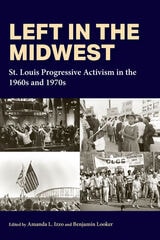
Left in the Midwest
St. Louis Progressive Activism in the 1960s and 1970sAmanda L. Izzo
University of Missouri Press, 2023
Despite St. Louis’s mid-twentieth-century reputation as a conservative and sleepy midwestern metropolis, the city and its surrounding region have long played host to dynamic forms of social-movement organizing. This was especially the case during the 1960s and 1970s, when a new generation of local activists lent their energies to the ongoing struggles for Black freedom, lesbian and gay liberation, feminist social transformations, environmental protection, an end to the Vietnam War, and more. This volume, the first of its kind, offers fifteen scholarly contributions that together bring into focus the exceptional range of progressive activist projects that took shape in a single midwestern city during these tumultuous decades.
In contrast to scholarship that seeks to interpret the era’s social-movement initiatives in a primarily national context, the works presented in this expansive collection emphasize the importance of locality, neighborhood, community institutions, and rooted social networks. Documenting wrenching forces of metropolitan change as well as grassroots resilience, Left in the Midwest shows us how place powerfully shaped agendas, worldviews, and opportunities for the disparate groups that dedicated themselves to progressive visions for their city. By revising our sense of the region’s past, this volume also expands our sense of the possibilities that the future may hold for activist movements seeking change in St. Louis and beyond.
Left in the West
Literature, Culture, and Progressive Politics in the American WestGioia Woods
University of Nevada Press, 2018
From the early 19th century to the present, a remarkably complex and varied body of literary and cultural production has emerged out of progressive social movements. While the literary left in the West shared many interests with other regional expressions—labor, class, anti-fascism, and anti-imperialism, the influence of Manifest Destiny—the distinct history of settler colonialism in western territories caused western leftists to develop concerns unique to the region.
Chapters in the volume provide an impressive range of analysis, covering artists and movements from suffragist writers to bohemian Californian photographers, from civil rights activists to popular folk musicians, from Latinx memoirists to Native American experimental writers, to name just a few.
The unique consideration of the West as a socio-political region establishes a framework for political critique that moves beyond class consequences, anti-fascism, and civil liberties, and into distinct Western concerns such as Native American sovereignty, environmental exploitation, and the legacies of settler colonialism. What emerges is a deeper understanding of the region and its unique people, places, and concerns.
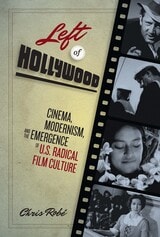
Left of Hollywood
Cinema, Modernism, and the Emergence of U.S. Radical Film CultureBy Chris Robé
University of Texas Press, 2010
In the 1930s as the capitalist system faltered, many in the United States turned to the political Left. Hollywood, so deeply embedded in capitalism, was not immune to this shift. Left of Hollywood offers the first book-length study of Depression-era Left film theory and criticism in the United States. Robé studies the development of this theory and criticism over the course of the 1930s, as artists and intellectuals formed alliances in order to establish an engaged political film movement that aspired toward a popular cinema of social change. Combining extensive archival research with careful close analysis of films, Robé explores the origins of this radical social formation of U.S. Left film culture.
Grounding his arguments in the surrounding contexts and aesthetics of a few films in particular—Sergei Eisenstein's Que Viva Mexico!, Fritz Lang's Fury, William Dieterle's Juarez, and Jean Renoir's La Marseillaise—Robé focuses on how film theorists and critics sought to foster audiences who might push both film culture and larger social practices in more progressive directions. Turning at one point to anti-lynching films, Robé discusses how these movies united black and white film critics, forging an alliance of writers who championed not only critical spectatorship but also the public support of racial equality. Yet, despite a stated interest in forging more egalitarian social relations, gender bias was endemic in Left criticism of the era, and female-centered films were regularly discounted. Thus Robé provides an in-depth examination of this overlooked shortcoming of U.S. Left film criticism and theory.
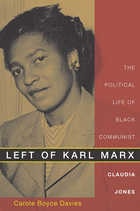
Left of Karl Marx
The Political Life of Black Communist Claudia JonesCarole Boyce Davies
Duke University Press, 2007
Claudia Cumberbatch Jones was born in Trinidad. In 1924, she moved to New York, where she lived for the next thirty years. She was active in the Communist Party from her early twenties onward. A talented writer and speaker, she traveled throughout the United States lecturing and organizing. In the early 1950s, she wrote a well-known column, “Half the World,” for the Daily Worker. As the U.S. government intensified its efforts to prosecute communists, Jones was arrested several times. She served nearly a year in a U.S. prison before being deported and given asylum by Great Britain in 1955. There she founded The West Indian Gazette and Afro-Asian Caribbean News and the Caribbean Carnival, an annual London festival that continues today as the Notting Hill Carnival. Boyce Davies examines Jones’s thought and journalism, her political and community organizing, and poetry that the activist wrote while she was imprisoned. Looking at the contents of the FBI file on Jones, Boyce Davies contrasts Jones’s own narration of her life with the federal government’s. Left of Karl Marx establishes Jones as a significant figure within Caribbean intellectual traditions, black U.S. feminism, and the history of communism.
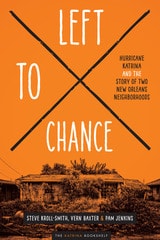
Left to Chance
Hurricane Katrina and the Story of Two New Orleans NeighborhoodsBy Steve Kroll-Smith, Vern Baxter, and Pam Jenkins
University of Texas Press, 2015
How do survivors recover from the worst urban flood in American history, a disaster that destroyed nearly the entire physical landscape of a city, as well as the mental and emotional maps that people use to navigate their everyday lives? This question has haunted the survivors of Hurricane Katrina and informed the response to the subsequent flooding of New Orleans across many years.
Left to Chance takes us into two African American neighborhoods—working-class Hollygrove and middle-class Pontchartrain Park—to learn how their residents have experienced “Miss Katrina” and the long road back to normal life. The authors spent several years gathering firsthand accounts of the flooding, the rushed evacuations that turned into weeks- and months-long exile, and the often confusing and exhausting process of rebuilding damaged homes in a city whose local government had all but failed. As the residents’ stories make vividly clear, government and social science concepts such as “disaster management,” “restoring normality,” and “recovery” have little meaning for people whose worlds were washed away in the flood. For the neighbors in Hollygrove and Pontchartrain Park, life in the aftermath of Katrina has been a passage from all that was familiar and routine to an ominous world filled with raw existential uncertainty. Recovery and rebuilding become processes imbued with mysteries, accidental encounters, and hasty adaptations, while victories and defeats are left to chance.
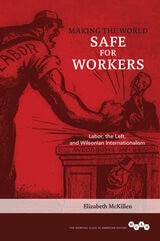
Making the World Safe for Workers
Labor, the Left, and Wilsonian InternationalismElizabeth McKillen
University of Illinois Press, 2018

On Your Marx
Relinking Socialism and the LeftRandy Martin
University of Minnesota Press, 2001
Reclaims Marx for today through a fundamental reconsideration of how his works should be read.
Why-and how-does Marx speak to our day? Seeking to reestablish the link between Marx, socialism, and the Left, this book negotiates the common ground between orthodox marxism and postmarxism to show how Marx can elaborate the present. More than a claim for his relevance, this book is also a forceful statement about how theory relates to political project and organization.
What, Randy Martin asks, does Marx have to say to the discourses of radical democracy, postmodernism, and globalization-all of which purport to solve problems that emerge in Marx’s writings? A reading of Marx can in fact disclose the limitations of the contemporary modes of criticism, identifying the difficult conceptual problems that cannot be avoided or overcome. Using readings of Marx to restage contemporary political discussions, On Your Marx reengages orthodox and postmarxist understandings in a critical and constructive conversation. In doing so, the book points to powerful new alliances between cultural and political theorists and activists, opening new possibilities for mobilization and social justice.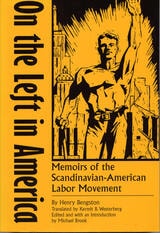
On the Left in America
Memoirs of the Scandinavian-American Labor MovementHenry Bengston. Translated by Kermit B. Westerberg. Edited and with an Introduction by Michael Brook
Southern Illinois University Press, 1999
Previously available only in an out-of-print Swedish edition published in 1955, Henry Bengston's firsthand account deals with what historian Dag Blanck calls the "other Swedish America."
Swedish immigrants in general were conservative, but Bengston and others—most notably Joe Hill—joined the working-class labor movement on the left, primarily as Debsian socialists, although their ranks included other socialists, communists, and anarchists. Involved in the radical labor movement on many fronts, Bengston was the editor of Svenska Socialisten from 1912 until he dropped out of the Scandinavian Socialist Federation in 1920. Even after 1920, however, his sympathies remained with the movement he had once strongly espoused.

Seeking Rights from the Left
Gender, Sexuality, and the Latin American Pink TideElisabeth Jay Friedman
Duke University Press, 2018
Contributors: Sonia E. Alvarez, María Constanza Diaz, Rachel Elfenbein, Elisabeth Jay Friedman, Niki Johnson, Victoria Keller, Edurne Larracoechea Bohigas, Amy Lind, Marlise Matos, Shawnna Mullenax, Ana Laura Rodríguez Gustá, Diego Sempol, Constanza Tabbush, Gwynn Thomas, Catalina Trebisacce, Annie Wilkinson
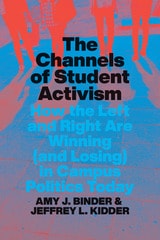
The Channels of Student Activism
How the Left and Right Are Winning (and Losing) in Campus Politics TodayAmy J. Binder and Jeffrey L. Kidder
University of Chicago Press, 2022
The past six years have been marked by a contentious political atmosphere that has touched every arena of public life, including higher education. Though most college campuses are considered ideologically progressive, how can it be that the right has been so successful in mobilizing young people even in these environments?
As Amy J. Binder and Jeffrey L. Kidder show in this surprising analysis of the relationship between political activism on college campuses and the broader US political landscape, while liberal students often outnumber conservatives on college campuses, liberal campus organizing remains removed from national institutions that effectively engage students after graduation. And though they are usually in the minority, conservative student groups have strong ties to national right-leaning organizations, which provide funds and expertise, as well as job opportunities and avenues for involvement after graduation. Though the left is more prominent on campus, the right has built a much more effective system for mobilizing ongoing engagement. What’s more, the conservative college ecosystem has worked to increase the number of political provocations on campus and lower the public’s trust in higher education.
In analyzing collegiate activism from the left, right, and center, The Channels of Student Activism shows exactly how politically engaged college students are channeled into two distinct forms of mobilization and why that has profound consequences for the future of American politics.

The Channels of Student Activism
How the Left and Right Are Winning (and Losing) in Campus Politics TodayAmy J. Binder and Jeffrey L. Kidder
University of Chicago Press, 2022
This is an auto-narrated audiobook edition of this book.
An eye-opening analysis of collegiate activism and its effects on the divisions in contemporary American politics.
The past six years have been marked by a contentious political atmosphere that has touched every arena of public life, including higher education. Though most college campuses are considered ideologically progressive, how can it be that the right has been so successful in mobilizing young people even in these environments?
As Amy J. Binder and Jeffrey L. Kidder show in this surprising analysis of the relationship between political activism on college campuses and the broader US political landscape, while liberal students often outnumber conservatives on college campuses, liberal campus organizing remains removed from national institutions that effectively engage students after graduation. And though they are usually in the minority, conservative student groups have strong ties to national right-leaning organizations, which provide funds and expertise, as well as job opportunities and avenues for involvement after graduation. Though the left is more prominent on campus, the right has built a much more effective system for mobilizing ongoing engagement. What’s more, the conservative college ecosystem has worked to increase the number of political provocations on campus and lower the public’s trust in higher education.
In analyzing collegiate activism from the left, right, and center, The Channels of Student Activism shows exactly how politically engaged college students are channeled into two distinct forms of mobilization and why that has profound consequences for the future of American politics.
The Church and the Left
Adam Michnik
University of Chicago Press, 1992
Years in advance of the collapse of communism in Eastern Europe, Poland underwent one of the most radical and painful social and political upheavals of our century. Through a wide body of writing and an unswerving political commitment that took him from prison to parliament, Adam Michnik was a central figure in these events—culminating in 1989 with his role in formulating the political deal that brought Solidarity to power. Michnik's writings, most of them smuggled out of prison, have been translated into many languages; but until now, only isolated essays have appeared in English.
In The Church and the Left, Michnik gives full expression to the ideas that have shaped the drama of Poland and of our time. The unlikely alliance of the Catholic Church and the dissident Left is one of the most fascinating and confusing features of the Polish revolutionary movement. No other book better explains the logic of this powerful coalition—or its future implications. In superb discussions of liberalism and nationalism, of secularism and clericalism, Michnik illuminates the unique makeup and direction of Poland's social revolution and, at the same time, offers unparalleled insight into the internal struggles still present in Eastern Europe.
Today, as religious revivals proliferate and secular progress, whether liberal or communist, comes under suspicion, the relationship of religion to politics has become a pressing issue far beyond the boundaries of Poland. As none has done before, Michnik's clear and thoughtful book gives us the means to understand this volatile mix as it has transformed Poland and as it figures in the future we see taking shape.
The Heart Is a Little to the Left
Essays on Public MoralityWilliam Sloane Coffin
Dartmouth College Press, 2011

The Honky Tonk on the Left
Progressive Thought in Country MusicMark Allan Jackson
University of Massachusetts Press, 2018
Bringing together a wide spectrum of cultural critics, The Honky Tonk on the Left takes on this conservative stereotype and reveals how progressive thought has permeated country music from its beginnings to the present day. The original essays in this collection analyze how diverse performers, including Fiddlin' John Carson, Webb Pierce, Loretta Lynn, Johnny Cash, O. B. McClinton, Garth Brooks, and Uncle Tupelo, have taken on such issues as government policies, gender roles, civil rights, prison reform, and labor unrest. Taking notice of the wrongs in their eras, these musicians worked to address them in song and action, often with strong support from fans.
In addition to the volume editor, this collection includes work by Gregory N. Reish, Peter La Chapelle, Stephanie Vander Wel, Charles L. Hughes, Ted Olson, Nadine Hubbs, Stephanie Shonekan, Stephen A. King, P. Renee Foster, Tressie McMillan Cottom, Travis D. Stimeling, and Jonathan Silverman.

The Left and Digital Politics
Political Parties from Platform Neoliberalism to Platform SocialismMarco Guglielmo
University of Westminster Press, 2025
The Pull of Politics
Steinbeck, Wright, Hemingway, and the Left in the Late 1930sMilton A. Cohen
University of Missouri Press, 2018

Why I Left the Amish
A MemoirSaloma Miller Furlong
Michigan State University Press, 2011
There are two ways to leave the Amish—one is through life and the other through death. When Saloma Miller Furlong’s father dies during her first semester at Smith College, she returns to the Amish community she had left twenty four years earlier to attend his funeral. Her journey home prompts a flood of memories. Now a mother with grown children of her own, Furlong recalls her painful childhood in a family defined by her father’s mental illness, her brother’s brutality, her mother’s frustration, and the austere traditions of the Amish—traditions Furlong struggled to accept for years before making the difficult decision to leave the community. In this personal and moving memoir, Furlong traces the genesis of her desire for freedom and education and chronicles her conflicted quest for independence. Eloquently told, Why I Left the Amish is a revealing portrait of life within—and without—this frequently misunderstood community.

Wrestling with the Left
The Making of Ralph Ellison’s Invisible ManBarbara Foley
Duke University Press, 2010