Results by title
5 books match the query 'Lesbian mothers'
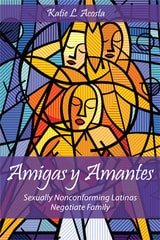
Amigas y Amantes
Sexually Nonconforming Latinas Negotiate FamilyAcosta, Katie L
Rutgers University Press, 2013
2014 Choice Outstanding Academic Title
Amigas y Amantes (Friends and Lovers) explores the experiences of sexually nonconforming Latinas in the creation and maintenance of families. It is based on forty-two in-depth ethnographic interviews with women who identify as lesbian, bisexual, or queer (LBQ). Additionally, it draws from fourteen months of participant observation at LBQ Latina events that Katie L. Acosta conducted in 2007 and 2008 in a major northeast city. With this data, Acosta examines how LBQ Latinas manage loving relationships with the families who raised them, and with their partners, their children, and their friends.
Acosta investigates how sexually nonconforming Latinas negotiate cultural expectations, combat compulsory heterosexuality, and reconcile tensions with their families. She offers a new way of thinking about the emotion work involved in everyday lives, which highlights the informal, sometimes invisible, labor required in preserving family ties. Acosta contends that the work LBQ Latinas take on to preserve connections with biological families, lovers, and children results in a unique way of doing family.
Paying particular attention to the negotiations that LBQ Latinas undertake in an effort to maintain familial order, Amigas y Amantes explores how they understand femininity, how they negotiate their religious faiths, how they face the unique challenges of being in interracial/interethnic relationships, and how they raise their children while integrating their families of origin.
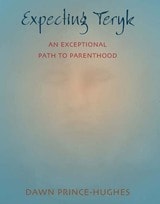
Expecting Teryk
An Exceptional Path to ParenthoodDawn Prince-Hughes
Ohio University Press, 2005
“Expecting Teryk is a rich and sumptuous work that speaks to the deeper realities and represents a unique viewpoint of experiences shared by all individuals who choose the path to parenthood.”—Disability, Pregnancy, and Parenthood
The period just prior to the birth of a child is a time of profound personal transformation for expectant parents. Expecting Teryk: An Exceptional Path to Parenthood is an intimate exploration, written in the form of a letter from a parent to her future son, that reclaims a rite of passage that modern society would strip of its magic.
Dawn Prince-Hughes, renowned author of Songs of the Gorilla Nation: My Journey through Autism, considers the ways being autistic might inform her parenting. She also candidly narrates her experience of becoming a parent as part of a lesbian couple—from meeting her partner to the questions they ask about their readiness to become parents and the practical considerations of choosing a sperm donor.
Expecting Teryk is viewed through the lens of autism as Prince-Hughes shares the unique way she sees and experiences the world—as well as her aching will to be fully present for her son. Contemplating the evolutionary traditions of parenting from both animal and human perspectives and the reassurances that nature offers, Expecting Teryk is a work of sensuous wonder that speaks to the deeper realities and archetypal experiences shared by all who embark on the journey of parenthood.

Mothering Without A Compass
White Mother’s Love, Black Son’s CourageBecky Thompson
University of Minnesota Press, 2000
A lively meditation on creating a multiracial family.
In 1997, Becky Thompson began parenting nine-year-old Adrian at the request of his mother, and her life changed forever. Mothering without a Compass is the moving story of her first year as the white lesbian "sudden-mother" of an African American boy. From the everyday yet sometimes overwhelming tasks of finding Adrian a school and debating the significance of action figures, to unexpected discussions about who pays whom at the sperm bank, to the more complicated matters of racism, sexuality, nontraditional families, open adoption, love, and loss, Thompson gives us an absorbing and often humorous account of her attempt at antiracist, multicultural parenting.
Mothering without a Compass highlights a range of issues and experiences: Thompson’s desire to be a good mother while holding on to her sense of self; her growing, detailed knowledge of the ways in which racism affects people’s feelings about themselves and the world around them; her increasing appreciation of the inner life of a child; her realization that mothering forces her to confront her own vulnerabilities and past losses. The book opens with Adrian’s arrival and ends with a visit from Adrian’s biological mother, during which she and Thompson search for ways to respect each other as parents across racial, religious, and cultural divides.Mothering without a Compass relates a lesbian parent’s struggle to help her child grow up and describes the complexities facing children who have more than one family. This candid, personal story shows that it is through everyday life that questions about race, class, gender, and sexuality are often played out. It is a necessary book for all parents-for anyone concerned with the challenge of raising justice-minded children in a complicated world.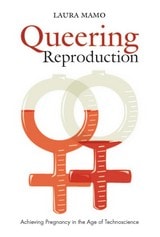
Queering Reproduction
Achieving Pregnancy in the Age of TechnoscienceLaura Mamo
Duke University Press, 2007
Mamo provides an overview of a shift within some lesbian communities from low-tech methods of self-insemination to a reliance on outside medical intervention and fertility treatments. Reflecting on the issues facing lesbians who become parents through assisted reproductive technologies, Mamo explores questions about the legal rights of co-parents, concerns about the genetic risks of choosing an anonymous sperm donor, and the ways decisions to become parents affect sexual and political identities. In doing so, she investigates how lesbians navigate the medical system with its requisite range of fertility treatments, diagnostic categories, and treatment trajectories. Combining moving narratives and insightful analysis, Queering Reproduction reveals how medical technology reconfigures social formations, individual subjectivity, and notions of kinship.
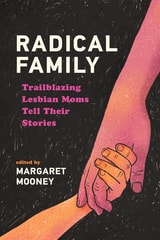
Radical Family
Trailblazing Lesbian Moms Tell Their StoriesEdited by Margaret Mooney
Wisconsin Historical Society Press, 2025
A powerful collection of personal essays from lesbian moms who fought for the right to raise children
For generations, lesbians across the United States were systematically denied opportunities to raise children and build families, opportunities that were readily available to straight people. Radical Family honors the history-making struggles and triumphs of lesbian families in Madison, Wisconsin, who raised children in the 1980s, ’90s, and early 2000s—a time when lesbian motherhood was widely considered extreme and unnatural. In a collection of nine profoundly personal essays, the contributors recount their diverse paths to parenthood, as well as the hopes and challenges each family experienced. While the stories in Radical Family are unique, they all share a common thread: the mothers’ resilience and the risks they took, both small and sweeping, to defend their family’s right to exist.
For lesbians, the desire to raise children has historically been met with vilification and legal and social prejudice. Adoption agencies consistently rejected applications from out lesbians. Doctors and clinics refused to provide fertility treatments and other medical options to help them get pregnant. Lesbians who were able to raise children commonly lost custody to estranged spouses or grandparents.
Trailblazing lesbian mothers—and their children—fought to defy and, ultimately, shift this paradigm. Lesbian parents, like those in Radical Family, created informal networks in their local communities, where they could share survival strategies and find acceptance among other families that looked like theirs. With no rule book to guide them, and few laws to protect them, lesbian mothers created a new—some might even say radical—standard for what it means to be a family.
Over and over, the stories in Radical Family show how families fought back against hatred and homophobia with love, resilience, commitment, and creativity. Their stories deepen our understanding of what it means to be a mother—while showing how safety, belonging, and acceptance are universal human needs.