Results by title
275 books match the query 'Letters' and 25 start with a
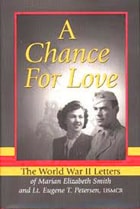
A Chance for Love
The World War II Letters of Marian Elizabeth Smith and Lt. Eugene T. Petersen, USMCREugene Peterson
Michigan State University Press, 1998
In mid-February 1944 Marian Elizabeth Smith, a young Wisconsin woman, met Marine Corps Lieutenant Eugene T. Petersen on the passenger train, El Capitan, as it made its 42-hour run from Los Angeles to Chicago. After a brief acquaintance, he left the United States to join the Third Marine Division on Guam and eventually to take part in the battle for Iwo Jima in February and March of 1945. The collected letters of their subsequent 18-month correspondence reveal much about wartime life at home and abroad. This correspondence represents a time capsule of current events as Smith and Petersen discuss Franklin Roosevelt, the United Nations, internationalism, popular movies, the French aviator and poet Antoine de St. Exupery, the comic strip Barnaby, and the frustrations of dealing with sometimes less-than- enlightened parents. The loss of Marian's brother during the bombing of Ploesti, Rumania, in June 1944, brought Petersen and Smith closer together, and after hundreds of letters the "chance for love" Marian had suggested early in their correspondence evolved into a marriage that has endured for more than half a century.
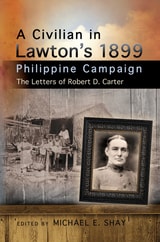
A Civilian in Lawton's 1899 Philippine Campaign
The Letters of Robert D. CarterEdited by Michael E. Shay
University of Missouri Press, 2013
In the midst of the Philippine-American War, twenty-two-year-old Robert Dexter Carter served in Manila as a civilian quartermaster clerk. Through his letters to his family, he provided a vivid picture of army life in Manila—the sights, the smells, and his responses to the native culture. In addition to his letters, his diary and several related articles present a firsthand account of the historic voyage of the United States Army Transport Grant through the Suez Canal to Manila in early 1899. Carter’s writings not only tell of his sometimes harrowing experiences, but also reveal the aspirations and fears of a young man not quite sure of his next steps on life’s journey.
Carter’s father, Robert Goldthwaite Carter, was a war hero and a longtime friend of Maj. Gen. Henry W. Lawton. Carter obtained his position through Lawton’s influence, and his respect for Lawton is clear throughout his writings. A frequent guest in the Lawton home, the young clerk was introduced to many notable figures both military and civilian. Carter’s letters, particularly to his father, are full of news and gossip related to his commander. In other letters, he reveals the kindness and generosity of Mrs. Lawton, who took time to look out for Carter while he was in the hospital and often loaned him books.
This well-researched and expertly edited work casts light on the role of support troops in war, a subject too often minimized or ignored. Shay begins each chapter with an introduction that establishes the setting, the context of events, and the disposition of Carter and his compatriots and provides notes and commentary to place the letters in context. By choosing not to edit the offensive expletives of a sometimes arrogant and racist young man, Shay presents a fully nuanced portrait of a young American exploring the larger world in a time of turmoil.
Enhanced by photographs from collections at the Library of Congress and the Military History Institute, as well as many of Carter’s own whimsical drawings, the book will appeal to armchair historians and scholars alike.
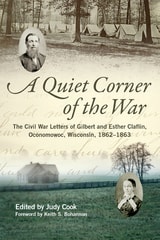
A Quiet Corner of the War
The Civil War Letters of Gilbert and Esther Claflin, Oconomowoc, Wisconsin, 1862–1863Gilbert Claflin and Esther Claflin; Edited by Judy Cook; Foreword by Keith S. Bohannon
University of Wisconsin Press, 2013
In 2002, Judy Cook discovered a packet of letters written by her great-great-grandparents, Gilbert and Esther Claflin, during the American Civil War. An unexpected bounty, these letters from 1862–63 offer visceral witness to the war, recounting the trials of a family separated. Gilbert, an articulate and cheerful forty-year-old farmer, was drafted into the Union Army and served in the Thirty-Fourth Wisconsin Infantry garrisoned in western Kentucky along the Mississippi. Esther had married Gilbert when she was fifteen; now a woman with two teenage sons, she ran the family farm near Oconomowoc, Wisconsin, in Gilbert’s absence.
In his letters, Gilbert writes about food, hygiene, rampant desertions by drafted men, rebel guerrilla raids, and pastimes in the daily life of a soldier. His comments on interactions with Confederate prisoners and ex-slaves before and after the Emancipation Proclamation reveal his personal views on monumental events. Esther shares in her letters the challenges and joys of maintaining the farm, accounts of their boys Elton and Price, concerns about finances and health, and news of their local community and extended family. Esther’s experiences provide insight into family, farm, and village life in the wartime North, an often overlooked aspect of Civil War history.
Judy Cook has made the letters accessible to a wider audience by providing historical context with notes and appendixes. The volume includes a foreword by Civil War historian Keith S. Bohannon.
A Russian Prince in the Soviet State
Hunting Stories, Letters from Exile, and Military MemoirsVladimir Trubetskoi
Northwestern University Press, 2006
In his letters from exile, Trubetskoi describes his grim situation in Central Asia-how he snatched moments to write between mornings playing piano in a ballet studio and late nights in a restaurant band, struggling with the heat, the insect-borne illness, and the problems of a large, uprooted family. His memoirs of 1911-12, "Notes of a Cuirassier," are the culmination of his efforts and they convey in vivid detail the glittering prewar world of an elite Russian Guards regiment. These reminiscences as well as his stories offer a glimpse of what life was like for a citizen of Imperial Russia who tried to make a life for himself in the new Soviet state. Instructive, amusing, moving, Trubetskoi's stories are also an inspiring example of how a person of grace and true nobility meets large-scale social and political upheaval.

A Stranger in the Hague
The Letters of Queen Sophie of the Netherlands to Lady Malet, 1842–1877S. W. Jackman and Hella Haasse, eds.
Duke University Press, 1989
Sophie met her friend and confidant Marina Dora Spading, Lady Malt, when the latter was at the Hague with her diplomat husband in 1842. A lifelong friendship ensued, although they saw each other only infrequently thereafter. Sophie’s letters to Lady Malt are an extraordinary combination of comments on her personal situation and shrewd analyses of the European political arena. This selection of her surviving correspondence is opinionated, frank, and perceptive, and her letters are a unique commentary on the affairs of the Europe of the mid-nineteenth century.
A Wisconsin Boy in Dixie
Civil War Letters of James K. NewtonSelected and Edited by Stephen E. Ambrose
University of Wisconsin Press, 1995
“When I wrote to you last I was at Madison with no prospect of leaving very soon, but I got away sooner than I expected to.” So wrote James Newton upon leaving Camp Randall for Vicksburg in 1863 with the Fourteenth Wisconsin Volunteer Infantry. Newton, who had been a rural schoolteacher before he joined the Union army in 1861, wrote to his parents of his experiences at Shiloh, Corinth, Vicksburg, on the Red River, in Missouri, at Nashville, at Mobile, and as a prisoner of war. His letters, selected and edited by noted historian Stephen E. Ambrose, reveal Newton as a young man who matured in the war, rising in rank from private to lieutenant.
A Wisconsin Boy in Dixie reveals Newton as a young man who grew to maturity through his Civil War experience, rising in rank from private to lieutenant. Writing soberly about the less attractive aspects of army life, Newton's comments on fraternizing with the Rebs, on officers, and on discipline are touched with a sense of humor—"a soldier's best friend," he claimed. He also became sensitive to the importance of political choices. After giving Lincoln the first vote he had ever cast, Newton wrote: "In doing so I felt that I was doing my country as much service as I have ever done on the field of battle."

Afterwords
Letters on the Death of Virginia WoolfOldfield, Sybil
Rutgers University Press, 2005
On 28 March, 1941, at the height of Hitler's victories during the Second World War, Virginia Woolf filled her pockets with stones and drowned herself in the River Ouse near her home in Sussex. At the time of her death some voices in the press attacked her for showing cowardice in the face of the enemy and for setting a bad example to the general population. Woolf's suicide has been the subject of controversy for the media, for literary scholars, and for her biographers ever since.
Just when it may seem that nothing else could be said about Virginia Woolf and the ambiguous details of her suicide, Afterwords provides an entirely fresh perspective. It makes available to a wide readership for the first time letters sent to Leonard Woolf and Vanessa Bell (Virginia Woolf's sister) in the aftermath of the event. This unique volume brings together over two hundred letters from T. S. Eliot, H. G. Wells, May Sarton, Vita Sackville-West, Edith Sitwell, E. M. Forster, Radclyffe Hall, and many others, including political figures and religious leaders. In addition, informative annotations reveal the identities of many unexpected condolence-letter writers from among the general public.
In her introduction, editor Sybil Oldfield confronts the contemporary controversy over Woolf's suicide note, arguing that no one who knew Woolf or her work believed that she had deserted Britain. The ensuing collection of letters supports Oldfield's assertion. In elegant prose that rises to the stature of the occasion, these writers share remembrances of Virginia Woolf in life, comment on the quality of her work and her antifascist values, and reveal previously unknown facets of her capacity for friendship.
A richly deserved tribute to the life of an extraordinary woman as well as a testimony to the human capacity for sympathy, Afterwords is essential reading for anyone interested in the life, death, and enduring impact of Virginia Woolf.
Alfonso Reyes and Spain
His Dialogue with Unamuno, Valle-Inclán, Ortega y Gasset, Jiménez, and Gómez de la SernaBy Barbara Bockus Aponte
University of Texas Press, 1972
Alfonso Reyes, the great humanist and man of letters of contemporary Spanish America, began his literary career just before the outbreak of the Mexican Revolution of 1910. He spearheaded the radical shift in Mexico's cultural and philosophical orientation as a leading member of the famous "Athenaeum Generation."
The crucial years of his literary formation, however, were those he spent in Spain (1914-1924). He arrived in Madrid unknown and unsure of his future. When he left, he had achieved both professional maturity and wide acclaim as a writer. This book has, as its basis, the remarkable correspondence between Reyes and some of the leading spirits of the Spanish intellectual world, covering not only his years in Spain but also later exchanges of letters.
Although Reyes always made it clear that he was a Mexican and a Spanish American, he became a full-fledged member of the closed aristocracy of Spanish literature. It was the most brilliant period in Spain's cultural history since the Golden Age, and it is richly represented here by Reyes' association with five of its most important figures: Miguel de Unamuno and Ramón del Valle-Inclán were of the great "Generation of 98"; among the younger writers were José Ortega y Gasset, essayist and philosopher; the Nobel poet Juan Ramón Jiménez; and Ramón Gómez de la Serna, a precursor of surrealism.
Alfonso Reyes maintained lifelong friendships with these men, and their exchanges of letters are of a dual significance. They reveal how the years in Spain allowed Reyes to pursue his vocation independently, thereby prompting him to seek universal values. Coincidentally, they provide a unique glimpse into the inner world of those friends—and their dreams of a new Spain.
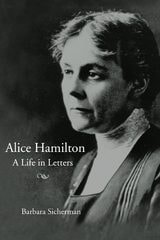
Alice Hamilton
A LIFE IN LETTERSBarbara Sicherman
University of Illinois Press, 2003
This legendary figure now comes to life in an integrated work of biography and letters that reveals the personal as well as the professional woman. In documenting Hamilton's evolution from a childhood of privilege to a life of social advocacy, the volume opens a window on women reformers and their role in Progressive Era politics and reform. Because Hamilton was a keen observer and vivid writer, her letters--more than 100 are included here--bring an unmatched freshness and immediacy to a range of subjects, such as medical education; personal relationships and daily life at Hull House; the women's peace movement; struggles for the protection of workers' health; academic life at Harvard; politics and civil liberties during the cold war; and the process of growing old. Her story takes the reader from the Gilded Age to the Vietnam War.

America in the Forties
The Letters of Ole Munch RæderGunnar Malmin
University of Minnesota Press, 1929
American Values, Religious Voices, Volume 2
Letters of Hope from People of FaithEdited by Andrea Weiss and Lisa Weinberger
University of Minnesota Press, 2022
In the aftermath of the 2016 presidential election, biblical scholar Andrea L. Weiss and graphic designer Lisa M. Weinberger teamed up to create Values & Voices, a national nonpartisan campaign that used letters and social media to highlight core American values connected to our diverse religious traditions. The result was American Values, Religious Voices: 100 Days, 100 Letters, a collection of one hundred letters written by some of America's most accomplished and thoughtful scholars of religion interspersed with original artwork during the first one hundred days of the Trump presidency.
In 2021, Weiss and Weinberger invited religious scholars and leaders to address President Biden, Vice President Harris, and members of the 117th Congress in their national letter writing and social media campaign. During the first 100 days of the Biden administration, religious leaders from across the country and from a range of religious denominations once again sent one letter a day to elected leaders in Washington. These letters bring an array of religious texts and teachings to bear on our most pressing contemporary issues. Arranged chronologically, the 2021 edition features 59 returning letter writers and 42 new scholars, new artwork, original essays, and and a new section focused on putting the letters into practice by using them for teaching, preaching, meditative practice, civic activism, and more. An alternate table of contents arranged by core values that emerged in the letters over the 100 days allows for thematic reading.
American Values, Religious Voices
100 Days. 100 LettersAndrea L. Weiss and Lisa M. Weinberger
University of Minnesota Press, 2018
American Values, Religious Voices: 100 Days, 100 Letters is a collection of letters written by some of America’s most accomplished and thoughtful scholars of religion during the first 100 days of the Trump presidency. While the letters are addressed to the president, vice president, and members of the 115th Congress and Trump administration, they speak to a broad audience of Americans looking for wisdom and encouragement at this tumultuous time in our nation’s history.
This unique volume assembles the 100 letters, plus four new supplemental essays and many of the graphic illustrations that enhanced the campaign.
Published near the midway point of the Trump presidency, this book showcases a wide range of ancient sacred texts that pertain to our most pressing contemporary issues. At a time of great division in our country, this post-election project models how people of different backgrounds can listen to and learn from one another. The letters offer insight and inspiration, reminding us of the enduring values that make our nation great.
American Women of Letters and the Nineteenth-Century Sciences
Styles of AffiliationBaym, Nina
Rutgers University Press, 2001
Choice Outstanding Academic Title
During the nineteenth century, the content and institutional organization of the sciences evolved dramatically, altering the public's understanding of knowledge. As science grew in importance, many women of letters tried to incorporate it into a female worldview. Nina Baym explores the responses to science displayed in a range of writings by American women. Conceding that they could not become scientists, women insisted, however, that they were capable of understanding science and participating in its discourse. They used their access to publishing to advocate the study and transmission of scientific information to the general public.
Bayms book includes biographies and a full exploration of these women's works. Among those considered are:
• Almira Phelps, author of Familiar Lectures on Botany (it sold 350,000 copies)
• Sarah Hale, who filled Godey's Lady's Book with science articles
• Catharine Esther Beecher, who based her domestic advice on scientific information
• Elizabeth Cary Agassiz, the actual ghostwriter of her husband's popular science essays
• Emily Dickinson, whose poetry is replete with scientific images.
Baym also investigates science in women's novels, writing by and about women doctors, and the scientific claims advanced by women's spiritualist movements. This book truly breaks new ground, outlining a field of inquiry that few have noted exists.
Amigas
Letters of Friendship and ExileBy Marjorie Agosín and Emma Sepúlveda
University of Texas Press, 2001
This collection of letters chronicles a remarkable, long-term friendship between two women who, despite differences of religion and ethnicity, have followed remarkably parallel paths from their first adolescent meeting in their native Chile to their current lives in exile as writers, academics, and political activists in the United States. Spanning more than thirty years (1966-2000), Agosín's and Sepúlveda's letters speak eloquently on themes that are at once personal and political—family life and patriarchy, women's roles, the loneliness of being a religious or cultural outsider, political turmoil in Chile, and the experience of exile.
Amy Levy
Critical EssaysLinda Hunt Beckman
Ohio University Press, 2000
Améfrica in Letters
Literary Interventions from Mexico to the Southern ConeJennifer Carolina Gómez Menjívar
Vanderbilt University Press, 2022
An Englishwoman in California
The Letters of Catherine Hubback, 1871-76Edited by Zoë Klippert
Bodleian Library Publishing, 2010
A niece of Jane Austen and a novelist herself, Catherine Hubback was fifty-two years old when she left England for America. She travelled to California on the Transcontinental Railroad and settled in Oakland, on the eastern shore of San Francisco Bay. Her son Edward shared her household and commuted by ferryboat to a wheat brokerage in the City.
In letters to her eldest son John and his wife Mary in Liverpool, Catherine conveys her delight – and her exasperation – at her new environment. She portrays her neighbours with a novelist's wry wit and brings her English sensibility to bear on gardening with unfamiliar plants and maintaining a proper wardrobe in a dry climate. She writes vividly of her adventures as she moves about a landscape recognizable to present-day residents, at a time when boats rather than bridges spanned the bay, and hot springs were the main attraction in the Napa Valley. In an atmosphere of financial unrest, she writes freely of her anxieties, while supplementing Edward's declining income by making lace and teaching the craft to other women. She recalls her 'prosperous days' in England, but finds pleasure in small things and assuredly takes her place in a society marked by great disparities in wealth.
In addition to transcriptions of the letters, this highly readable edition offers pertinent information on many of the people and places mentioned, explanatory notes, and striking illustrations. The introduction places the letters in context and tells the story of Catherine Hubback, whose life evolved in ways unprecedented in the Austen family.
An Iowa Schoolma’am
Letters of Elizabeth “Bess” Corey, 1904–1908Philip L. Gerber
University of Iowa Press, 2011
An Uncompromising Secessionist
The Civil War of George Knox Miller, Eighth (Wade's) Confederate CavalryGeorge Knox Miller, edited by Richard M. McMurry
University of Alabama Press, 2006
Offers significant insight into the life, heart, mind, and attitudes of an intelligent, educated, young mid-19th-century white Southerner
This book contains the letters of George Knox Miller who served as a line officer in the Confederate cavalry and participated in almost all of the major campaigns of the Army of Tennessee. He was, clearly, a very well-educated young man. Born in 1836 in Talladega, Alabama, he developed a great love for reading and the theater and set his sights upon getting an education that would lead to a career in law or medicine; meanwhile he worked as an apprentice in a painting firm to earn tuition. Miller then enrolled in the University of Virginia, where he excelled in his studies.
Eloquent, bordering on the lyrical, the letters provide riveting first-hand accounts of cavalry raids, the monotony of camp life, and the horror of battlefield carnage. Miller gives detailed descriptions of military uniforms, cavalry tactics, and prison conditions. He conveys a deep commitment to the Confederacy, but he was also critical of Confederate policies that he felt hindered the army's efforts. Dispersed among these war-related topics is the story of Miller's budding relationship with Celestine “Cellie” McCann, the love of his life, whom he would eventually marry.
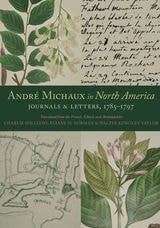
André Michaux in North America
Journals and Letters, 1785–1797Translated from the French, Edited, and Annotated by Charlie Williams, Eliane M. Norman, and Walter Kingsley Taylor
University of Alabama Press, 2020
Tracing the roots of American botany through the journals of an eighteenth-century explorer.
Known to today’s biologists primarily as the “Michx.” at the end of more than 700 plant names, André Michaux was an intrepid French naturalist. Under the directive of King Louis XVI, he was commissioned to search out and grow new, rare, and never-before-described plant species and ship them back to his homeland in order to improve French forestry, agriculture, and horticulture. He made major botanical discoveries and published them in his two landmark books, Histoire des chênes de l’Amérique (1801), a compendium of all oak species recognized from eastern North America, and Flora Boreali-Americana (1803), the first account of all plants known in eastern North America.
Straddling the fields of documentary editing, history of the early republic, history of science, botany, and American studies, André Michaux in North America: Journals and Letters, 1785–1797 is the first complete English edition of Michaux’s American journals. This copiously annotated translation includes important excerpts from his little-known correspondence as well as a substantial introduction situating Michaux and his work in the larger scientific context of the day.
To carry out his mission, Michaux traveled from the Bahamas to Hudson Bay and west to the Mississippi River on nine separate journeys, all indicated on a finely rendered, color-coded map in this volume. His writings detail the many hardships—debilitating disease, robberies, dangerous wild animals, even shipwreck—that Michaux endured on the North American frontier and on his return home. But they also convey the soaring joys of exploration in a new world where nature still reigned supreme, a paradise of plants never before known to Western science. The thrill of discovery drove Michaux ever onward, even ultimately to his untimely death in 1802 on the remote island of Madagascar.

Annie Adams Fields
Woman of LettersRita Gollin
University of Massachusetts Press, 0
Arabic Sounds and Letters
A Beginning Programmed Course. Textbook and ManualRaji M. Rammuny
University of Michigan Press, 2006
The textbook includes twenty lessons aimed at introducing Arabic sounds and writing system in a programmed method of instruction, supported by images and audio tapes*. The Manual consists of two parts. Part One includes a suggested methodology to guide teachers and students and Part Two contains basic communication needs in both Arabic script and transliteration to create a climate of enjoyable learning while students are acquiring the sounds and letters.
Raji M. Rammuny is Professor of Arabic Studies, Department of Near Eastern Studies, University of Michigan. He is the author of numerous books, including Advanced Standard Arabic through Authentic Texts and Audiovisual Materials, Parts 1 and 2, also published by the University of Michigan Press.
*The CD accompanying Arabic Sounds and Letters can be obtained from the UM Language Resource Center. Contact them by email at flacs@umich.edu or by phone at 734-764-3521.

Artaud 1937 Apocalypse
Letters from IrelandAntonin Artaud
Diaphanes, 2019
During his fateful journey, Artaud wrote letters to friends in Paris which included several “magic spells,” intended to curse his enemies and protect his friends from the city’s forthcoming incineration and the Antichrist’s appearance. (To André Breton, he wrote: “It’s the Unbelievable—yes, the Unbelievable—it’s the Unbelievable which is the truth.”) This book collects all of Artaud’s surviving correspondence from his time in Ireland, as well as photographs of the locations he traveled through. Featuring an afterword and notes by the book’s translator, Stephen Barber, this edition marks the seventieth anniversary of Artaud’s death.
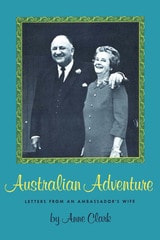
Australian Adventure
Letters from an Ambassador's WifeBy Anne Clark
University of Texas Press, 1969
From August 1965 to February 1968, during his period of service in Australia, Ambassador Edward Clark traveled in that country as no other American and probably few Australians ever have. His wife, Anne Clark, traveled with him, then wrote her observations and impressions to friends and family in the United States.
Her letters, published for the first time in this volume, reveal the isolations and involvements as well as the opportunities and the pleasures of embassy life. The etiquette of official functions at times posed problems, as in the Clarks' first black-tie dinner with the Acting Governor General, where Mrs. Clark was supposed to curtsy. "Some Ambassadors feel strongly that the representative of the President of the United States should never bend his knee (or rather his wife's) to any man. Mrs. Battle, wife of our predecessor ... put the question directly to President Kennedy. His answer to her was, 'Curtsy you must, but keep a stiff upper knee.'"
Soon, Anne Clark realized that the routine of appearances and entertainments was constant: "I do not know when I will make peace with the schedule. I am a slave to the little black book that is my calendar."
In addition to the intricacies of embassy life, the Clarks encountered much that was unfamiliar—new people, almost a new language, new flowers, new animals—even a sky with its new moon upside down. But their warm hospitality and genuine interest in things Australian attracted friends throughout the continent. Figures from the government, the church, the diplomatic circle, and everyday life, plus well-known guests from home, all become known to the reader in this perceptive account of official life from the inside.
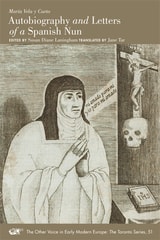
Autobiography and Letters of a Spanish Nun
María Vela y Cueto
Iter Press, 2016
When María Vela y Cueto (1561–1617) declared that God had personally ordered her to take only the Eucharist as food and to restore primitive dress and public penance in her aristocratic convent, the entire religious community, according to her confessor, “rose up in wrath.” Yet, when Vela died, her peers joined with the populace to declare her a saint. In her autobiography and personal letters, Vela speaks candidly of the obstacles, perils, and rewards of re-negotiating piety in a convent where devotion to God was no longer expressed through rigorous asceticism. Vela’s experience, told in her own words, reveals her shrewd understanding of the persuasive power of a woman’s body.