Results by title

3 books match the query 'Levant'
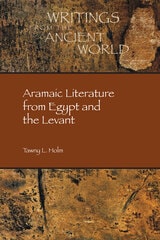
cover of Aramaic Literature from Egypt and the Levant

Aramaic Literature from Egypt and the Levant

Tawny L. Holm

SBL Press, 2026

In this volume, Tawny L. Holm provides bilingual editions of the majority of Aramaic literary compositions written between the fifth century BCE and first century CE. Each text is presented in transliteration and accompanied by an introduction, notes, and an English translation. The section on Egypt includes, among others, the fascinating anthology found on Papyrus Amherst 63, an Aramaic text written in the Demotic Egyptian script, as well as the Story and Proverbs of Ahiqar. The Levant section includes a selection of texts from the Dead Sea Scrolls, such as Tales from the Persian Court. These compositions cover a broad array of themes, from insights into the human condition to unique portraits of kings, heroes, and deities. The book also addresses matters of history, language, genres, poetics, and scribalism, and it offers a comprehensive collection of primary sources for use in ancient Near Eastern studies courses as well as biblical studies.
[more]
cover of Syrian and Lebanese Patricios in São Paulo: From the Levant to Brazil

Syrian and Lebanese Patricios in São Paulo

From the Levant to Brazil

Oswaldo Truzzi. Translated by Ramon J. Stern

University of Illinois Press, 2018

Syrian and Lebanese immigrants to Brazil chose to settle in urban areas, a marked contrast to many other migrant groups. In São Paulo, these newcomers embraced new lives as merchants, shopkeepers, and industrialists, making them a dominant force in the city's business sector.

Oswaldo Truzzi's original work on these so-called patrícios changed the face of Brazilian studies. Now available in an English translation, Truzzi's pioneering book identifies the complex social paths blazed by Syrian and Lebanese immigrants and their descendants from the 1890s to the 1960s. He considers their relationships to other groups within São Paulo's kaleidoscopic mix of cultures. He also reveals the differences--real and perceived--between Syrians and Lebanese in terms of religious and ethnic affinities and in the economic sphere. Finally, he compares the two groups with their counterparts in the United States and looks at the wave of Lebanese Muslims to São Paulo that began in the 1960s.
[more]
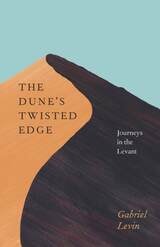
cover of The Dune's Twisted Edge: Journeys in the Levant

The Dune's Twisted Edge

Journeys in the Levant

Gabriel Levin

University of Chicago Press, 2012

“How to speak of the imaginative reach of a land habitually seen as a seedbed of faiths and heresies, confluences and ruptures . . . trouble spot and findspot, ruin and renewal, fault line and ragged clime, with a medley of people and languages once known with mingled affection and wariness as Levantine?” So begins poet Gabriel Levin in his journeys in the Levant, the exotic land that stands at the crossroads of western Asia, the eastern Mediterranean, and northeast Africa. Part travelogue, part field guide, and part literary appreciation, The Dune’s Twisted Edge assembles six interlinked essays that explore the eastern seaboard of the Levant and its deserts, bringing to life this small but enigmatic part of the world.
 
Striking out from his home in Jerusalem in search of a poetics of the Fertile Crescent, Levin probes the real and imaginative terrain of the Levant, a place that beckoned to him as a source of wonder and self-renewal. His footloose travels take him to the Jordan Valley; to Wadi Rumm south of Petra; to the semiarid Negev of modern-day Israel and its Bedouin villages; and, in his recounting of the origins of Arabic poetry, to the Empty Quarter of Arabia where the pre-Islamic poets once roamed. His meanderings lead to encounters with a host of literary presences: the wandering poet-prince Imru al-Qays, Byzantine empress Eudocia, British naturalist Henry Baker Tristram, Herman Melville making his way to the Dead Sea, and even New York avant-garde poet Frank O’Hara. When he is not confronting ghosts, Levin finds himself stumbling upon the traces of vanished civilizations. He discovers a ruined Umayyad palace on the outskirts of Jericho, the Greco-Roman hot springs near the Sea of Galilee, and Nabatean stick figures carved on stones in the sands of Jordan. Vividly evoking the landscape, cultures, and poetry of this ancient region, The Dune’s Twisted Edge celebrates the contested ground of the Middle East as a place of compound myths and identities.
[more]