Results by title

20 books match the query 'Levering, Matthew'

cover of A Learned Faith: Principles, Problems, and Ends of Catholic Theology: Essays in Honor of Reinhard Huetter

A Learned Faith

Principles, Problems, and Ends of Catholic Theology: Essays in Honor of Reinhard Huetter

Thomas Pfau

Catholic University of America Press, 2026
One of the preeminent theologians of our time, Reinhard Hütter, has taught at the Catholic University of America, Duke University Divinity School, and Lutheran School of Theology at Chicago, has held prestigious visiting professorships at Providence College and Mundelein Seminary, and has published groundbreaking books engaging with Aquinas and Newman (among others). He has served as co-editor of Nova et Vetera and as editor of Pro Ecclesia, has been the president of the Academy of Catholic Theology, and has been a member of the International Theological Commission, the most important theological body in the Roman Catholic Church. This festschrift in honor of Reinhard Hütter contains twelve essays, with attention especially to theological method, the doctrine of the Triune God, faith and reason, the virtues, and ecclesiology, in light of Hütter’s own emphases. The Introduction explores Hütter’s distinctive contributions to Catholic theology, focusing on his constructive engagements with the theologies of Augustine, Aquinas, Newman, and Ratzinger. Contributors include Michael Root, Matthew Levering, Thomas Joseph White OP, Bruce D. Marshall, Peter Casarella, John R. Betz, Mats Wahlberg, Miguel J. Romero, Holly Taylor Coolman, Guy Mansini OSB, Edgardo A. Colón-Emeric, and Thomas Pfau.
[more]
cover of Africae Munus: Ten Years Later

Africae Munus

Ten Years Later

Agbaw-ebai

St. Augustine's Press, 2022

With great foresight and vision for the Church, Pope Emeritus Benedict XVI carefully integrated theological, catechetical and pastoral themes in the Post-Synodal Apostolic Exhortation, Africae Munus. Maurice A. Agbaw-Ebai and Matthew Levering, in the introduction to this collection of reflections and studies focused on the Pope Emeritus’ themes, affirm the African continent’s status as a global center for the growth of the Catholic Church in the twenty-first century and the future of the international Catholic community.
     Building on the vitality and enthusiasm of the Church in Africa, it is important to lift their faith through scholarly research and academic reflections. We cannot fully appreciate the dedication, commitment and perseverance of the Catholic community throughout the African continent if we do not know the truth of their sufferings and persecution and understand their resilience in the light of faith. This collection, drawn from the halls of academia, provides an important contribution to the understanding and advancement of Catholic Africa, following the insights and enlightenment of Pope Emeritus Benedict. It is my hope that these essays will enrich your understanding and experience of the Catholic faith.

— From the Preface by Seán Patrick Cardinal O’Malley
[more]
cover of An Introduction to Vatican II as an Ongoing Theological Event

An Introduction to Vatican II as an Ongoing Theological Event

Matthew Levering

Catholic University of America Press, 2017

Contemporary scholars often refer to “the event of Vatican II,” but what kind of an event was it? In this first book of the new CUA Press series Sacra Doctrina, Matthew Levering leads his readers to see the Council as a “theological event”—a period of confirming and continuing God’s self-revelation in Christ into a new historical era for the Church.

This is an introduction to Vatican II with a detailed summary of each of its four central documents—the dogmatic constitutions—followed by explanations of how to interpret them. In contrast to other introductions, which pay little attention to the theological soil in which the documents of Vatican II germinated, Levering o­ffers a reading of each conciliar Constitution in light of a key theological author from the era: René Latourelle, SJ for Dei Verbum (persons and propositions); Louis Bouyer, CO for Sacrosanctum Concilium (active participation); Yves Congar, OP for Lumen Gentium (true and false reform); and Henri de Lubac, SJ for Gaudium et Spes (nature and grace).

This theological event is “ongoing,” Levering demonstrates, by tracing in each chapter the theological debates that have stretched from the close of the council till the present, and the difficulties the Church continues to encounter in encouraging an ever deeper participation in Jesus Christ on the part of all believers. In this light, the book’s final chapter compares the historicist (Massimo Faggioli) and Christological (Robert Imbelli) interpretations of Vatican II, arguing that historicism can undermine the Council’s fundamental desire for a reform and renewal rooted in Christ. The conclusion addresses the concerns about secularization and loss of faith raised after the Council by Henri de Lubac, Joseph Ratzinger, and Yves Congar, arguing that contemporary Vatican II scholarship needs to take these concerns more seriously.
[more]
cover of Aquinas the Augustinian

Aquinas the Augustinian

Michael Dauphinais

Catholic University of America Press, 2007
The book is composed of eleven essays by an international group of renowned scholars from the United States, England, Switzerland, Holland, and Italy
[more]
cover of Aquinas's <i>Summa</i> and Jesuit Ethics: A Call for Ressourcement

Aquinas's <i>Summa</i> and Jesuit Ethics

A Call for Ressourcement

Justin M. Anderson

Catholic University of America Press, 2026
This book explores how the great sixteenth- and early-seventeenth-century Jesuits read the secunda pars of the Summa theologiae. Their interpretation of Aquinas’s moral theology is shaped in part by their historical context, including the impact of the Protestant Reformation and the European discovery of the "New World," as well as new trade routes with Asia. The essays in this volume explore a wide variety of topics, including the natural desire to see God, infused moral virtues, freedom of conscience, faith and justification, doctrinal development, just war, slavery, the virtue of religion, Eucharistic sacrifice, sexual ethics, the theology of vocation, and natural law. The essays engage the thought of Francisco Suárez, Gabriel Vázquez, Luis de Molina, Francisco de Toledo, and various others. The underlying argument of the book is that this erudite, deeply Catholic and broadly Thomistic approach to ethics should be retrieved, given its Christian seriousness. Guided by divine revelation as taught in Scripture and Tradition, moral theologians in the Jesuit tradition ground themselves in Aquinas and in a rich understanding of natural law, universal moral norms, and the virtues, as well as in appreciation for spiritual interiority, conscience, and discernment.
[more]
cover of Commentary on the Gospel of John, Chapters 6-12

Commentary on the Gospel of John, Chapters 6-12

Thomas Aquinas

Catholic University of America Press, 2010
No description available
[more]
cover of Commentary on the Gospel of John: Chapters 1-5

Commentary on the Gospel of John

Chapters 1-5

Thomas Aquinas

Catholic University of America Press, 2010
No description available
[more]
cover of Commentary on the Gospel of John: Chapters 13-21

Commentary on the Gospel of John

Chapters 13-21

Thomas Aquinas

Catholic University of America Press, 2010
No description available
[more]
cover of Continuing the Quest for Morality Truly Christian, Truly African: The Achievement of Paulinus Odozor, C,S,Sp.

Continuing the Quest for Morality Truly Christian, Truly African

The Achievement of Paulinus Odozor, C,S,Sp.

Maurice Ashley Agbaw-Ebai

St. Augustine's Press, 2025

Paulinus Ikechukwu Odozor is among the preeminent moral theologians of our time. He has reached the pinnacle of his profession after serving more than two decades as a professor of theology at the University of Notre Dame. Among African theologians, he stands at the forefront of the generation that came of age in the early postconciliar period. Fr. Odozor’s work in Morality Truly Christian, Truly African: Foundational, Methodological, and Theological Considerations (2014) has become a classic in the field of Catholic moral theology. His contribution to reuniting moral theology to dogmatics is a key element to processing the contention in theological scholarship in the wake of Vatican II and the shifting of the socio-economic global landscape. Understanding the influence of theologians such as Richard McCormick, Charles Curran, and Edward Schillebeeckx, Fr. Odozor, he is unable to ignore the work of John Paul II, Joseph Ratzinger, Joseph Boyle, and John Cavadini as essential to the age of renewal in the field of moral theology.

            The essays in this volume highlight the fruits of Fr. Odozor's ability to move between the spheres of moral and dogmatic theology, and his particular treatment of the nature of God, ecclesiology, and interreligious dialogue. He is a theologian who is rightly positioned within a postconciliar moral theological context, and his thought is critical as we enter a new era in the Church that no longer takes Vatican II as its reference point––that is, the Church is reorienting toward the future, in continuity but seeking to discern what lies ahead. Claiming postconciliar theologians shared basic agreement regarding the mission of the Church, within the foggy contention among pre- and postconciliar moral theologians Odozor sees a legitimate albeit complex connection. Fr. Odozor's appreciation for Humanae Vitae and Veritatis Splendor is clear, and his fidelity to seeing issues like contraception as a "God question" and representing the concerns and voices of Africa make him an indispensable leader of the Church in this field of study. His mission to "bring Africa to the University of Notre Dame, and Notre Dame to Africa," has been more successful than former dean John Cavadini expected: African theology is no longer separated from the wider world thanks to this partnership and Fr. Odozor's acumen to establish moral theology's stature in the wider field. 

Contributions include: Maurice Agbaw-Ebai, "Ratzinger's Theological Anthropology in Conversation with Aspects of Paulinus Odozor's Understanding of the Human Person in Christ"; Raymond Olusesan Aina, MSP, "Paulinus Ikechukwu Odozor’s Unfinished Quest for a Truly African and Christian Moral Theology of Marriage"; Anthony Akinwale, OP, "Politics, the Common Good and Holiness"; Melanie Susan Barrett, "Aquinas, Balthasar, and African Tradition: Christian Conversion of Individuals and Cultures"; Jana M. Bennett, "The Importance of Anamnesis for Moral Life"; John Berkman, "Abominations and Absolute Prohibitions: Killing the Innocent According to Anscombe and Odozor"; John C. Cavadini, "African Theology and a Classical Theory of Inculturation"; David A. Clairmont, "Catholic Comparative Theological Ethics: Elements of an Approach to Tradition, Ethics, and Dialogue (with Odozor and Clooney, in the Church)"; David Elliot, "The Legacy of the African Church Fathers to St. Thomas Aquinas’ Account of Virtue Growth and Spiritual Practice"; Dennis Kasule, "Facing Up to the Challenge of Moral Formation in African Catechumenates Today: Drawing on African Catechumenates of the Past and Paulinus Odozor’s Seven Guidelines for Inculteration"; Matthew Levering, "Natural Law in Bénézet Bujo, Paulinus Odozor, and Stephen L. Brock"; Tegha Afuhwi Nji, "Paulinus Odozor and Joseph Ratzinger on the Question of Moral Objectivity: A Morality Truly African and Truly Christian?"; Emmanuel Ojeifo, "African and Christian: Black Sanctity and the Future of African Catholicism"; Bede Ukwuije, C.S.Sp., "Trinitarian Conception of God as Basis for an African Christian Ethics"; Paulinus Odozor, C.S.Sp., "Continuing the Quest for a Morality Truly Christian and African."
[more]
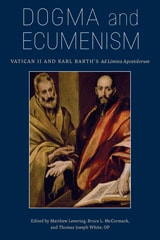
cover of Dogma and Ecumenism: Vatican II and Karl Barth's 'Ad Limina Apostolorum'

Dogma and Ecumenism

Vatican II and Karl Barth's 'Ad Limina Apostolorum'

Matthew Levering

Catholic University of America Press, 2020
The conversation of this book is structured around five major documents from the Second Vatican Council, each of which Barth commented upon in his short but penetrating response to the Council, published as Ad Limina Apostolorum. In the two opening essays, Thomas Joseph White reflects upon the contribution that this book seeks to make to contemporary ecumenism rooted in awareness of the value of dogmatic theology; and Matthew Levering explores the way in which Barth’s Ad Limina Apostolorum flows from his preconciliar dialogues with Catholic representatives of the nouvelle théologie and remain relevant to the issues facing Catholic theology today. The next two essays turn to Dei Verbum, the Dogmatic Constitution on Divine Revelation; here Katherine Sonderegger (Protestant) reflects on scripture and Lewis Ayres (Catholic) reflects on tradition. The next two essays address the Dogmatic Constitution on the Church, Lumen Gentium, which touches upon central differences of Catholic and Protestant self-understanding. Christoph Schwöbel (Protestant) analyzes visible ecclesial identity as conceived in a Protestant context, while Thomas Joseph White (Catholic) engages Barth’s Reformed criticisms of the Catholic notion of the Church. The next two essays take up Nostra Aetate: Bruce Lindley McCormack (Protestant) asks whether it is true to say that Muslims worship the same God as Christians, and Bruce D. Marshall (Catholic) explores the implications of the Council’s reflections on the Jewish people. The next two essays take up the Pastoral Constitution on the Church in the Modern World, Gaudium et Spes: John Bowlin (Protestant) makes use of the thought of Aquinas to consider the promise and perils of the document, while Francesca Aran Murphy (Catholic) engages critically with George Lindbeck’s analysis of the document. The next two essays explore Unitatis Redintegratio: Hans Boersma (Protestant) asks whether the ecumenical intention of the document is impaired by its insistence that the unity of the Church is already present in the Catholic Church, and Reinhard Hütter (Catholic) systematically addresses Barth’s questions regarding the document. The noted ecumenist and Catholic theologian Richard Schenk brings the volume to a close by reflecting on “true and false ecumenism” in the post-conciliar period.
[more]
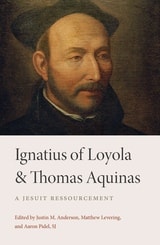
cover of Ignatius of Loyola and Thomas Aquinas: A Jesuit Ressourcement

Ignatius of Loyola and Thomas Aquinas

A Jesuit Ressourcement

Justin M. Anderson

Catholic University of America Press, 2023
Though the relationship between Jesuits and Dominicans has historically been marked by theological controversy, Ignatius of Loyola, the founder of the Jesuits, shows remarkable affinity for the Thomistic tradition, the tradition advanced above all by the Dominican order. When writing the Jesuit Constitutions, in fact, Ignatius made Thomas Aquinas’s Summa Theologiae the primary textbook for Jesuit theological formation. The contributions to this volume—originating from Jesuits, Dominicans, and lay scholars alike—explore different aspects of the complex yet illuminating relationship between Ignatius and Thomas. The themes range from the general relationship between the early Jesuits and scholastic theology to the attempts by Francisco de Toledo, the first Jesuit cardinal, to apply Thomistic reasoning to the religious and legal status of Jewish converts to Christianity. Other contributions compare Ignatius and Thomas on topics of significant interest for dogmatic, sacramental, and spiritual theology: spiritual experience, the ordering of the passions, the use of the imagination, prudence and discernment of spirits, frequent communion, Mariology, the “hierarchical church,” and the limits of obedience. Students of Ignatius of Loyola, Thomas Aquinas, second scholasticism, Christian-Jewish relations, and spiritual theology in general will find this volume an invaluable contribution.
[more]
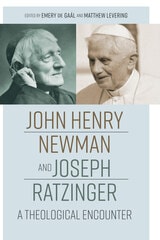
cover of John Henry Newman and Joseph Ratzinger: A Theological Encounter

John Henry Newman and Joseph Ratzinger

A Theological Encounter

Emery de Gaal

Catholic University of America Press, 2024
This book brings the thought of John Henry Newman into conversation with that of Joseph Ratzinger/Benedict XVI on a number of crucial theological themes. The book begins with a programmatic essay by Tracey Rowland connecting Newman’s approach with that of Ratzinger’s doktorvater Gottlieb Söhngen, along seven instructive paths. The book then delves into central themes of both Newman’s and Ratzinger’s thought, with essays that treat dogmatic development, the relationship of faith and reason, biblical inspiration, mystery, conscience, attentiveness to the “signs of the times,” interculturality and revelation, the Church as the Mystical Body, ecclesial authority, the relationship of faith and natural science, and deification. The essays in the volume come from many of the world’s leading Newman and Ratzinger scholars, with Ratzinger being represented by such experts as Rowland, Emery de Gaál, Aaron Pidel, SJ, Jacob Phillips, Matthew Ramage, and Jeremy Pilch; and Newman by such experts as Frederick D. Aquino, Andrew Meszaros, Marial Corona, Ryan Marr, and Elizabeth A. Huddleston. The Introduction briefly sets the scene for the encounter by describing the German reception of Newman during Ratzinger’s youth in comparison with the much less robust situation in German Newman scholarship today. It is the hope of the editors that this theological encounter will serve to promote and advance both Newman studies and Ratzinger studies in English- and German-speaking lands today.
[more]
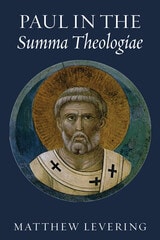
cover of Paul in the Summa Theologiae

Paul in the Summa Theologiae

Matthew Levering

Catholic University of America Press, 2014
Aquinas's commentaries on St. Paul are well known and have received significant attention in the past few years. It is widely known, too, that Aquinas quotes Paul often in the Summa theologiae. This aspect of the Summa, however, has not been studied in detail. This book seeks to fill that lacuna in scholarship.
[more]
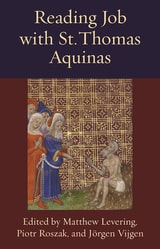
cover of Reading Job with St. Thomas Aquinas

Reading Job with St. Thomas Aquinas

Matthew Levering

Catholic University of America Press, 2020
Reading Job with St. Thomas Aquinas is a scholarly contribution to Thomistic studies, specifically to the study of Aquinas’s biblical exegesis in relation to his philosophy and theology. Each of the thirteen chapters has a different focus, within the shared concentration of the book on Aquinas’s Literal Exposition on Job. The essays are arranged in three Parts: “Job and Sacra Doctrina”; “Providence and Suffering”; and “Job and the Moral Life”. Boyle’s opening essay argues that Aquinas’s commentary seeks to show what is required in the “Magister” (namely, Job and God) for the effective communication of wisdom. Mansini’s essay argues that by speaking, God reveals the virtue of Job and its value in God’s providence; without the personal revelation or speech of God, Job could not have known the value of his suffering. Vijgen’s essay explores the commentary’s use of Aristotle for reflecting upon divine providence, sorrow and anger, resurrection, and the new heavens and new earth. Levering’s essay explores the commentary’s citations of the Gospel of John and argues that these pertain especially to divine speech and to light/darkness. Bonino’s essay explains why divine incomprehensibility does not mean that Job is wrong to seek to understand God’s ways. Te Velde’s essay explores how Aquinas’s commentary draws upon the reasoning of his Summa contra gentiles with regard to the good order of the universe. Goris’s essay reflects upon how, according to Aquinas’s commentary, sin is and is not related to suffering. Knasas’s essay argues that Aquinas does not hold that the resurrection of the body is a necessary philosophical corollary of the human desire for happiness. Wawrykow’s essay explores merit, in relation to the connection between sin and punishment/affliction as well as to the connection between good actions and flourishing. Spezzano’s essay shows that Job’s hope and filial fear transform his suffering, making him an exemplar of the consolation they provide to the just. Mullady’s essay reflects upon the moral problems and opportunities posed by the passions, along with the ordering of the virtues to the reward of human happiness. Flood’s essay shows how Aquinas defends Job’s possession of the qualities needed for true friendship (including friendship with God), such as patience, delight in the presence of the friend, and compassion. Lastly, Kromholtz’s essay argues that although Aquinas’s Literal Exposition on Job never extensively engages eschatology, Aquinas depends throughout upon the reasonableness of hoping for the resurrection of the body and the final judgment.
[more]
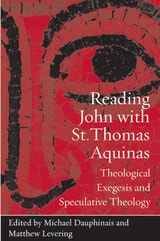
cover of Reading John with St. Thomas Aquinas: Theological Exegesis and Speculative Theology

Reading John with St. Thomas Aquinas

Theological Exegesis and Speculative Theology

Michael Dauphinais

Catholic University of America Press, 2005
This volume fits within the contemporary reappropriation of St. Thomas Aquinas, which emphasizes his use of Scripture and the teachings of the church fathers without neglecting his philosophical insight.
[more]
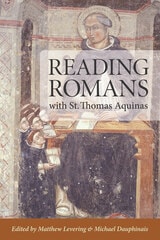
cover of Reading Romans with St. Thomas Aquinas

Reading Romans with St. Thomas Aquinas

Matthew Levering

Catholic University of America Press, 2012
This volume fits within the contemporary reappropriation of St. Thomas Aquinas, which emphasizes his use of Scripture and the teachings of the church fathers without neglecting his philosophical insight.
[more]
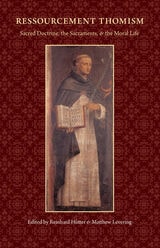
cover of Ressourcement Thomism: Sacred Doctrine, the Sacraments, and the Moral Life

Ressourcement Thomism

Sacred Doctrine, the Sacraments, and the Moral Life

Reinhard Hütter

Catholic University of America Press, 2010
The essays in this volume explore three areas in which St. Thomas Aquinas's voice has never fallen silent: sacred doctrine, the relationship of sacraments and metaphysics, and the central role of virtue in moral theology.
[more]
cover of The Achievement of Hans Urs von Balthasar

The Achievement of Hans Urs von Balthasar

Matthew Levering

Catholic University of America Press, 2019

In The Achievement of Hans Urs von Balthasar, Matthew Levering has written a book for theologically educated readers who mistrust von Balthasar or who mistrust von Balthasar’s critics. The book shows that von Balthasar’s critics can and should benefit both from the rich and wide-ranging conversations that mark his trilogy and from the critical and constructive engagement with German philosophical modernity offered by the trilogy. In addition, Levering hopes to show that those who mistrust von Balthasar’s critics need to be more Balthasarian in their response to criticisms of the Swiss theologian.
[more]
cover of The Challenge of Catholic-Jewish Theological Dialogue

The Challenge of Catholic-Jewish Theological Dialogue

Matthew Tapie

Catholic University of America Press, 2024
[more]
cover of The True Christian Life: Thomistic Reflections on Divinization, Prudence, Religion, and Prayer

The True Christian Life

Thomistic Reflections on Divinization, Prudence, Religion, and Prayer

Ambroise Gardeil, OP

Catholic University of America Press, 2022

Although not well-known in the English-speaking world, Fr. Ambroise Gardeil, OP (1859-1931) was a Dominican of significant influence in French Catholic thought at the turn of the 20th century. Conservative theologians like Frs. Reginald Garrigou-Lagrange, OP, Michel Labourdette, OP, Jean-Hervé Nicolas, OP and many others hailed him as a careful expositor of the supernaturality of faith, a defender of the theological nature of rational apologetics, and a spiritual master. In his controversial Le Saulchoir: Une école de théologie, Fr. Marie-Dominique Chenu, OP praised Fr. Gardeil as an important Dominican initiator of reforms in historical theology, presenting the latter as a kind of precursor to one of the streams of what is now referred to historically as the “Nouvelle Théologie.” And one cannot read the words of Fr. Gardeil’s contemporary Fr. Antoine Lemonnyer, OP, without hearing echoes and re-echoes of common cause regarding our lofty spiritual vocation, resounding within the halls of the Saulchoir. With such a broad appeal, it is no surprise that in private correspondence, a young Yves Simon, writing to Jacques Maritain, referred to Fr. Gardeil as “The Great Gardeil.” The True Christian Life provides a thorough and stirring introduction to Fr. Gardeil’s work in spiritual theology. The volume was originally published posthumously through the collaboration of Fr. Gardeil’s nephew, Fr. Henri-Dominique Gardeil, OP and Jacques Maritain. Fr. Ambroise, prior to beginning work on his masterpiece on spiritual experience, La Structure de l'âme et l'expérience mystique, drafted nearly eight-hundred pages that would have set forth a full presentation of moral-ascetical theology. While drafting this massive work, his reflection on the soul’s receptive capacity for grace led him to the two-volume study, La Structure, and he never was able to finish his original designs for a comprehensive study of the Christian moral-spiritual life. Soon after his death, his nephew gathered several essays from the Revue thomiste and Revue de Jeunes, along with a complete-but-unpublished study on prayer. Drafting a lengthy introduction on the basis of Fr. Ambroise’s unpublished notes, Fr. Henri-Dominique assembled a volume of moral / spiritual theology that sets out the principles of many important themes: divinization through grace, Christian prudence /conscience, the virtue of religion, devotion, and prayer. In his In memoriam written after the passing of Fr. Gardeil, Fr. Reginald Garrigou-Lagrange emphasized Fr. Gardeil’s ability to meditate on a given topic’s central principles, like someone who sees the highest peaks that give structure to the entire mountain range of theology. In this volume, the reader will find a clear and rhetorically striking presentation of the central mysteries of the spiritual life, presented with stirring and beautiful rhetoric by a theological master from the Thomist tradition.
[more]