Results by title
14 books match the query 'Lewis, Peter'
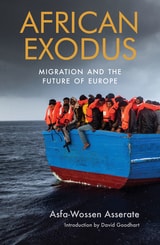
African Exodus
Migration and the Future of EuropeAsfa-Wossen Asserate
Haus Publishing, 2018
Asfa-Wossen Asserate argues here that building higher fences or finding more effective methods of integration will only, in the long term, perpetuate rather than solve the problems associated with these large numbers of displaced refugees. We need to realize that we are only treating the symptoms of an oncoming catastrophe and that, if we are to respond to mass migration, we will ultimately have to understand its causes. African Exodus places its emphasis firmly on the causes of the refugee crisis, which are to be found not least in Europe itself, and charts ways in which we might deal with it effectively in the long term.
In the course of this analysis, Asserate asks why our view of Africa—a troubled continent, but rich in so many ways—is so distorted. How can we combat the corrupt, authoritarian regimes that stymie progress and development? Why are millions fleeing to Europe? How is the EU complicit in the migration crisis? And finally, in practical terms: what can be done, and what prospects does the future hold?
Barbarian Spring
Jonas Lüscher
Haus Publishing, 2014
So begins Barbarian Spring, the debut novel from Jonas Lüscher, a major emerging voice in European fiction. The timely and unusual novel centers on a culture clash between high finance and the value system of the Maghreb. Provocative and entertaining, Barbarian Spring is a refreshingly original and all-too-believable satire for our times.
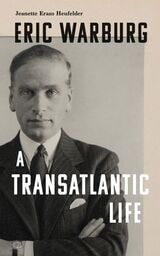
Eric Warburg
A Transatlantic LifeJeanette Erazo Heufelder
Haus Publishing, 2025
In Eric Warburg, Jeanette Erazo Heufelder tells the story of the nephew of the art historian Aby Warburg, whose world-famous library Eric saved from the Nazis. He was a Jew, a banker, a helper of escapees, an intelligence officer in the US Army, a transatlantic bridge builder, and a Cold Warrior. With the help of the cooperation channels he set up, West German and US social groups were aligned with the West amidst the turmoil of postwar Europe.
The history of the transatlantic partnership has become highly topical; since the Russian invasion of Ukraine on February 24, 2022, it has been invoked in Europe as a key reassurance. Eric Warburg’s life, and that of Aby Warburg’s library, tells the story of Europe's twentieth century, the legacy of which continues to inform and inspire the transatlantic partnership today.
Growing Apart
Oil, Politics, and Economic Change in Indonesia and NigeriaPeter M. Lewis
University of Michigan Press, 2007
"Growing Apart is an important and distinguished contribution to the literature on the political economy of development. Indonesia and Nigeria have long presented one of the most natural opportunities for comparative study. Peter Lewis, one of America's best scholars of Nigeria, has produced the definitive treatment of their divergent development paths. In the process, he tells us much theoretically about when, why, and how political institutions shape economic growth."
—Larry Diamond, Senior Fellow, Hoover Institution
"Growing Apart is a careful and sophisticated analysis of the political factors that have shaped the economic fortunes of Indonesia and Nigeria. Both scholars and policymakers will benefit from this book's valuable insights."
—Michael L. Ross, Associate Professor of Political Science, Chair of International Development Studies, UCLA
"Lewis presents an extraordinarily well-documented comparative case study of two countries with a great deal in common, and yet with remarkably different postcolonial histories. His approach is a welcome departure from currently fashionable attempts to explain development using large, multi-country databases packed with often dubious measures of various aspects of 'governance.'"
—Ross H. McLeod, Editor, Bulletin of Indonesian Economic Studies
—Nicolas van de Walle, John S. Knight Professor of International Studies, Cornell University
Peter M. Lewis is Associate Professor and Director of the African Studies Program, Johns Hopkins University, School of Advanced International Studies.
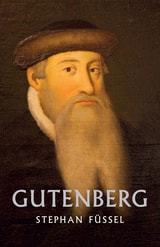
Gutenberg
Stephan Füssel
Haus Publishing, 2019
Gutenberg’s technical innovations remained unrivalled for almost 350 years, until industrialization of the printing industry and the digital revolution built on the advances that he began, increasing the rate at which information is spread. Despite his significance in forming the world as we know it, there has not yet been a rigorous and accessible biography of Gutenberg published in English. Written by the leading expert on Gutenberg, Füssel’s biography brings together high academic standards and thorough historical details in a highly readable text that conveys everything you need to know about the man who changed printing forever.
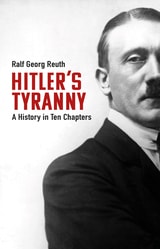
Hitler's Tyranny
A History in Ten ChaptersRalf Georg Reuth
Haus Publishing, 2022
Hitler’s tyranny is still difficult to understand today. In this book, Ralf Georg Reuth examines ten aspects of this catastrophe. Among other things, he asks: Was anti-Semitism more pronounced in Germany than elsewhere? Was Versailles really responsible for Hitler’s rise and why did the Germans follow a racial fanatic like him? How did his war differ from all others before it? The disturbing answers provide an overall picture that shows Hitler was not the consequence of the depths of German history, but the result of chance, deception, and seduction.
This thought-provoking new study takes aim at several of the norms of Hitler scholarship from the past forty years. Reuth interrogates and challenges a range of orthodox views on such topics as how mainstream politicians facilitated Hitler’s rise to power, the Führer’s infamous pact with Stalin, and the complicity of ordinary Germans in his genocidal tyranny. Eschewing a conventional chronological approach in favor of a forensic analysis of Hitler’s mainsprings of action both as chancellor and military commander, Reuth portrays Hitler as the apotheosis of what he argues is a specifically German strain of militarism and imperialism, shifting the focus firmly back to the mindset and modus operandi of Hitler himself. The portrait that emerges is one of a murderous fantasist and political opportunist driven by an all-embracing ideology of racial superiority. Reuth’s account courts controversy on a number of points and offers a fascinating counterpoint to much recent scholarship.
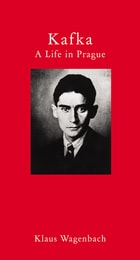
Kafka's Prague
Klaus Wagenbach
Haus Publishing, 2020
Drawing from a range of documents and historical materials, this is the first book specifically dedicated to the relationship between Kafka and Prague. Klaus Wagenbach’s account of Kafka’s life in the city is a meticulously researched insight into the author’s family background, his education and employment, his attitude toward the town of his birth, his literary influences, and his relationships with women. The result is a fascinating portrait of the twentieth century’s most enigmatic writer and the city that provided him with so much inspiration. W. G. Sebald recognized that “literary and life experience overlap” in Kafka’s works, and the same is true of this book.
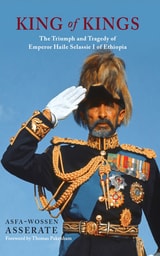
King of Kings
The Triumph and Tragedy of Emperor Haile Selassie I of EthiopiaAsfa-Wossen Asserate
Haus Publishing, 2015
Written by Asfa-Wossen Asserate, Haile Selassie’s grandnephew, this is the first major biography of this final “king of kings.” Asserate, who spent his childhood and adolescence in Ethiopia before fleeing the revolution of 1974, knew Selassie personally and gained intimate insights into life at the imperial court. Introducing him as a reformer and an autocrat whose personal history—with all of its upheavals, promises, and horrors—reflects in many ways the history of the twentieth century itself, Asserate uses his own experiences and painstaking research in family and public archives to achieve a colorful and even-handed portrait of the emperor.
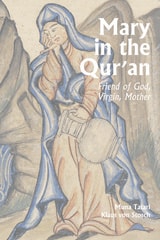
Mary in the Qur'an
Friend of God, Virgin, MotherMuna Tatari and Klaus von Stosch
Gingko, 2025
An entire chapter (surah) is dedicated to her, and she is the only woman mentioned by name in the Qur’an—indeed, her name appears more frequently than that of either Muhammad or Jesus. From the earliest times to the present day, Mary, the mother of Jesus, continues to be held in high regard by Christians and Muslims alike, yet she has also been the cause of much tension between these two religions.
In this groundbreaking study, Muna Tatari and Klaus von Stosch painstakingly reconstruct the picture of Mary that is presented in the Qur’an and show how veneration of the Blessed Virgin Mary in the Roman Catholic Church intersects and interacts with the testimony of the Qur’an. This sensitive and scholarly treatise offers a significant contribution to contemporary interfaith dialogue.
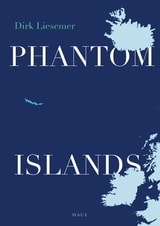
Phantom Islands
In Search of Mythical LandsDirk Liesemer
Haus Publishing, 2018
Beautifully illustrated with colored maps and charts, Phantom Islands shows the cunning of imposters and frauds, the earnestness of explorers searching for knowledge, and the pleasure that can be found in our willingness to deceive and to be deceived.
Roman Elegy
Sabine Gruber
Haus Publishing, 2013
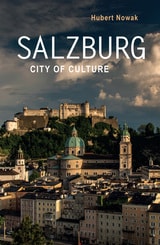
Salzburg
City of CultureHubert Nowak
Haus Publishing, 2020
Situated in the shadow of the Eastern Alps, Salzburg is known for its majestic baroque architecture, music, cathedrals, and gardens. The city grew in power and wealth as the seat of prince-bishops, found international fame as the birthplace of the beloved composer Mozart, and expanded to become a global destination for travel as a festival city. With all its stunning sights and rich history, Salzburg has become Austria’s second most visited city, drawing visitors from around the world.
Hubert Nowak sets out to reveal the lesser-known side of Salzburg, a small town with international renown. Leaving the famed festival district, he plunges into the narrow façade-lined streets of the old quarter, creating one of the most extensive accounts of the city published in English. Through the stories of those who visited and lived in the city over the centuries, he gives the reader a fresh perspective and gives the old city new life.
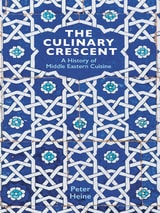
The Culinary Crescent
A History of Middle Eastern CuisinePeter Heine
Gingko, 2018
In The Culinary Crescent: A History of Middle Eastern Cuisine, Peter Heine combines years of scholarship with a personal passion: his knowledge of the cookery traditions of the Umayyad, Abbasid, Ottoman, Safavid, and Mughal courts is matched only by his love for the tastes and smells produced by the contemporary cooking of these areas today. In addition to offering a fascinating history, Heine presents more than one hundred recipes—from the modest to the extravagant—with dishes ranging from those created by the “celebrity chefs” of the bygone Mughal era, up to gastronomically complex presentations of modern times.
Beautifully produced, designed for both reading and cooking, and lavishly illustrated in color throughout, The Culinary Crescent is sure to provide a delectable window in the history of food in the Middle East.
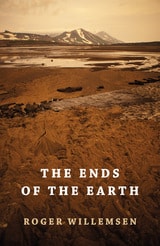
The Ends of the Earth
Roger Willemsen
Haus Publishing, 2010