Results by title
11 books match the query 'Liberals'
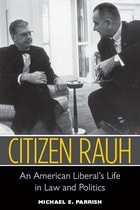
Citizen Rauh
An American Liberal's Life in Law and PoliticsMichael E. Parrish
University of Michigan Press, 2011
"Joe Rauh was the type of lawyer who comes along maybe once in a generation---talented, politically astute, effective, and stubbornly devoted to principles, the type of person who not only could but did make a difference. He deserves a biography that explores not only his persona, but the America in which he lived and worked, and how he made a difference to so many people. Michael Parrish has given us just such a book, an exceedingly fine, well-written story that will make clear to another generation not only who Joe Rauh was, but why we as a nation will always need someone like him."
---Melvin I. Urofsky, Professor of Law and Public Policy, Virginia Commonwealth University
"Michael Parrish has captured the life of this great civil libertarian in splendid fashion. His biography of this energetic New Deal liberal weaves effortlessly between public and private, friend and foe, victory and defeat. With Parrish as a sure guide, Citizen Rauh transports the reader through an American history that begins with Sacco and Vanzetti and ends as he battles CIA skullduggery in the 1980s. This biography should be on your shelf and in your heart."
---Nelson Lichtenstein, MacArthur Foundation Professor of History and Director of the Center for the Study of Work, Labor, and Democracy, University of California, Santa Barbara
"Michael Parrish has fashioned a biography filled with Rauh's spirit, achievements, his losses, and above all, the importance of his presence. This is a wonderful account of a giant of late 20th century political and legal affairs."
---Stanley Kutler, E. Gordon Fox Professor Emeritus of American Institutions, History, and Law, University of Wisconsin, Madison
Citizen Rauh tells the story of American lawyer Joseph L. Rauh Jr., who kept alive the ideals of New Deal liberalism and broadened those ideals to include a commitment to civil rights. Rauh's clients included Arthur Miller, Lillian Hellman, A. Philip Randolph, and the Mississippi Freedom Democratic Party. With good reason Freedom Rider John Lewis once called him "the blackest white man I ever knew."
No lawyer in the post-1945 era did more to protect the economic interests of working-class Americans than Rauh, who fought for the unions as they struggled for legitimacy and against them when they betrayed their own members. No lawyer stood more courageously against repressive anticommunism during the 1950s or advanced the cause of racial justice more vigorously in the 1960s and 1970s. No lawyer did more to defend the constitutional vision of the Warren Court and resist the efforts of Richard Nixon and Ronald Reagan to undo its legacy.
Throughout his life, Rauh continued to articulate a progressive vision of law and politics, ever confident that his brand of liberalism would become vital once again when the cycle of American politics took another turn.
Michael E. Parrish is Distinguished Professor of History at the University of California, San Diego, where he has taught for forty years. A specialist in the legal and constitutional history of the United States, he has also taught at Nanjing University in the People's Republic of China, the University of Edinburgh, the University of Glasgow, and the University of Helsinki, where he was the Fulbright Bicentennial Professor of American Studies.
Parrish is the author of five other books: Securities Regulation and the New Deal; Felix Frankfurter and His Times; Anxious Decades: America in Prosperity and Depression; The Hughes Court: Justices, Rulings, and Legacy; and The Supreme Court and Capital Punishment: Judging Death. His articles have appeared in the American Historical Review, the Historian, Diplomatic History, the Journal of the Supreme Court Historical Society, and the Yale Law Journal.
Jacket design by Paula Newcomb
Jacket photograph: Joseph L. Rauh Jr. with President Lyndon B. Johnson. Courtesy of the Estate of Olie W. Rauh.
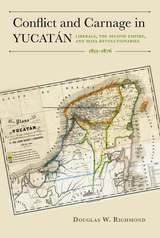
Conflict and Carnage in Yucatán
Liberals, the Second Empire, and Maya Revolutionaries, 1855–1876Douglas W. Richmond
University of Alabama Press, 2015
Synthesizing an extensive and heterogeneous range of sources, Douglas W. Richmond covers three tumultuous political upheavals of this period. First, Mexico’s fledgling republic attempted to impose a liberal ideology at odds with traditional Maya culture on Yucatán; then, the French-backed regime of Emperor Maximilian began to reform Yucatán; and, finally, the republican forces of Benito Juárez restored the liberal hegemony. Many issues spurred resistance to these liberal governments. Instillation of free trade policies, the suppression of civil rights, and persecution of the Roman Catholic Church mobilized white opposition to liberal governors. The Mayas fought the seizure of their communal properties. A long-standing desire for regional autonomy united virtually all Yucatecans. Richmond advances the thought-provoking argument that Yucatán both fared better under Maximilian’s Second Empire than under the liberal republic and would have thrived more had the Second Empire not collapsed.
The most violent and bloody manifestation of these broad conflicts was the Caste War (Guerra de Castas), the longest sustained peasant revolt in Latin American history. Where other scholars have advocated the simplistic position that the war was a Maya uprising designed to reestablish a mythical past civilization, Richmond’s sophisticated recounting of political developments from 1855 to 1876 restores nuance and complexity to this pivotal time in Yucatecan history.
Richmond’s Conflict and Carnage in Yucatán is a welcome addition to scholarship about Mexico and Yucatán as well as about state consolidation, empire, and regionalism.
Everyday Democracy
Liberals, Conservatives, and Their Routine Political LivesJeffrey M. Berry, James M. Glaser and Deborah J. Schildkraut
University of Chicago Press, 2025
How the everyday habits and attitudes of ordinary liberals and conservatives shape the health of American democracy.
In Everyday Democracy, Jeffrey M. Berry, James M. Glaser, and Deborah J. Schildkraut study Americans’ views of several manifestations of “everyday democracy,” which they define as the attitudes, behaviors, and processes that people experience in daily life and their routine considerations of politics and community. Examples include engaging in dialogue with political opponents and giving politicians license to compromise. Ordinary political moments like these constitute much of politics, and they can lay the foundation that shapes if, when, and how crisis moments unfold.
Paying particular attention to the role of ideology in shaping how Americans emulate daily democratic ideals, this book considers such questions as: How do liberals and conservatives support different aspects of democratic practice, and are there ideological asymmetries between the two groups? If and when asymmetries emerge, what factors might explain them? The authors consider what their findings mean for the health of American democracy broadly.
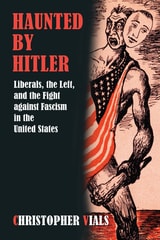
Haunted by Hitler
Liberals, the Left, and the Fight against Fascism in the United StatesChristopher Vials
University of Massachusetts Press, 2014
Although fascism is typically associated with Europe, the threat of fascism in the United States haunted the imaginations of activists, writers, and artists, spurring them to create a rich, elaborate body of cultural and political work. Traversing the Popular Front of the 1930s, the struggle against McCarthyism in the 1950s, the Black Power movement of the 1960s, and the AIDS activism of the 1980s, Haunted by Hitler highlights the value of “antifascist” cultural politics, showing how it helped to frame the national discourse.
Christopher Vials examines the ways in which anxieties about fascism in the United States have been expressed in the public sphere, through American television shows, Off-Broadway theater, party newspapers, bestselling works of history, journalism, popular sociology, political theory, and other media. He argues that twentieth-century liberals and leftists were more deeply unsettled by the problem of fascism than those at the center or the right and that they tirelessly and often successfully worked to counter America's fascist equivalents.
Liberal Suppression
Section 501(c)(3) and the Taxation of SpeechPhilip Hamburger
University of Chicago Press, 2018
Tracing the history of American liberalism, including theological liberalism and its expression in nativism, Hamburger shows the centrality of turbulent popular anxieties about the Catholic Church and other potentially orthodox institutions. He argues persuasively that such theopolitical fears about the political speech of churches and related organizations underlay the adoption, in 1934 and 1954, of section 501(c)(3)’s speech limits. He thereby shows that the speech restrictions have been part of a broad majority assault on minority rights and that they are grossly unconstitutional.
Along the way, Hamburger explores the role of the Ku Klux Klan and other nativist organizations, the development of American theology, and the cultural foundations of liberal “democratic” political theory. He also traces important legal developments such as the specialization of speech rights and the use of law to homogenize beliefs. Ultimately, he examines a wide range of contemporary speech restrictions and the growing shallowness of public life in America.
His account is an unflinching look at the complex history of American liberalism and at the implications for speech, the diversity of belief, and the nation’s future.
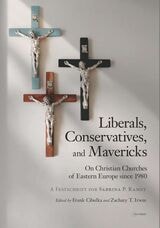
Liberals, Conservatives, and Mavericks
On Christian Churches of Eastern Europe since 1980. A Festschrift for Sabrina P. RametFrank Cibulka
Central European University Press, 2025
No Church is monolithic—this is the preliminary premise of this volume on the public place of religion in a representative number of post-communist countries. The studies confirm that within any religious organization we can expect to find fissures, factions, theological or ideological quarrels, and perhaps even competing interest groups, such as missionary workers, regular clergy versus secular clergy, and sometimes even competing ecclesiastical hierarchies. The main focus of the book rests on the divisions arising within select Christian Churches, as they confront the processes of secularization and atheization. The coverage area includes Russia and the Ukraine, East-Central Europe and South-Eastern Europe. Some chapters focus on individual clergy who challenge the mainstream of their given Church either from a more liberal or from a more conservative perspective, while others deal with the divisive forces impacting the religious organizations.
This festschrift to honor Sabrina Ramet’s seminal contribution to the study of religion in the politics of the communist and post-communist world, brings together several generations of scholars from a variety of countries, both those well established in their fields of study as well as young promising academics.
Neither Liberal nor Conservative
Ideological Innocence in the American PublicDonald R. Kinder and Nathan P. Kalmoe
University of Chicago Press, 2017
Well, American elites disagree fiercely. But average Americans do not. This, at least, was the position staked out by Philip Converse in his famous essay on belief systems, which drew on surveys carried out during the Eisenhower Era to conclude that most Americans were innocent of ideology. In Neither Liberal nor Conservative, Donald Kinder and
Nathan Kalmoe argue that ideological innocence applies nearly as well to the current state of American public opinion. Real liberals and real conservatives are found in impressive numbers only among those who are deeply engaged in political life. The ideological battles between American political elites show up as scattered skirmishes in the general public, if they show up at all.
If ideology is out of reach for all but a few who are deeply and seriously engaged in political life, how do Americans decide whom to elect president; whether affirmative action is good or bad? Kinder and Kalmoe offer a persuasive group-centered answer. Political preferences arise less from ideological differences than from the attachments and antagonisms of group life.
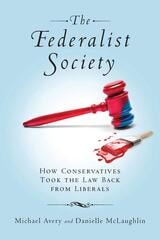
The Federalist Society
How Conservatives Took the Law Back from LiberalsMichael Avery
Vanderbilt University Press, 2013
Today the Society claims that 45,000 conservative lawyers and law students are involved in its activities. Four Supreme Court Justices--Antonin Scalia, Clarence Thomas, John Roberts, and Samuel Alito--are current or former members. Every single federal judge appointed in the two Bush presidencies was either a Society member or approved by members. During the Bush years, young Federalist Society lawyers dominated the legal staffs of the Justice Department and other important government agencies.
The Society has lawyer chapters in every major city in the United States and student chapters in every accredited law school. Its membership includes economic conservatives, social conservatives, Christian conservatives, and libertarians, who differ with each other on significant issues, but who cooperate in advancing a broad conservative agenda.
How did this happen? How did this group of conservatives succeed in moving their theories into the mainstream of legal thought?
What is the range of positions of those associated with the Federalist Society in areas of legal and political controversy? The authors survey these stances in separate chapters on
• regulation of business and private property
• race and gender discrimination and affirmative action
• personal sexual autonomy, including abortion and gay rights
• American exceptionalism and international law
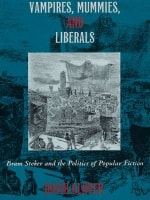
Vampires, Mummies and Liberals
Bram Stoker and the Politics of Popular FictionDavid Glover
Duke University Press, 1996
Glover’s efforts reveal a writer who was more wide-ranging and politically engaged than his current reputation suggests. An Irish Protestant and nationalist, Stoker nonetheless drew his political inspiration from English liberalism at a time of impending crisis, and the tradition’s contradictions and uncertainties haunt his work. At the heart of Stoker’s writing Glover exposes a preoccupation with those sciences and pseudo-sciences—from physiognomy and phrenology to eugenics and sexology—that seemed to cast doubt on the liberal faith in progress. He argues that Dracula should be read as a text torn between the stances of the colonizer and the colonized, unable to accept or reject the racialized images of backwardness that dogged debates about Irish nationhood. As it tracks the phantasmatic form given to questions of character and individuality, race and production, sexuality and gender, across the body of Stoker’s writing, Vampires, Mummies, and Liberals draws a fascinating portrait of an extraordinary transitional figure.
Combining psychoanalysis and cultural theory with detailed historical research, this book will be of interest to scholars of Victorian and Irish fiction and to those concerned with cultural studies and popular culture.
Why Everyone Hates White Liberals (Including White Liberals)
A HistoryKevin M. Schultz
University of Chicago Press, 2025
If there’s one thing most Americans can agree on, it’s that everyone hates white liberals. Conservatives hate them for being culturally tolerant and threatening to usher in communism. Libertarians hate them for believing in the power of the state. Socialists hate them for serving as capitalism’s beard. Even liberals hate liberals—either because they can’t manage to overcome their own prejudices, or precisely because they’re so self-hating.
This is the starting point for Kevin M. Schultz’s lively new history of white liberals in the United States. He efficiently lays out the array of objections to liberals—ineffective, spineless, judgmental, authoritarian, and more—in a historical frame that shows how protean the concept has been throughout the past hundred years. It turns out, he declares, that how you define a “white liberal” is less a reflection of reality and more a Rorschach test revealing your own anxieties.
Sharply assessing how decades of attacks on liberals and liberalism have steadily hollowed out the center of American political life, Schultz also explains precisely what needs to be done to avoid digging ourselves even further into the hole of polarization. The ultimate goal, he argues, is to achieve political fragmentation that will fuel the rise of a true multiparty system, where ideology will matter more, not less.
With a tight command of postwar American history and a spirited voice, Why Everyone Hates White Liberals (Including White Liberals) is a must-read for anyone wishing to understand—and envision a way forward in—the complicated landscape of American politics.