Results by title
3 books match the query 'Libertines in literature'
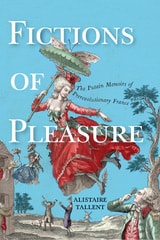
Fictions of Pleasure
The Putain Memoirs of Prerevolutionary FranceAlistaire Tallent
University of Delaware Press, 2024
Out of the libertine literary tradition of eighteenth-century France emerged over a dozen memoir novels of female libertines who eagerly take up sex work as a means of escape from the patriarchal control of fathers and husbands to pursue pleasure, wealth, and personal independence outside the private, domestic sphere. In these anonymously published novels, the heroines proudly declare themselves prostitutes, or putains, and use the desire they arouse, the professional skills they develop, and the network of female friends they create to exploit, humiliate, and financially ruin wealthy and powerful men. In pursuing their desires, the putains challenge contemporary notions of womanhood and expose the injustices of ancien-régime France. Until the French Revolution spelled the end of the genre, these novels proposed not only an appealing libertine utopia in which libertine women enjoy the same benefits as their male counterparts but also entirely new ways of looking at systems of power, gender, and sexuality.
[more]
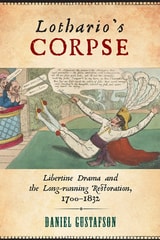
Lothario's Corpse
Libertine Drama and the Long-Running Restoration, 1700-1832Daniel Gustafson
Bucknell University Press, 2020
Lothario’s Corpse unearths a performance history, on and off the stage, of Restoration libertine drama in Britain’s eighteenth and early nineteenth centuries. While standard theater histories emphasize libertine drama’s gradual disappearance from the nation’s acting repertory following the dispersal of Stuart rule in 1688, Daniel Gustafson traces its persistent appeal for writers and performers wrestling with the powers of the emergent liberal subject and the tensions of that subject with sovereign absolutism. With its radical, absolutist characters and its scenarios of aristocratic license, Restoration libertine drama became a critical force with which to engage in debates about the liberty-loving British subject’s relation to key forms of liberal power and about the troubling allure of lawless sovereign power that lingers at the heart of the liberal imagination. Weaving together readings of a set of literary texts, theater anecdotes, political writings, and performances, Gustafson illustrates how the corpse of the Restoration stage libertine is revived in the period’s debates about liberty, sovereign desire, and the subject’s relation to modern forms of social control. Ultimately, Lothario’s Corpse suggests the “long-running” nature of Restoration theatrical culture, its revived and revised performances vital to what makes post-1688 Britain modern.
Published by Bucknell University Press. Distributed worldwide by Rutgers University Press.
Published by Bucknell University Press. Distributed worldwide by Rutgers University Press.
[more]
Sade
The Invention Of The Libertine BodyMarcel Henaff
University of Minnesota Press, 1999
A new model for examining Sade and his creations.
A new model for examining Sade and his creations.
Decried as a misogynist and pornographer, imprisoned for debauchery and for his writings, there is scarcely a cultural figure as flamboyant and controversial as the Marquis de Sade, the father of the new libertine body. But this is not, Hénaff maintains, the only way to see Sade. In this long-awaited English translation, Hénaff says that Sade should be discussed less for the sensual heat of his writing and more for the larger poetic and economic model his work represents.With unabashed candor, Sade describes bodies in terms not of flesh but of production, use, exchange, and waste. In his writing, this libertine self is unleashed from its constraints, no longer bound by old conceptions of desire and traditions of courtship. Hénaff’s argument that Sade is a sign of his times-exposing the courtly facade of a society unable to preserve itself-reveals dark, disquieting secrets about the direction of civilization. The libertine body, he says, is a child of this new order.ISBN 0-8166-2536-0 Cloth £34.50 $49.95xxISBN 0-8166-2537-9 Paper £14.00 $19.95x296 Pages 5 7/8 x 9 OctoberTranslation inquiries: University of Minnesota Press[more]